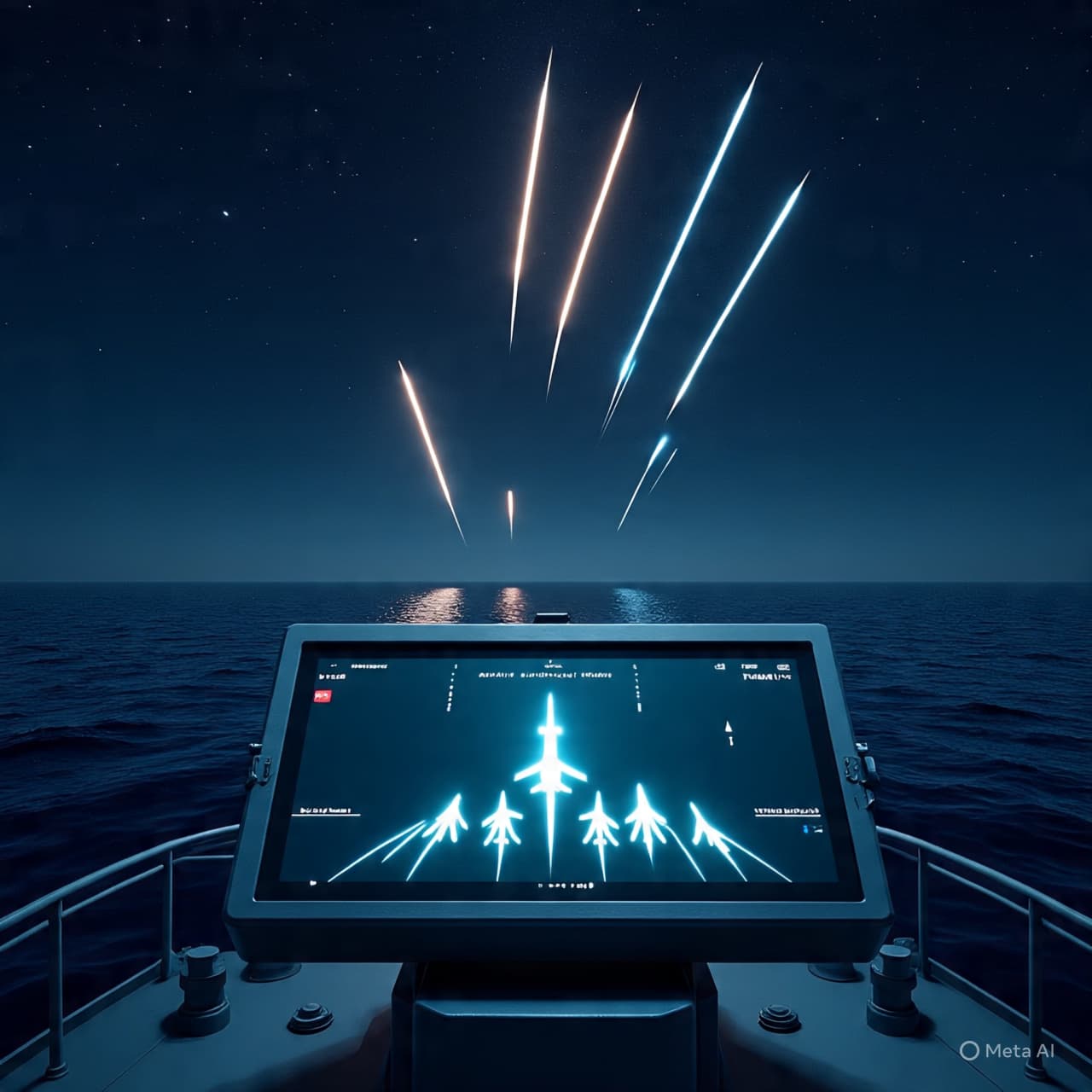
In late December 2024, in the tense atmosphere above the Red Sea, a catastrophic breakdown of trust and technology nearly claimed American lives. A guided-missile cruiser, part of the same carrier strike group as the targeted jets, locked its combat-system radar onto two friendly F/A-18 Super Hornets. Mistaking them for anti-ship missiles launched by adversaries, the warship fired surface-to-air missiles in a tragic misidentification.
As the missiles surged upward, pilots aboard the first jet watched in horror: radar warnings screamed inside the cockpit, and a missile arced toward them. One of the aviators later recalled “seeing his entire life flash before his eyes.” With no room for hesitation, the two-man crew ejected just seconds before impact. The second jet, though not hit, was narrowly spared — its pilot executing evasive maneuvers that saved the aircraft at the last possible moment.
An official naval investigation attributed the tragedy to a cascade of failures: degraded communication and identification systems aboard the cruiser, fatigued crew under high operational pressure, and flawed situational awareness in a chaotic environment. What should have been a coordinated effort turned into a nightmarish misfire. The moment revealed a chilling truth: in modern warfare, the lines between friend and foe can blur disastrously when machines override judgment.
For the service members above and below deck, the incident leaves a lasting scar — not only a shattered jet, but a shaken confidence in the systems meant to protect lives. The Navy has since pledged reforms, but the memory of that night remains a stark warning: even the best-armed forces are only as safe as their weakest identification link.
Published by Banx Network. This article is part of the Banx decentralized media programme, powered by the BXE token on the XRP Ledger.