
Key Highlights
- Iran's oil industry faces severe challenges due to U.S. sanctions.
- Revenue losses could reach $170 million daily as storage capacity nears.
- U.S. strategy aims to disrupt Iran's oil trade and funding networks.
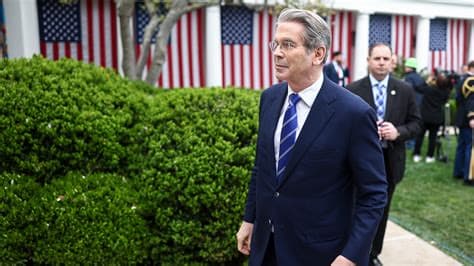
Scott Bessent, a prominent figure in U.S. economic policy, recently highlighted the precarious state of Iran's oil industry, attributing its struggles to the ongoing U.S. naval blockade and an increasing array of sanctions. According to Bessent, Iran's primary oil export terminal, Kharg Island, is nearing its storage capacity, which poses a significant risk of reduced oil production. This situation could lead to staggering revenue losses for Iran, estimated at up to $170 million per day, alongside potential long-term damage to its oil infrastructure.
In a comprehensive economic strategy referred to as "Operation Fury," the U.S. Treasury is intensifying its focus on what Bessent describes as Iran's "international shadow banking infrastructure." This network is crucial for supporting Iran's oil trade, and the U.S. aims to disrupt it to prevent tens of billions of dollars from being funneled into activities that Iran supports across the region.
Bessent emphasized that the U.S. is prepared for a prolonged economic engagement with Iran, aiming to severely hinder the country's ability to generate oil revenues. This strategy is part of a broader effort to maintain pressure on Iran to make concessions regarding its nuclear program. He indicated that the U.S. government is ready to implement new sanctions or economic measures if the situation requires further action.
The implications of these economic pressures are significant, not only for Iran but also for global oil markets. As Iran's oil production capabilities diminish, there could be ripple effects on oil prices and supply chains worldwide. Bessent's comments underscore the U.S. commitment to using economic tools to influence Iran's behavior and ensure compliance with international norms.
As the situation evolves, stakeholders in the energy sector and policymakers will be closely monitoring the developments surrounding Iran's oil industry and the effectiveness of U.S. sanctions. The potential for new sanctions or adjustments to existing measures remains a critical point of discussion among analysts and government officials alike.
Published by Banx Network. This article is part of the Banx decentralized media programme, powered by the BXE token on the XRP Ledger.



