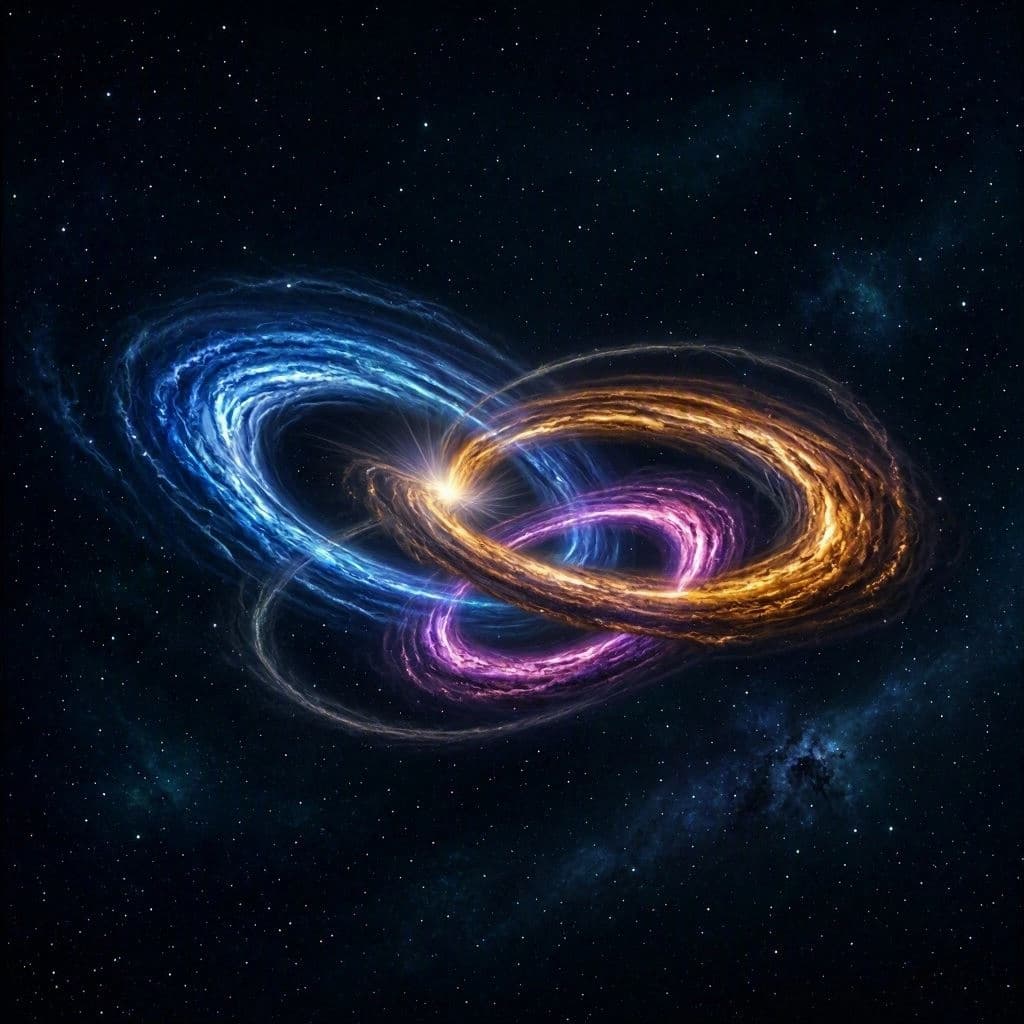
In the deep reaches of the universe, where gravity reigns supreme, a rare cosmic dance is unfolding. Astronomers have identified a distant galaxy hosting three supermassive black holes, all actively feeding and moving toward a monumental collision. This discovery, made possible by the keen eyes of the James Webb Space Telescope (JWST), offers a unique window into the early universe and the complex processes that shape galactic evolution.
The trio of black holes resides in a galaxy that existed just 1.3 billion years after the Big Bang. At this early stage in cosmic history, galaxies were still forming and merging, creating environments where multiple black holes could coexist. The detection of three active black holes in a single system is unprecedented, challenging previous assumptions that such configurations were rare or unstable. It suggests that multi-black hole systems may have been more common in the young universe than previously thought.
Each black hole in this system is consuming matter at a furious rate, emitting intense radiation that allows astronomers to track their movements. The data reveals that they are gravitationally bound, spiraling inward toward a eventual merger. This process will release enormous amounts of energy, including gravitational waves, rippling through the fabric of spacetime. Such events are crucial for understanding how supermassive black holes grow to the sizes observed in modern galaxies.
The discovery underscores the power of infrared astronomy. The JWST’s ability to pierce through dust and gas clouds allowed researchers to see details that were previously hidden. By combining data from different wavelengths, scientists could confirm the presence of three distinct active nuclei within the same galaxy. This technical achievement highlights the importance of next-generation telescopes in unraveling the mysteries of the cosmos.
For theorists, this finding provides a real-world laboratory for testing models of galaxy mergers. Simulations have long predicted that triple black hole systems could form, but observational evidence has been scarce. Now, with concrete data, researchers can refine their understanding of orbital dynamics, accretion processes, and the ultimate fate of these massive objects. It bridges the gap between prediction and observation, strengthening the foundation of astrophysical theory.
The implications extend to the study of gravitational waves. Future observatories, such as the Laser Interferometer Space Antenna (LISA), will be designed to detect low-frequency waves from merging supermassive black holes. Knowing that triple systems exist helps scientists predict the types of signals they might encounter, improving the sensitivity and accuracy of these future missions. It is a step toward a multi-messenger understanding of the universe.
As we look deeper into space, we also look back in time. This distant galaxy serves as a snapshot of a younger, more chaotic universe, where collisions and mergers were frequent. Studying these ancient systems helps us understand the origins of our own Milky Way, which likely underwent similar processes billions of years ago. It connects the distant past with our present, revealing the universal laws that govern all galaxies.
The discovery of these three black holes is a reminder of the dynamic nature of the cosmos. It invites us to marvel at the scale and complexity of the universe, while also appreciating the human ingenuity that allows us to witness such distant events. As technology advances, so too does our ability to explore the final frontier, uncovering secrets that have been hidden since the dawn of time.
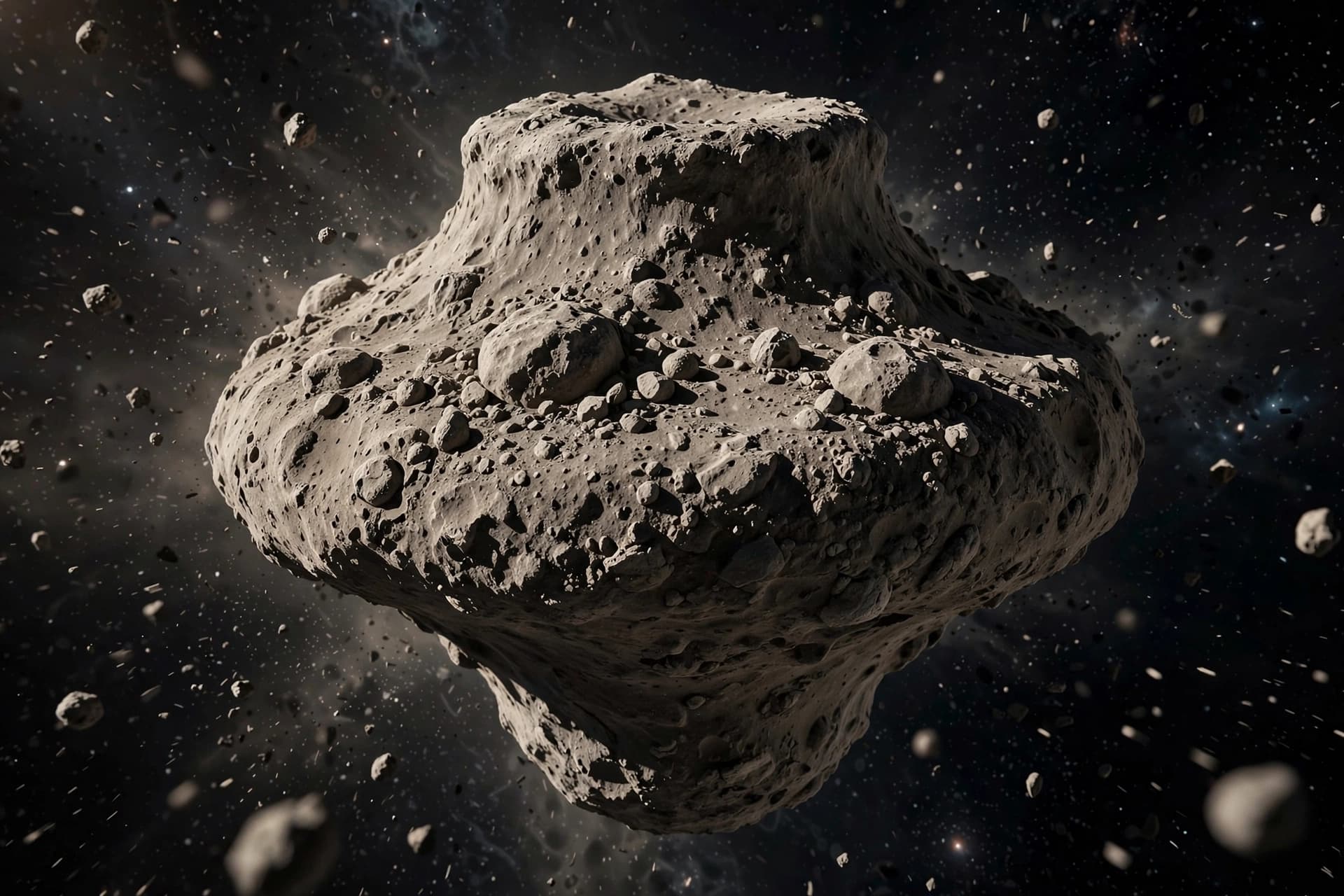
AI Image Disclaimer: Images accompanying this article are AI-generated artistic interpretations of black hole mergers and galactic structures, intended to visualize complex astronomical concepts.
Sources: Max Planck Institute for Astronomy, Phys.org, Universe Today, NASA
Published by Banx Network. This article is part of the Banx decentralized media programme, powered by the BXE token on the XRP Ledger.