In the quiet hum of a particle accelerator, secrets of the universe are whispered in bursts of energy. For decades, physicists have puzzled over a mysterious excess of low-energy gamma rays emitted by certain atomic nuclei, a phenomenon that defied simple explanation. Now, thanks to advanced magnetic probes and sophisticated modeling, researchers have finally traced these elusive signals to subtle shifts within the nucleus itself, offering a clearer picture of how stars forge the elements of life.
The mystery centered on zinc-70, an isotope that released more gamma radiation than theoretical models predicted. This discrepancy was not just a minor error but a significant gap in our understanding of nuclear structure. By studying the magnetic properties of protons and neutrons inside the nucleus, scientists at facilities like the Facility for Rare Isotope Beams (FRIB) discovered that collective magnetic movements were responsible for the extra energy release. It was a reminder that even the smallest components of matter hold complex, dynamic behaviors.
This discovery is akin to finding a missing piece in a cosmic puzzle. Gamma rays are the fingerprints of nuclear processes, and understanding their origin helps astronomers interpret the light from distant stars. When stars explode or merge, they emit gamma rays that carry information about the elements being created. By decoding the behavior of zinc-70 on Earth, scientists can better understand the nucleosynthesis events that occurred billions of years ago in the hearts of ancient stars.
The research relied on cutting-edge technology, including high-resolution gamma-ray detectors and powerful computational simulations. These tools allowed researchers to observe the nucleus not as a static ball of particles but as a fluid, interacting system. The magnetic clues revealed that protons and neutrons were moving in coordinated patterns, generating the unexpected radiation. This level of detail was previously inaccessible, highlighting the rapid advancement of experimental nuclear physics.
Beyond zinc, this finding has implications for other isotopes involved in stellar processes. If magnetic interactions play a larger role than previously thought, models of star evolution may need refinement. This could affect our estimates of how much gold, silver, or other heavy elements are produced in supernovae and neutron star mergers. It is a small adjustment in theory that could ripple through our understanding of cosmic chemistry.
The collaborative nature of this work underscores the global effort required to push scientific boundaries. Teams from universities and national laboratories shared data and expertise, combining theoretical insights with experimental precision. This synergy is essential in modern science, where problems are too complex for any single group to solve alone. It reflects a community dedicated to uncovering the fundamental laws of nature.
For the public, the connection between atomic nuclei and the stars above may seem abstract, but it is deeply personal. The atoms in our bodies were forged in these very stellar processes. By understanding how gamma rays are produced, we are learning more about our own origins. It is a story of connection, linking the microscopic world of quantum mechanics to the macroscopic beauty of the night sky.
As research continues, new mysteries will undoubtedly arise. But each answer brings us closer to a coherent narrative of the universe. The unveiling of the gamma ray mystery in zinc-70 is a testament to human curiosity and perseverance, reminding us that even in the smallest particles, there are vast stories waiting to be told.
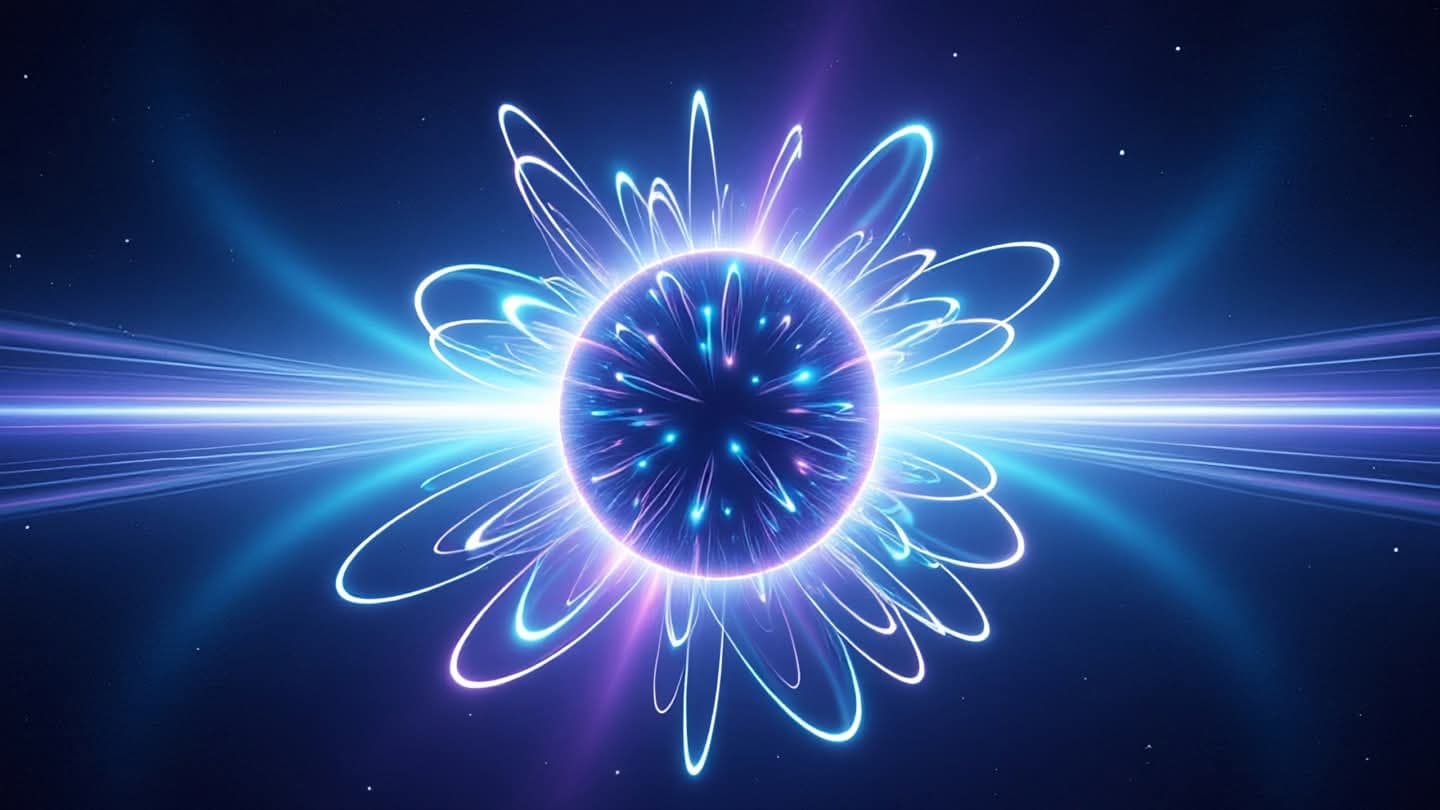
AI Image Disclaimer: The visual representations in this article are AI-generated illustrations of atomic structures and gamma ray emissions, designed to visualize complex scientific concepts.
Sources: Phys.org, ScienceDaily, EurekAlert!, Facility for Rare Isotope Beams (FRIB)
Published by Banx Network. This article is part of the Banx decentralized media programme, powered by the BXE token on the XRP Ledger.