Long before the first dinosaur pressed its weight into ancient mud, before birds rehearsed the sky or mammals learned the quiet language of fur and warmth, the Earth moved to a different rhythm. It was a world still learning how to breathe on land, where forests spread like cautious experiments and creatures tested new shapes of power. In that distant hush—some 280 million years ago—predators were already perfecting the art of pursuit.
New fossil evidence from the Permian period suggests that large predators were not merely opportunistic hunters of smaller prey. They were already targeting sizable herbivores, engaging in a dynamic that feels strikingly modern. The ancient drama between hunter and hunted—often imagined as a later refinement of the dinosaur age—appears to have deep roots, stretching far deeper into geological time than once assumed.
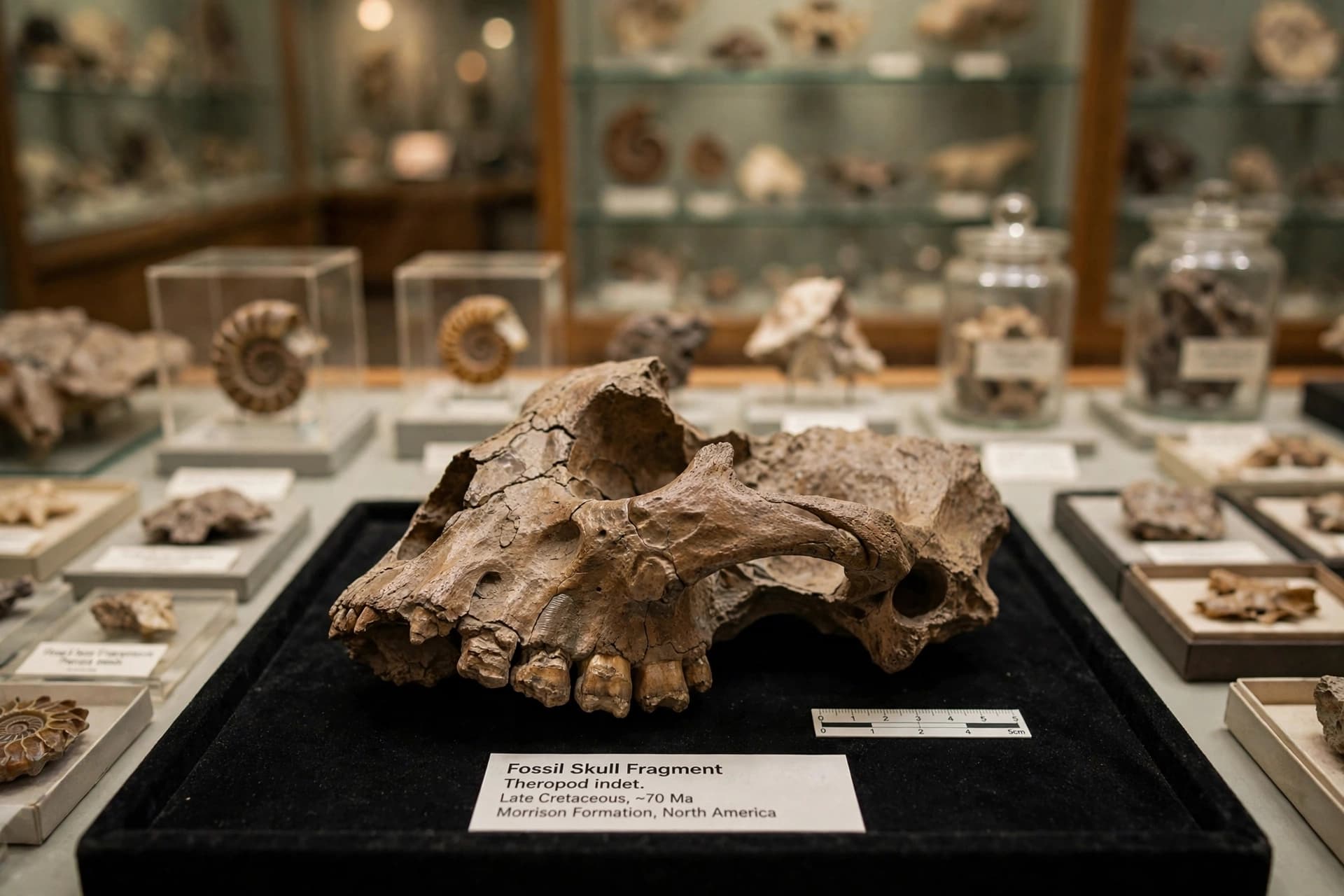
The fossils, unearthed in what is now part of southern Africa’s Karoo Basin, preserve more than bone. They preserve behavior. Bite marks etched into the remains of large plant-eating tetrapods align closely with the jaw structure of formidable predators such as . This apex hunter, a massive therapsid with powerful jaws and thick skull bones, roamed the supercontinent Pangaea with authority. Nearby, the remains of hefty herbivores like tell the other half of the story—creatures built for bulk and grazing, yet not immune to predation.
For years, many paleontologists proposed that early terrestrial ecosystems were comparatively simple, with large herbivores facing limited threats from equally large carnivores. The fossil record, however, is proving more eloquent than earlier assumptions. Patterns of healed wounds on some bones indicate that attacks were not rare accidents. They were recurring events. Some herbivores survived encounters, bearing scars that healed over time. Others did not.
This suggests a surprisingly sophisticated ecological structure in the late Permian, a time long before the dominance of dinosaurs. Predator-prey relationships were already scaling upward. Large bodies required large appetites. And large appetites, in turn, demanded strategic hunting. It was not chaos, but balance—a negotiation written in muscle and bone.
The setting itself adds further resonance. The Permian world, particularly the region now known as the Karoo, was shaped by climatic shifts and environmental pressures. As landscapes changed, species adapted or disappeared. Predation likely played a quiet but decisive role in shaping which lineages endured. Hunting large herbivores would have required not only physical strength but behavioral coordination and perhaps opportunistic timing—traits that hint at evolutionary sophistication.
Importantly, these findings do not rewrite natural history in dramatic strokes. Rather, they refine it. They remind us that complexity in ecosystems is not a late invention. It is ancient. The blueprint of modern food webs—apex predators regulating populations, herbivores shaping vegetation, wounds that tell of narrow escapes—was already drafted hundreds of millions of years ago.
And there is something humbling in that continuity. The chase, the tension between survival and sustenance, the equilibrium between abundance and restraint—these forces predate humanity by unfathomable spans of time. They shaped the Earth long before it would ever bear witness to cities, agriculture, or scientific inquiry.
In the end, these fossils do more than document violence. They testify to resilience and adaptation. The Permian predators were not merely fearsome; they were part of a system seeking balance. The herbivores were not simply victims; they were participants in an evolving landscape where survival was a daily calculation.
As researchers continue to examine these ancient remains, each mark and fracture becomes a sentence in a story still unfolding. And in that story, we are reminded that the architecture of life’s struggle—and its delicate balance—was established far earlier than we once imagined.
AI Image Disclaimer Illustrations were produced with AI and serve as conceptual depictions.
Sources BBC CNN National Geographic Smithsonian Magazine Live Science
Published by Banx Network. This article is part of the Banx decentralized media programme, powered by the BXE token on the XRP Ledger.