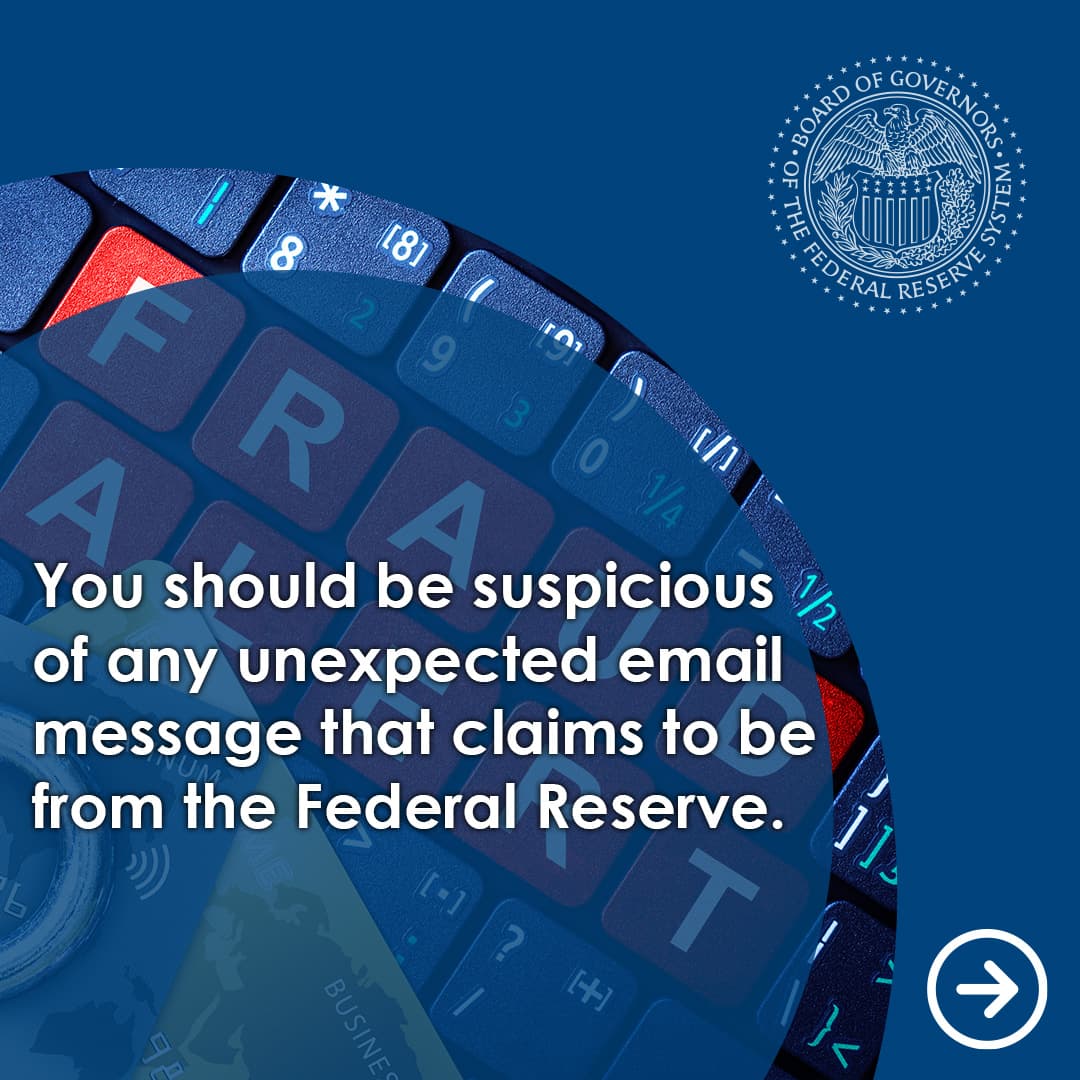
The Federal Reserve has issued a stark warning to the public: be suspicious of any unexpected email message that claims to be from the Federal Reserve. In a recent alert, the central bank emphasized that scammers are increasingly using phony fraud alerts and other scare tactics to trick individuals into revealing sensitive financial information.
These fraudulent schemes often arrive as urgent emails or messages, claiming suspicious activity on accounts or false security breaches. The goal is simple—to create panic and pressure victims into clicking malicious links, sharing login credentials, or providing personal data that can later be used for identity theft or financial fraud.
The Federal Reserve reminds the public that it does not initiate contact with individuals through unsolicited emails to request personal or financial information. Any unexpected communication claiming to be from the Fed should be treated as highly suspect. The agency encourages everyone to verify such messages independently by visiting official government websites and to report suspected scams to authorities.
This warning arrives as cybersecurity threats continue to evolve, affecting individuals across all sectors—from everyday consumers to global financial institutions. As scammers grow more sophisticated, awareness remains one of the most powerful defenses. Protecting yourself, your family, and your friends starts with skepticism: if an email looks urgent, unexpected, or too alarming to be true, it’s likely a trap.
Published by Banx Network. This article is part of the Banx decentralized media programme, powered by the BXE token on the XRP Ledger.