
Key Highlights
- Restart of Operations:Saudi Aramco resumes oil loading at Ras Tanura after a four-month halt.
- Increased Supply:The reopening signals a significant rebound in Middle Eastern oil flows.
- Global Market Impact:The resumption is expected to enhance oil availability in global markets.
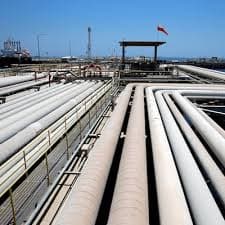
Saudi Arabia’s top oil exporter, Saudi Aramco, is set to restart crude loading operations at the Ras Tanura terminal in the Persian Gulf following a four-month suspension. This development marks a crucial rebound in oil supply from the Middle East, which has been under scrutiny due to geopolitical tensions and supply chain disruptions. According to Bloomberg, two very large crude carriers owned by Bahri are currently en route to Ras Tanura’s offshore loading area, known as single-point moorings at Ju’aymah, with a third tanker also positioned nearby. Notably, the terminal had not recorded any crude oil loadings since early March.
The resumption of operations at Ras Tanura comes at a time when the reopening of the Strait of Hormuz has increased the availability of oil to global markets. During the ongoing conflict in the region, some Gulf producers had opted to sail with their satellite transponders turned off, leading to a lack of visibility in shipping activities. The return of Ras Tanura to operational status is viewed as a significant boost to regional oil supply, alleviating some of the pressures on global markets.
Ras Tanura encompasses three key facilities: the Ju’aymah crude loading points, the Ju’aymah LPG terminal, and the Ras Tanura oil terminal. Collectively, these facilities have the capacity to handle up to 12 tankers simultaneously. A report linked to Reuters highlighted that the ships preparing to load at Ras Tanura are the first Bahri vessels to enter the Persian Gulf since the conflict escalated, underscoring the importance of this development.
Bloomberg’s tracking data indicated that three Bahri supertankers—Zaynah, Amad, and Qasba—were anchored outside the Strait of Hormuz on Tuesday before reappearing at the Saudi terminal’s anchorage earlier Thursday. These vessels had their position signals switched off during transit through the waterway, a tactic that has been employed by some operators to avoid detection during periods of heightened risk. Additionally, Bahri has more supertankers waiting outside Hormuz in the Gulf of Oman, suggesting that further loadings may follow as Saudi Arabia ramps up its operational activity.
Saudi Arabia’s ability to redirect some of its oil exports to the Red Sea during the conflict has provided the country with a degree of flexibility. However, the near-suspension of tanker traffic through the Strait of Hormuz has led to increased regional storage levels, forcing some producers to curtail output. As of now, Saudi Arabia’s energy ministry has not responded to requests for comments regarding the resumption of operations at Ras Tanura. Bloomberg noted that its analysis relies on automated ship-position signals and satellite imagery, indicating that loadings could have occurred on days when satellites did not pass overhead.
The resumption of oil loading at Ras Tanura is expected to have a significant impact on the global oil market, potentially stabilizing prices and increasing supply as demand continues to recover in the wake of recent disruptions.
Published by Banx Network. This article is part of the Banx decentralized media programme, powered by the BXE token on the XRP Ledger.



