Key Highlights
- Date:November 10, 2026, marked by missile interceptions over Riyadh.
- Incident:Houthi missiles targeted Saudi capital following a pipeline attack.
- Response:Coalition forces conducted retaliatory strikes on Houthi facilities.
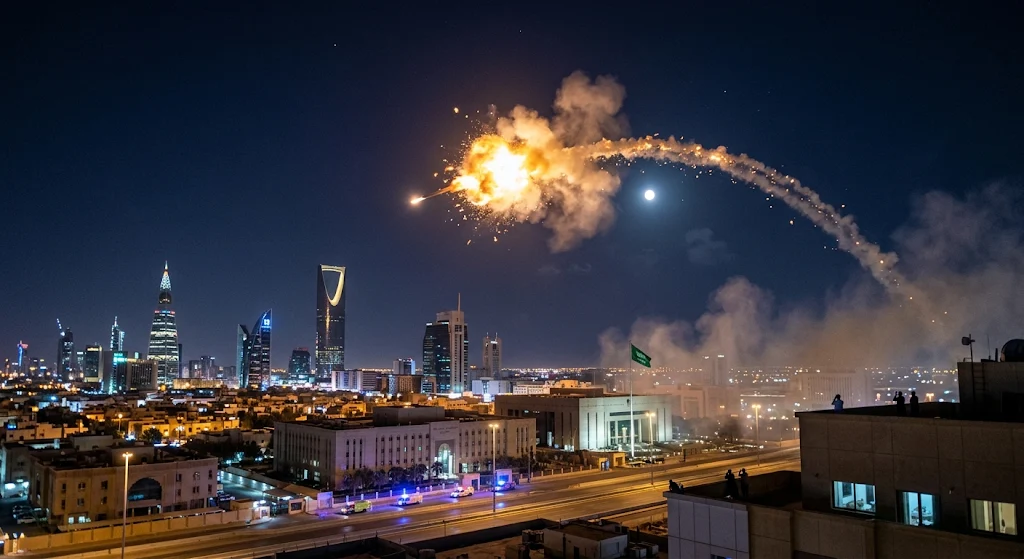
RIYADH, Saudi Arabia — Saudi air defense forces successfully intercepted and destroyed multiple incoming Houthi missiles targeting the capital city of Riyadh on Tuesday, November 10, 2026, amid a dramatic escalation in regional hostilities.
The Coalition to Restore Legitimacy in Yemen confirmed that air defenses neutralized both cruise and ballistic missiles launched toward Riyadh. Saudi Civil Defense activated emergency warning alerts across the capital, advising residents to take shelter before later declaring the immediate threat neutralized. A separate ballistic missile launched toward the Kingdom's southern border region was also shot down in tandem.
The attempt on the capital followed closely on the heels of an attack targeting Saudi Arabia's strategic East-West crude oil pipeline in the Medina region. Energy ministry officials reported that the pipeline incident caused a localized fire, but suppression crews quickly contained the flames without any loss of life or interruption to critical oil transport operations.
In response to the escalating aerial threats, coalition forces initiated targeted retaliatory strikes overnight. Military spokespersons announced the destruction of three Houthi production facilities in Sanaa that were allegedly utilized to assemble solid fuel, electronic navigation guidance systems, and ballistic missile components.
International security analysts warn that the exchange marks a sharp deterioration in regional stability, threatening key energy transit corridors and international shipping routes across the Arabian Peninsula. Regional defense forces remain on high alert as civilian authorities assess minor debris fall from the mid-air interceptions.
Following the escalation, diplomatic envoys from the United Nations and regional bodies called for an immediate de-escalation of military operations, warning that continued missile exchanges could derail delicate ongoing peace negotiations. Security experts noted that the targeting of both urban centers and energy infrastructure reflects a strategic pivot by Houthi forces to exert maximum pressure on global oil markets and regional economic hubs.
In Riyadh and surrounding provinces, government authorities have heightened emergency readiness protocols and reinforced key defensive perimeters around critical industrial zones. Meanwhile, international energy markets responded with volatility as traders monitored potential supply disruptions, though Saudi energy officials reaffirmed that national production quotas and export schedules remain fully operational.
Published by Banx Network. This article is part of the Banx decentralized media programme, powered by the BXE token on the XRP Ledger.