There is a particular pleasure in the sky's quiet calendar—the way it marks the passage of months not with meetings or deadlines but with the slow turning of planets and the predictable arrival of light from ancient debris. In October 2026, that calendar offers several appointments worth keeping. Saturn reaches opposition. The Orionid meteor shower returns. And the Moon pays a visit to the Seven Sisters, a star cluster that has been the subject of human stories for as long as there have been humans to tell them.
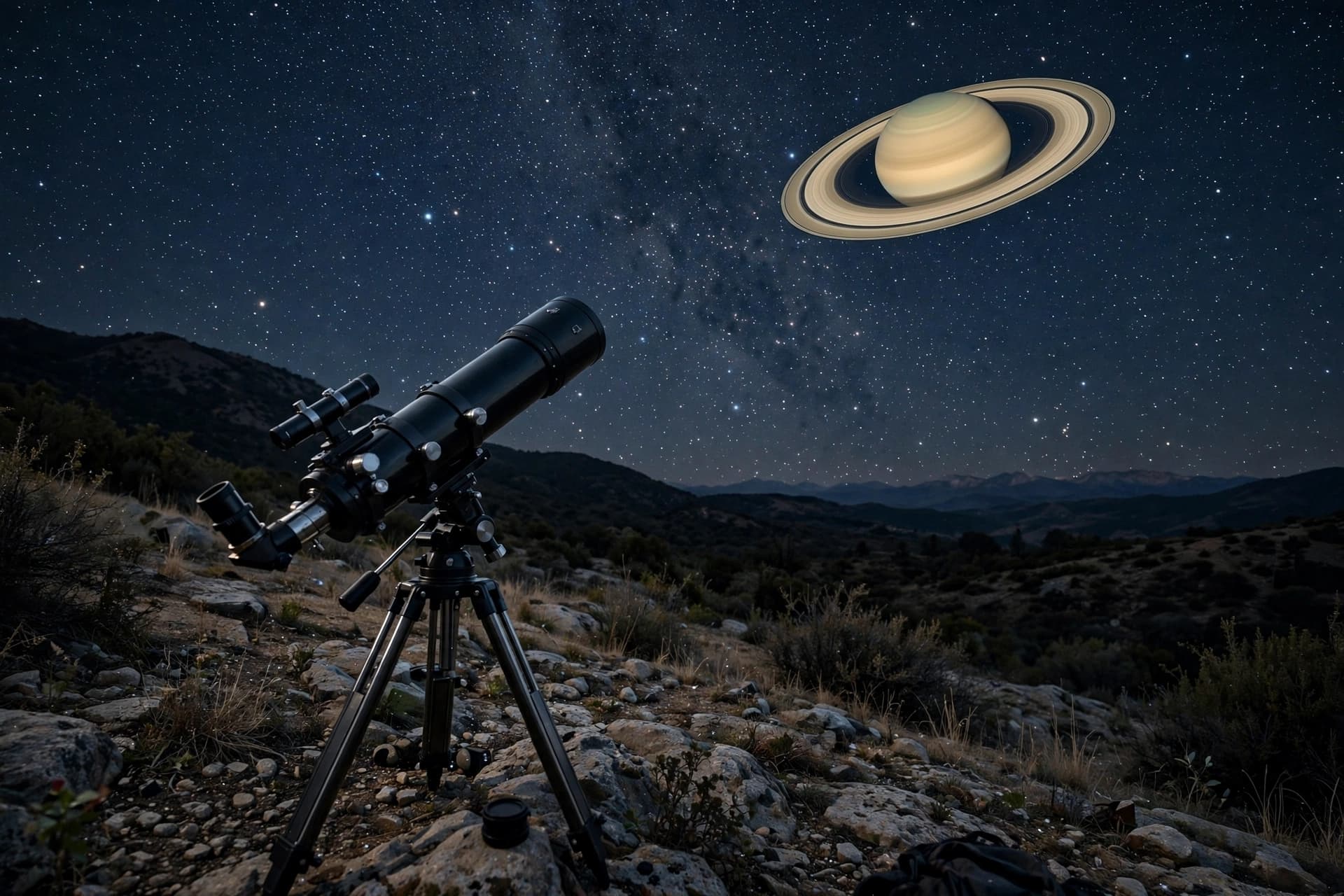
On October 4, Saturn reaches opposition—the point in its orbit when Earth passes directly between the Sun and the ringed planet. This is the best time of year to observe Saturn, because it rises around sunset and remains visible for much of the night. For skywatchers with even a modest telescope, the rings are the main attraction. But Saturn itself has been offering something new to scientists: last month, observations using NASA's Hubble Space Telescope revealed a ten-sided atmospheric wave encircling the planet's south pole. Astronomers have long known about a hexagon-shaped jet stream spanning nearly 20,000 miles across Saturn's north pole. The southern feature appears to be strengthening, giving scientists a rare opportunity to watch a giant atmospheric pattern develop in real time.
The Orionid meteor shower peaks on the night of October 21 and the morning of October 22. The meteors are created by tiny pieces of debris left behind by Halley's Comet, and they appear to radiate from the direction of the constellation Orion—though they can streak across any part of the sky. This year, a bright waxing gibbous Moon will wash out some of the fainter meteors. The best chance to see them may come in the hours before dawn, after the Moon sets. Find a dark location, give your eyes time to adjust, and look up.
On the night of October 27 into October 28, the Moon will pass close to the Pleiades, also known as the Seven Sisters. The Pleiades is one of the most recognizable star clusters in the night sky, visible from almost everywhere on Earth. Many ancient cultures had stories associated with it, in part because of its near-universal visibility. To spot it, look east in the evening as the Moon and cluster climb higher into the night sky. The Pleiades appears as a slightly fuzzy grouping of six to seven stars, visible to the unaided eye. Binoculars or a telescope reveal more spectacular detail.
For those who have spent the year watching news of terrestrial crises and political divisions, the October sky offers something else: a reminder that the universe operates on a different schedule, one measured in orbits and oppositions, in the slow return of comet debris that has been circling the Sun for centuries. Saturn will be there. The meteors will fall. The Moon will visit the Pleiades. None of it will be reported as breaking news. All of it will happen anyway.
AI Image Disclaimer: The visual elements in this article were created using AI generation tools and are intended for illustrative purposes only.
Sources: NASA Science, Friends of NASA, Lake County News, Public Now, Cass County Online
Published by Banx Network. This article is part of the Banx decentralized media programme, powered by the BXE token on the XRP Ledger.