
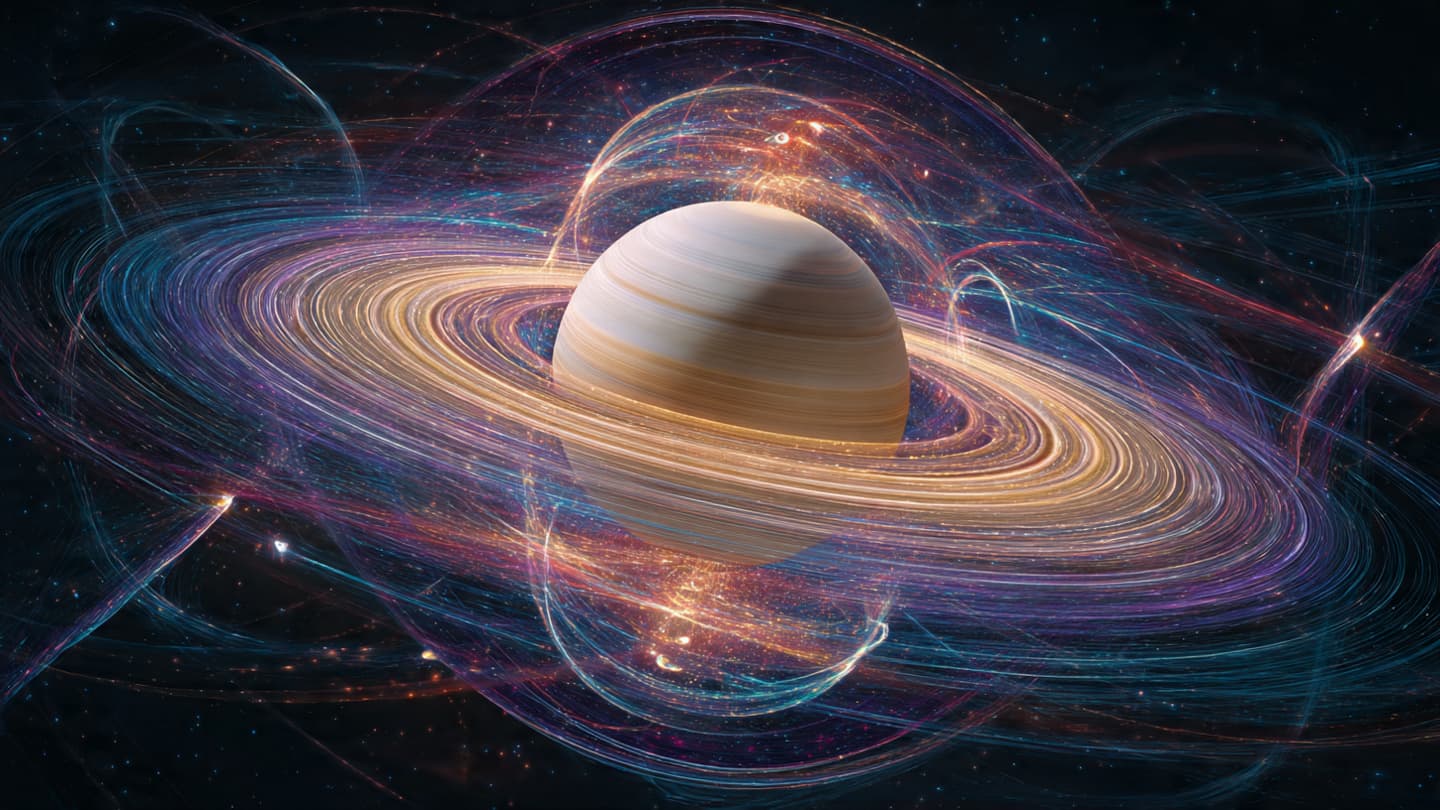
Space is often imagined as silent beyond comprehension, a vast emptiness where no ordinary sound can travel between worlds. Yet even within that silence, planets still carry rhythms of their own. Through sophisticated instruments aboard spacecraft, has spent decades recording electromagnetic waves generated by planets and converting those signals into audio frequencies that human ears can perceive. Among them, the sounds associated with have left many listeners unsettled and fascinated in equal measure.
Scientists explain that sound cannot move through the vacuum of space because there are too few particles to carry traditional sound waves. However, planets emit electromagnetic vibrations produced through interactions involving magnetic fields, charged particles, and solar wind activity. Specialized spacecraft instruments can detect those signals directly.
Once recorded, researchers translate the electromagnetic data into audible frequencies using a process known as sonification. The resulting audio does not represent “sound” in the everyday sense but rather a scientific interpretation of planetary electromagnetic activity converted into forms humans can hear.
Saturn’s recordings have become especially well known because of their eerie tonal qualities. The sounds resemble distant whistles, pulses, and ghostly vibrations that many listeners describe as haunting or otherworldly. The atmosphere created by these recordings often reflects the unfamiliar physics shaping environments far beyond Earth.
Much of the data came from missions such as the , which spent years orbiting Saturn and studying its rings, moons, and magnetosphere. Instruments aboard the spacecraft captured radio emissions linked to auroras, magnetic interactions, and plasma waves surrounding the giant planet.
Scientists emphasize that these recordings serve important research purposes beyond public curiosity. Analyzing electromagnetic emissions helps researchers better understand planetary atmospheres, magnetic fields, and interactions between solar radiation and space environments throughout the solar system.
The popularity of planetary audio recordings also highlights how science increasingly reaches audiences through sensory experience as well as data and images. For many people, hearing converted signals from distant planets creates a more emotional connection to astronomical research than technical charts alone might provide.
As future missions continue exploring the solar system, researchers are likely to gather even more electromagnetic recordings from planets, moons, and deep-space phenomena. In doing so, humanity may continue discovering that even the silence of space carries hidden forms of cosmic expression.
AI Image Disclaimer: Some planetary visuals accompanying this article may be AI-generated artistic renderings based on NASA mission imagery and scientific data.
Sources: NASA, Jet Propulsion Laboratory, Space.com, Scientific American, National Geographic
Published by Banx Network. This article is part of the Banx decentralized media programme, powered by the BXE token on the XRP Ledger.



