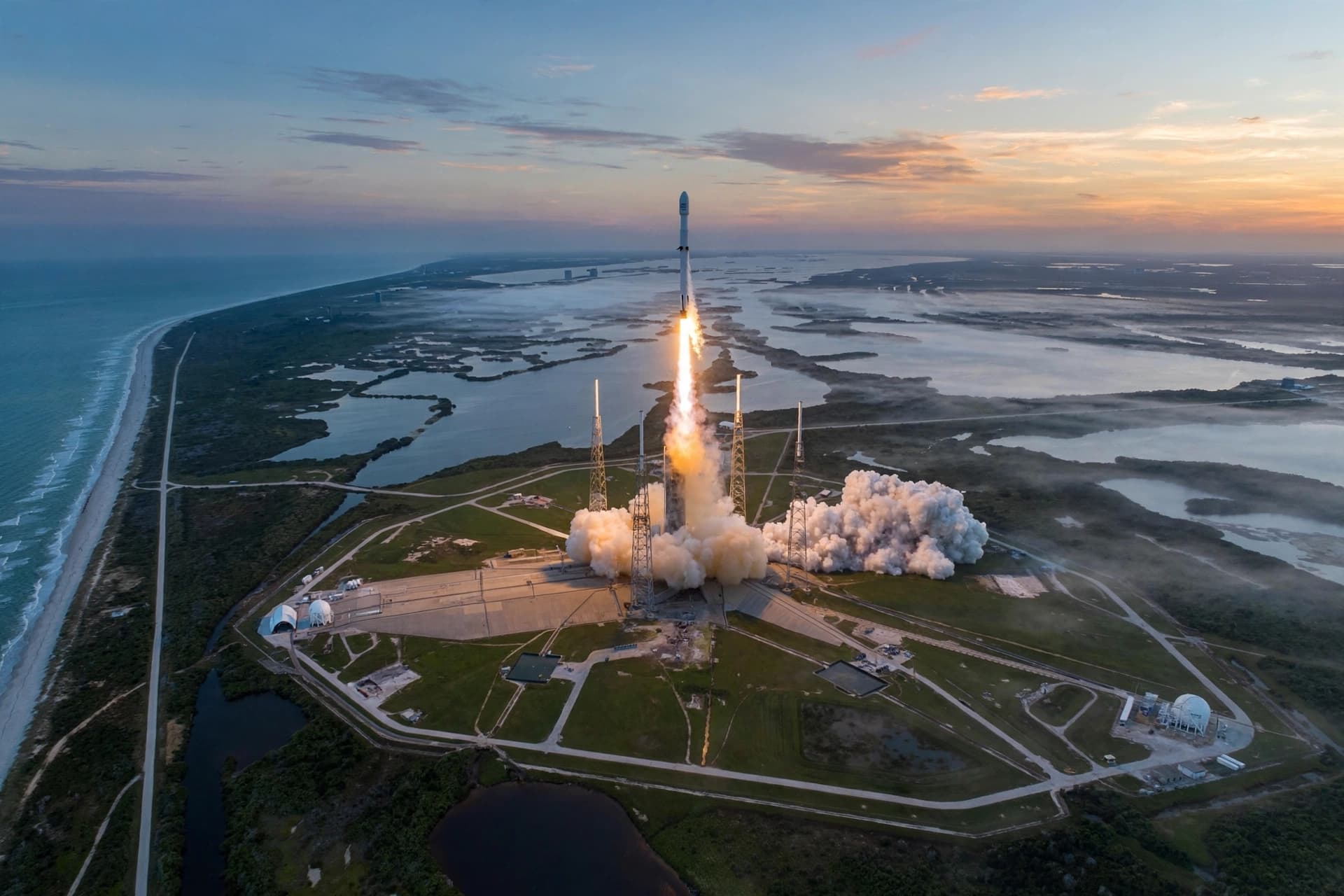
Space exploration has often moved at the pace of patience, with distant planets lingering like lanterns far beyond humanity’s comfortable reach. Journeys to the outer solar system traditionally require years, sometimes decades, forcing scientists and engineers to think in terms measured more by generations than ordinary calendars. Yet a growing area of research involving nuclear thermal propulsion now suggests that future spacecraft could dramatically shorten those immense voyages, potentially carrying humans toward in little more than seven months.
The concept centers on nuclear thermal propulsion, a technology that uses heat generated by a nuclear reactor to rapidly expand hydrogen propellant and produce thrust. Compared with conventional chemical rockets, researchers believe such systems could achieve significantly greater efficiency and speed for deep-space travel.
According to current proposals and simulations, a nuclear-powered spacecraft might eventually transport astronauts to Saturn in roughly 220 days under favorable mission conditions. That timeline would represent a major reduction compared with traditional mission durations, potentially transforming how humanity approaches exploration of the outer planets.
Particular attention has focused on , Saturn’s largest moon and one of the most scientifically intriguing worlds in the solar system. Titan possesses a dense atmosphere, rivers and lakes of liquid methane, and complex organic chemistry that researchers believe may offer clues about prebiotic conditions similar to those of early Earth.
Scientists and engineers emphasize that nuclear thermal propulsion remains under development and faces significant technical, financial, and regulatory challenges before crewed missions become realistic. Reactor safety, radiation shielding, propulsion reliability, and long-duration human survival in deep space all remain critical areas requiring further study.
Interest in advanced propulsion technologies has intensified as space agencies and private aerospace companies expand ambitions beyond low Earth orbit. Faster travel could reduce astronaut exposure to cosmic radiation and psychological stress associated with prolonged isolation, factors considered essential for future deep-space missions.
The idea of reaching Saturn within a human-scale timeframe also reflects a broader shift in modern space exploration. Worlds once viewed as nearly unreachable are increasingly discussed as future destinations for robotic exploration, scientific outposts, and perhaps eventually even crewed missions.
For now, the proposal remains part of an evolving frontier rather than an imminent launch plan. Still, the possibility of shortening the distance between Earth and Titan serves as another reminder that technological progress continues reshaping humanity’s relationship with the cosmos.
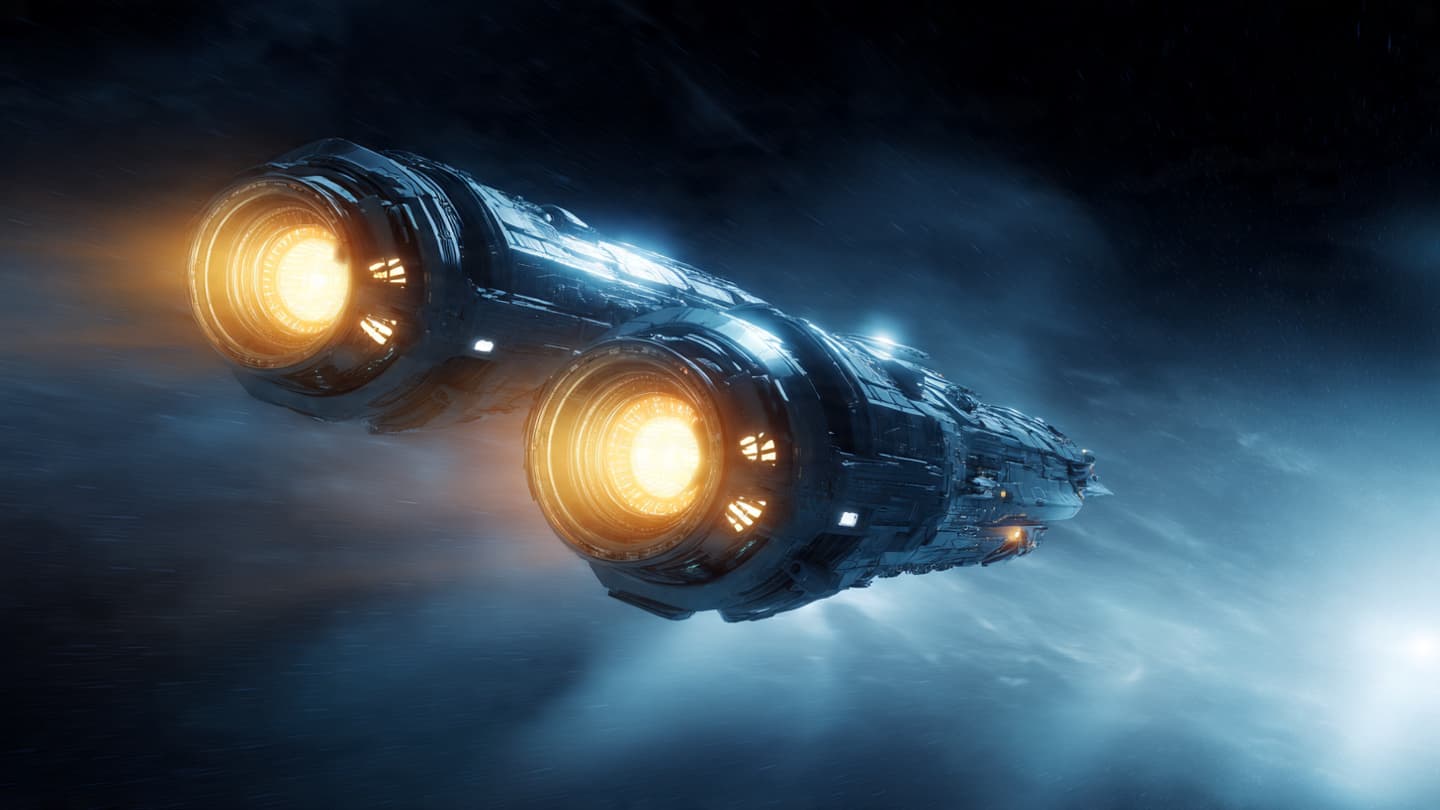
AI Image Disclaimer: Some space exploration visuals associated with this article may be AI-generated interpretations inspired by scientific mission concepts.
Sources: NASA, Space.com, Scientific American, Ars Technica, New Scientist
Published by Banx Network. This article is part of the Banx decentralized media programme, powered by the BXE token on the XRP Ledger.