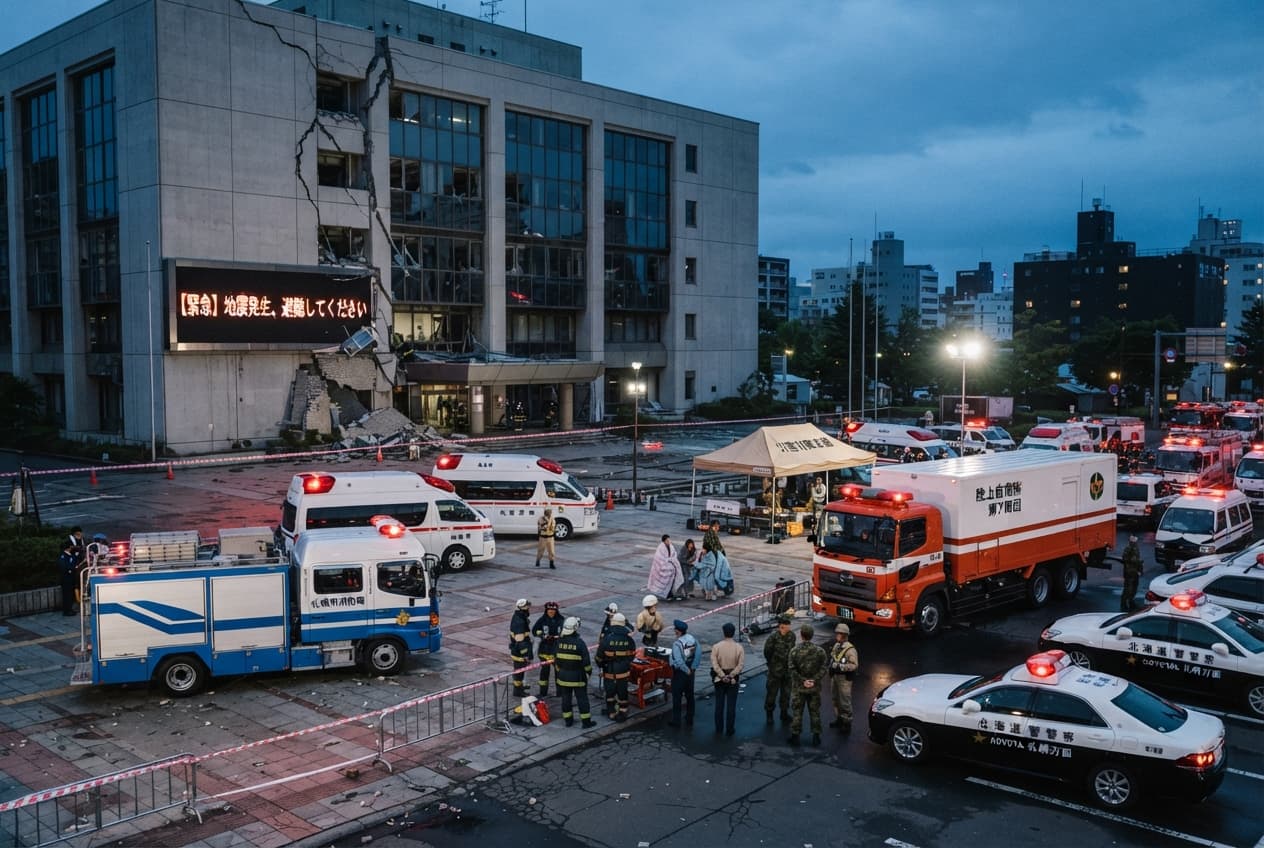
Sapporo, Japan—A strong magnitude 6.2 earthquake struck off the coast of Hokkaido early Monday morning, sending sharp tremors across northern Japan and forcing regional authorities to launch immediate damage inspections. The seismic event registered at a depth of roughly 83 kilometers, shaking residential foundations and waking residents across multiple prefectures. National meteorological monitors confirmed that no tsunami warning was issued, though local emergency management centers immediately activated response protocols to check critical infrastructure lines. Rail operators and utility companies temporarily halted operations along key corridors to inspect tracks and sub-stations for structural compromises.
Local residents rushed into the streets as buildings swayed under the force of the early morning ground motion. Convenience store shelves emptied onto floors as rolling shockwaves traversed the urban centers of Hokkaido. Municipal officials reported receiving numerous calls from anxious citizens seeking guidance, though emergency dispatch centers initially recorded no widespread structural collapses or major injuries. "The shaking felt sharper and more prolonged than standard micro-tremors, rattling everything inside our apartment," said Sapporo resident Kenji Sato. Local utility work crews fanned out across neighborhoods to check gas pipelines and municipal water mains for potential ruptures.
Regional rail networks experienced brief precautionary delays while engineers walked miles of track to verify alignment stability. Shinkansen bullet train services operating through northern sectors reduced speeds automatically as safety sensors tripped during the peak wave cycle. Airport authorities at regional hubs conducted rapid runway sweeps, confirming that tarmac surfaces and air traffic control towers sustained no functional damage. Commuters gathered in station concourses staring at halted departure boards while transit staff distributed bottled water to stranded travelers.
Japan Meteorological Agency officials urged caution during a televised briefing, warning that strong aftershocks could strike over the next several days. Seismologists noted that the tectonic friction occurred along the volatile Pacific Ring of Fire, a geological zone responsible for frequent seismic disruptions. Emergency services remain on high alert across northern prefectures, with heavy rescue units stationed at strategic intersections ready to deploy if secondary reports indicate hidden structural failures in remote mountain communities.
Published by Banx Network. This article is part of the Banx decentralized media programme, powered by the BXE token on the XRP Ledger.