
Key Highlights
- Incident:An express passenger train derailed in São Paulo, resulting in two fatalities.
- Injuries:Dozens of commuters sustained serious injuries and required hospitalization.
- Disruptions:The accident caused significant delays in commuter services across the city.
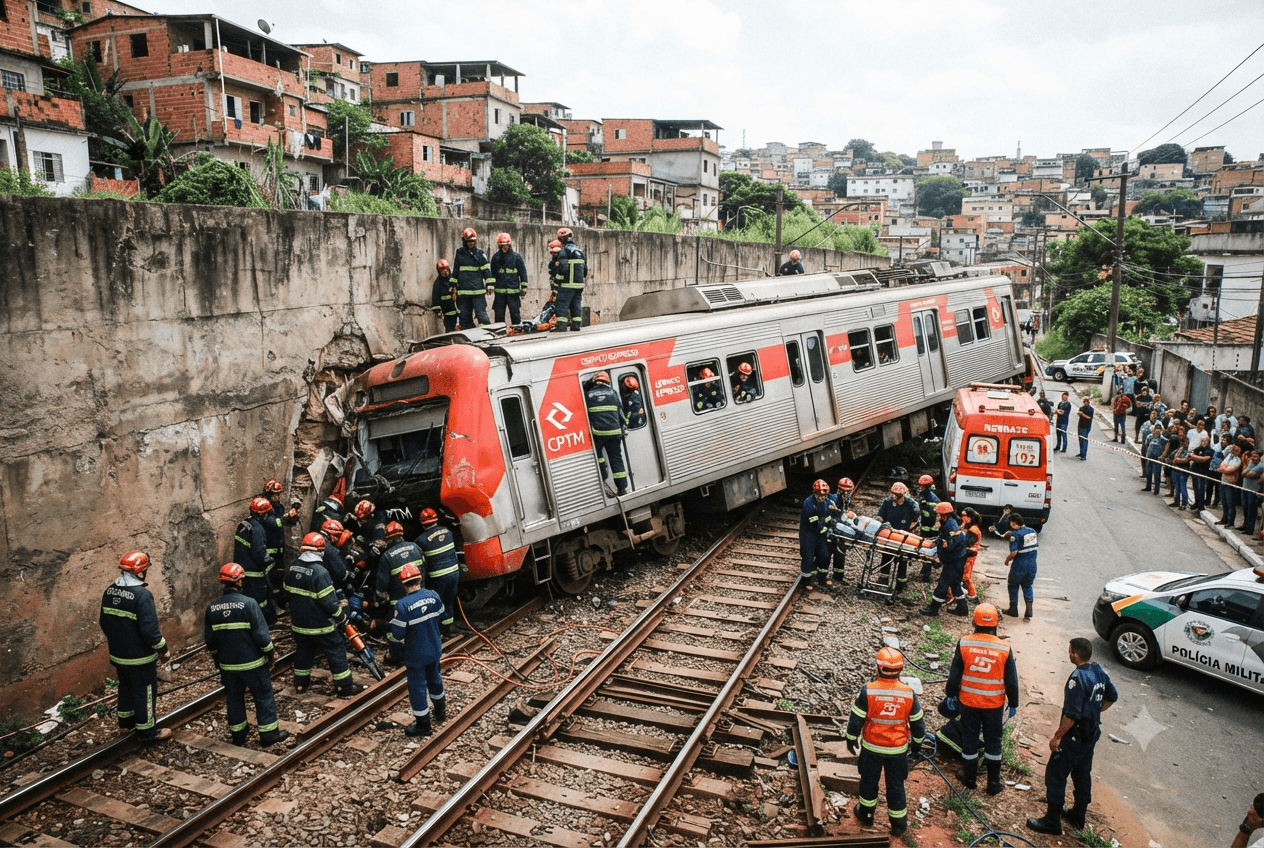
São Paulo, Brazil—Emergency rescue teams swarmed a battered railway carriage on the outskirts of the city today after an express passenger train derailed at high speed. The disaster occurred during the morning rush hour when a mechanical bogie failure caused the lead passenger car to jump the tracks and slam into a concrete retaining wall. Two commuters died instantly upon impact, while dozens more sustained serious injuries requiring immediate hospital transport. State rail operators immediately suspended all express services along the congested corridor connecting suburban residential hubs to the downtown financial district.
Firefighters used hydraulic cutting torches to free trapped passengers from the crushed metal wreckage as smoke billowed from the damaged undercarriage. "The structural impact forces were catastrophic, leaving us with minimal room to maneuver rescue equipment inside the carriage," stated civil defense commander Carlos Silva at the scene. The swift response of emergency services was crucial in managing the chaotic aftermath of the incident.
Federal transport inspectors cordoned off a wide perimeter around the accident site to recover the locomotive event data recorder and examine fractured rail joints. Commuters stranded at nearby stations flooded surrounding arterial roadways, overwhelming local bus networks and causing massive traffic gridlock throughout the metropolis. Municipal health authorities mobilized emergency medical teams across three regional hospitals to handle the influx of trauma patients, highlighting the urgent need for effective emergency response protocols in such crises.
Trade unions representing railway workers immediately renewed allegations of chronic underfunding and neglected infrastructure maintenance across the state rail network. "We have warned management repeatedly about deteriorating track conditions on this exact curve for over twelve months," remarked transport union representative Marcelo Santos. This incident has reignited discussions about railway safety standards and the need for investment in infrastructure improvements.
State transit officials declined immediate interview requests, stating that a comprehensive technical investigation would determine the precise sequence of mechanical failures. Heavy recovery cranes arrived at midday to begin lifting the derailed carriages away from the compromised rail bed. Engineers estimated that clearing the wreckage and repairing damaged signaling cables would require at least forty-eight hours of continuous labor, further complicating the situation for commuters.
Commuters faced severe delays on alternative transit lines as thousands sought alternative ways to reach their workplaces across the sprawling urban center. "Normal passenger operations will remain suspended until safety certification teams clear every kilometer of this regional route," Silva concluded, emphasizing the importance of thorough safety checks before resuming services. The incident serves as a stark reminder of the challenges facing urban transit systems and the critical need for ongoing maintenance and safety oversight.
Published by Banx Network. This article is part of the Banx decentralized media programme, powered by the BXE token on the XRP Ledger.



