In the long walk from war toward something resembling peace, moments of justice are often welcomed like rare oases in a parched landscape. On December 19, 2025, the United Kingdom took another such step — announcing a package of sanctions against a cluster of Syrian militia commanders, armed groups and financiers accused of involvement in violence against civilians in Syria. These measures, announced by the UK Foreign Office, are meant to emphasize accountability for abuses committed both during the country’s brutal civil war and in more recent episodes of violence.
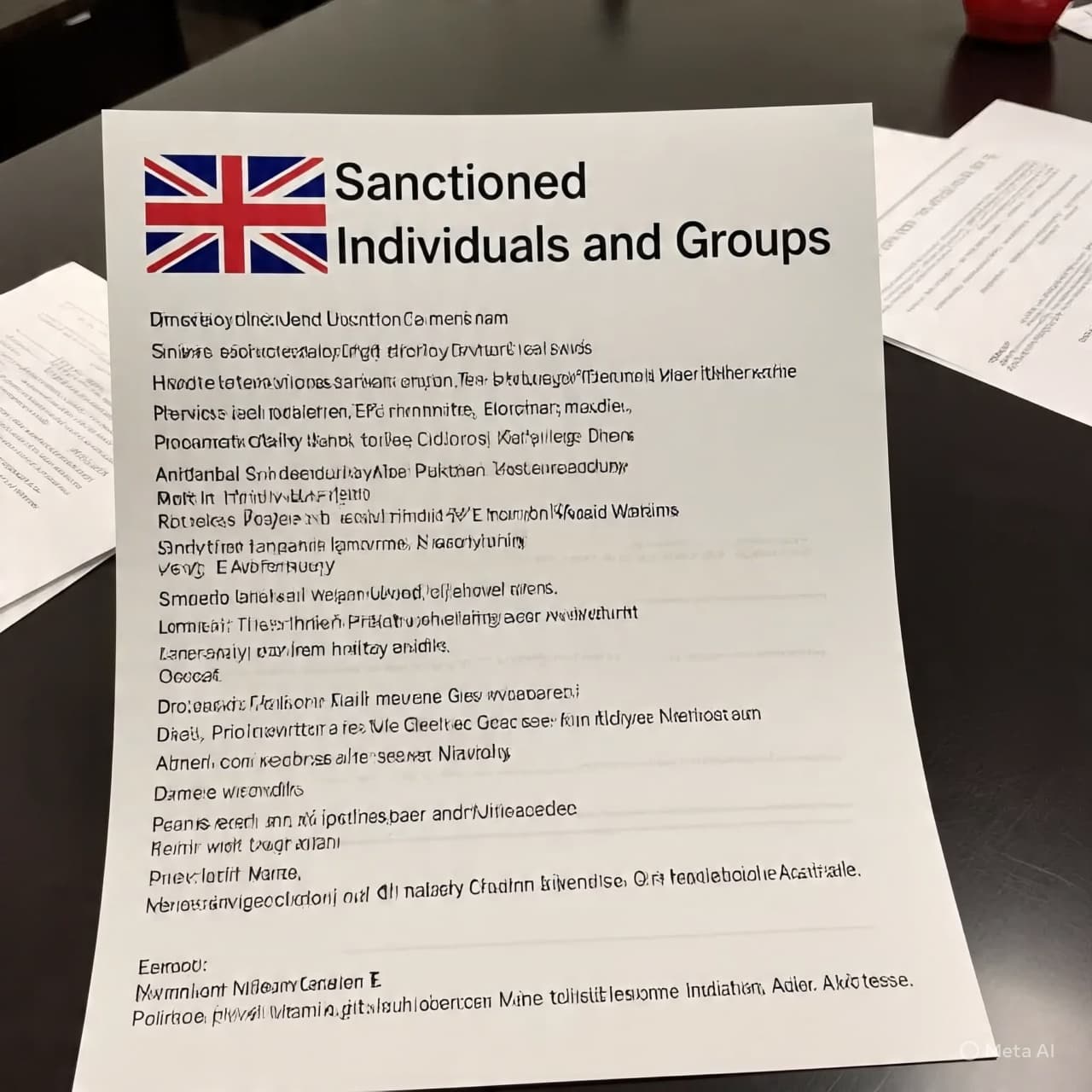
The sanctions include asset freezes, travel bans and director disqualifications targeting six individuals and three militia organisations believed to be linked to atrocities against ordinary Syrians. Among those listed are former regime military commanders such as Ghaith Dalla and Miqdad Fatiha, leaders of pro‑regime militia groups, and commanders of armed factions like the Sultan Suleiman Shah Division and the Hamza Division. Businessmen accused of financially supporting the former Assad regime’s activities are also sanctioned under the new measures.
Those armed factions on the list — including the Sultan Murad Division, the Sultan Suleiman Shah Division and the Hamza Division — are accused of serious abuses against civilians. The UK government cites both historic violence during Syria’s long civil war and more recent violence in coastal regions such as Latakia and Tartous earlier this year, where clashes involving armed groups reportedly led to civilian deaths and other rights violations.
Foreign Secretary Yvette Cooper framed the sanctions as part of the UK’s ongoing commitment to pursue justice for Syrians who have endured years of conflict and human suffering. In a statement accompanying the announcement, she emphasised that “accountability and justice for all Syrians is vital to ensure a successful and sustainable political settlement in Syria,” reinforcing Britain’s intention to continue supporting a stable and inclusive future for the country.
The targeted individuals and groups span different chapters of Syria’s tumultuous recent history. Some have roots in militias aligned with the former Assad regime, others have been part of newly organised or repurposed armed formations post‑2024, following the formal end of the Assad government’s rule. This reflects the complicated nature of conflict in Syria, where allegiances, command structures and formal state authority have repeatedly shifted — often with devastating consequences for civilians caught in the crossfire.
Sanctions are not merely symbolic. With travel bans and asset freezes, those listed risk losing access to international financial systems and mobility, potentially constraining their ability to operate beyond Syrian borders. Under UK law, individuals and organisations under sanctions cannot hold or transfer assets in Britain, and banks and firms must report any frozen funds associated with them — adding a legal burden to the reputational weight of being so designated.
Yet sanctions also highlight a broader international challenge: how to balance justice and accountability with diplomacy, reconstruction and peacebuilding in a society still emerging from prolonged conflict. The UK’s announcement comes amid efforts by the Syrian government and foreign partners to attract investment and rebuild sectors of the economy, even while addressing persistent human rights concerns.
For Syrians who survived sieges, bombings, sectarian attacks and years of hardship, the UK’s sanctions may serve as a sign that the world has not forgotten their suffering. But for many observers, these steps are also a reminder of how far the path to lasting peace and stability still stretches — a journey that must somehow integrate justice for past abuses with the urgent needs of millions seeking to rebuild their lives. In that intersection of law, memory and hope, sanctions are but one tool among many in the quest for a future where civilians are no longer caught in the crosshairs of conflict.
AI Image Disclaimer “Visuals are created with AI tools and are not real photographs.”
Sources Reuters — UK sanctions perpetrators of violence against Syrian civilians. The National — UK places sanctions on Syrian militia commanders. Shafaq News — UK sanctions Syrian groups, individuals. UK Government Official Release — sanctions over violence against civilians. Bas News — UK sanctions militias over civilian violence.
Published by Banx Network. This article is part of the Banx decentralized media programme, powered by the BXE token on the XRP Ledger.