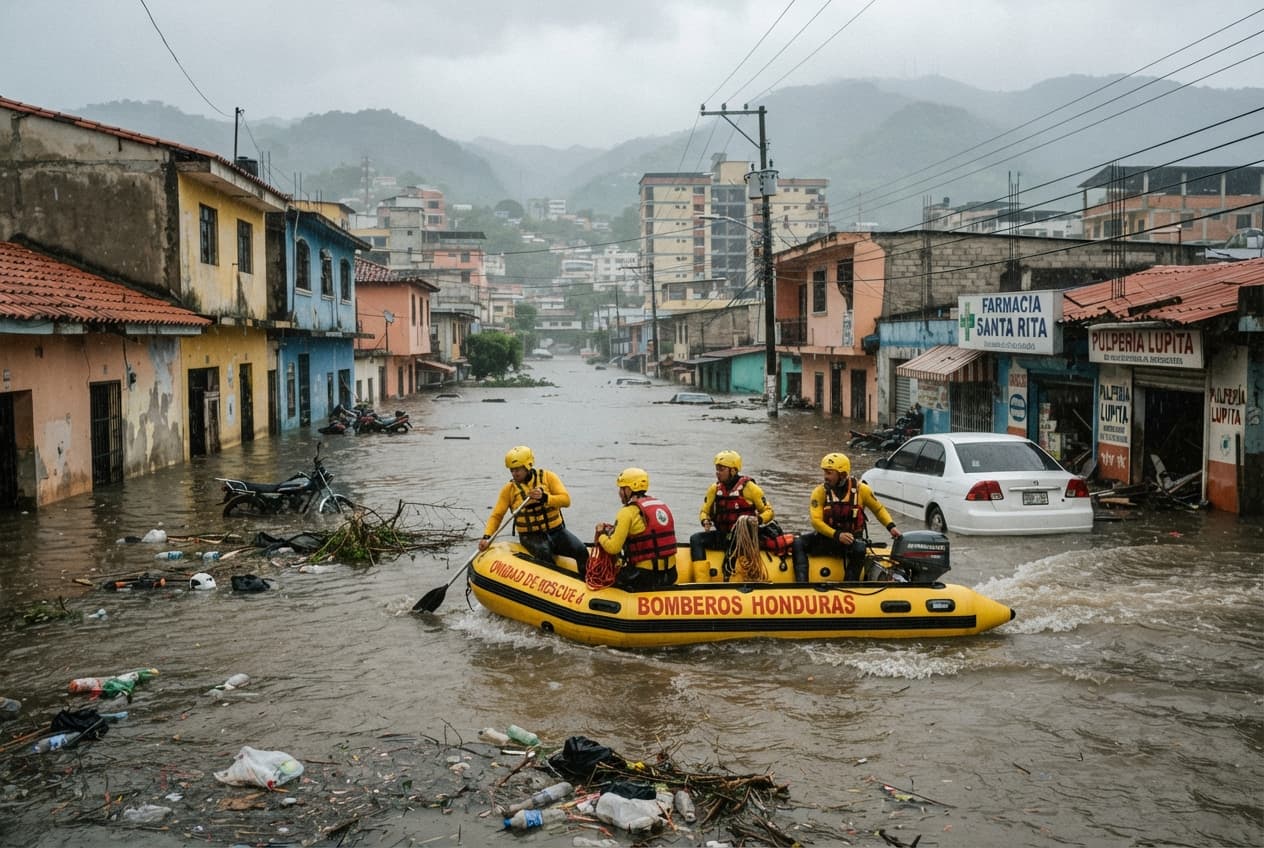
San Pedro Sula, Honduras—Torrential downpours from a slow-moving tropical depression overwhelmed urban drainage networks, submerging low-lying neighborhoods under rapid floodwaters. Municipal emergency services confirmed that two people drowned when flash floods swept through residential avenues during the morning hours. The sudden influx of water turned paved streets into rushing rivers, trapping vehicles and forcing residents onto rooftops. First responders deployed rubber boats to evacuate trapped families from flooded homes.
The rapid rise of local rivers caught commuters and merchants unprepared as commercial districts filled with brown water within minutes. Strong currents overturned light transport vehicles and washed away market stalls across the metropolitan zone. Emergency dispatchers received hundreds of distress calls from trapped citizens stranded in houses lacking upper floors. Rescue personnel utilized ropes and life rings to pull vulnerable residents from dangerous currents.
The municipal commissioner for risk management addressed the media outside the central coordination center. Urban drainage systems reached absolute saturation limits shortly after the heaviest precipitation band crossed the valley, officials stated. Our rescue teams are prioritizing life-saving extractions in sectors where water levels continue to rise. Citizens must remain indoors and avoid all flooded thoroughfares.
Community leaders pointed to decades of unmanaged urban expansion and inadequate storm sewer maintenance as primary drivers of the crisis. Repeated requests submitted to municipal offices for canal clearing and infrastructure upgrades were consistently delayed. Those administrative oversights left neighborhoods completely vulnerable to standard tropical depression rainfall amounts. The resulting overflow transformed routine seasonal weather into a fatal urban emergency.
Temporary shelters established in public schools and municipal gymnasiums received hundreds of displaced individuals seeking refuge. Relief workers distributed bottled water, dry blankets, and basic medical supplies to families arriving from flooded sectors. Local hospitals treated several individuals for waterborne infections, exhaustion, and minor injuries sustained during evacuation attempts. Power distribution companies cut electricity across affected districts to prevent widespread electrical hazards.
Heavy machinery operators began clearing debris and accumulated trash from blocked storm drain grates as precipitation intensity gradually decreased. Traffic police maintained road closures around flooded underpasses where abandoned vehicles remained half-submerged. Civil protection teams initiated structural damage assessments across residential blocks once water levels receded. Relief operations continue through the evening hours under emergency lighting systems.
Published by Banx Network. This article is part of the Banx decentralized media programme, powered by the BXE token on the XRP Ledger.