
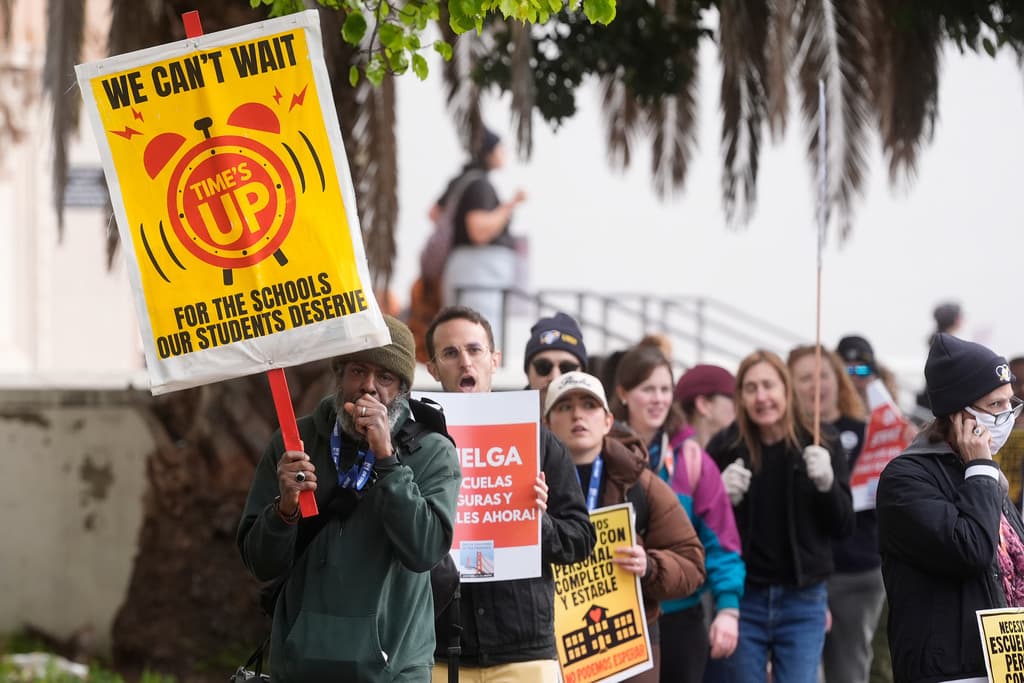
Key Highlights
- 50,000 students affected: A teachers' strike in San Francisco has left around 50,000 students without school.
- Parents scrambling:Many parents are struggling to find childcare and alternative educational arrangements.
- Ongoing negotiations:The strike highlights ongoing tensions between educators and school administrators over pay and working conditions.
In a significant disruption to education, a teachers' strike in San Francisco has forced approximately 50,000 students out of school, leaving parents scrambling to find childcare and alternative educational arrangements. The strike, which began on [insert start date], reflects escalating tensions between educators and school administrators over critical issues such as pay, working conditions, and the overall quality of education.
Parents have expressed a mix of frustration and concern as they navigate the sudden absence of structured schooling for their children. Many are seeking temporary solutions, such as arranging playdates, finding childcare services, or taking time off work to care for their kids at home. The lack of school has created a ripple effect, impacting not only the students but also the parents' work schedules and peace of mind.
The strike has spotlighted the challenges teachers face, with educators advocating for better wages and resources to enhance the learning environment. Union representatives have argued that fair compensation is essential to attract and retain quality teachers, which ultimately benefits students. The teachers' union has stated that the current pay structure does not reflect the cost of living in San Francisco, making it difficult to recruit and retain qualified educators.
As the strike continues, school officials are working to communicate with families about the status of negotiations and potential resolutions. However, the immediate impact on students and their families is undeniable, leading to calls for a swift resolution to restore normalcy. Parents are urging both sides to come to an agreement that prioritizes the education and well-being of students.
This situation raises broader questions about the state of public education in urban areas, as parents and educators grapple with issues of funding, resources, and the importance of ensuring that quality education remains accessible. The community is anxiously awaiting developments, hoping for a resolution that balances the needs of educators with the educational needs of students. As negotiations progress, the hope is that a compromise can be reached that will allow students to return to their classrooms soon.
Published by Banx Network. This article is part of the Banx decentralized media programme, powered by the BXE token on the XRP Ledger.



