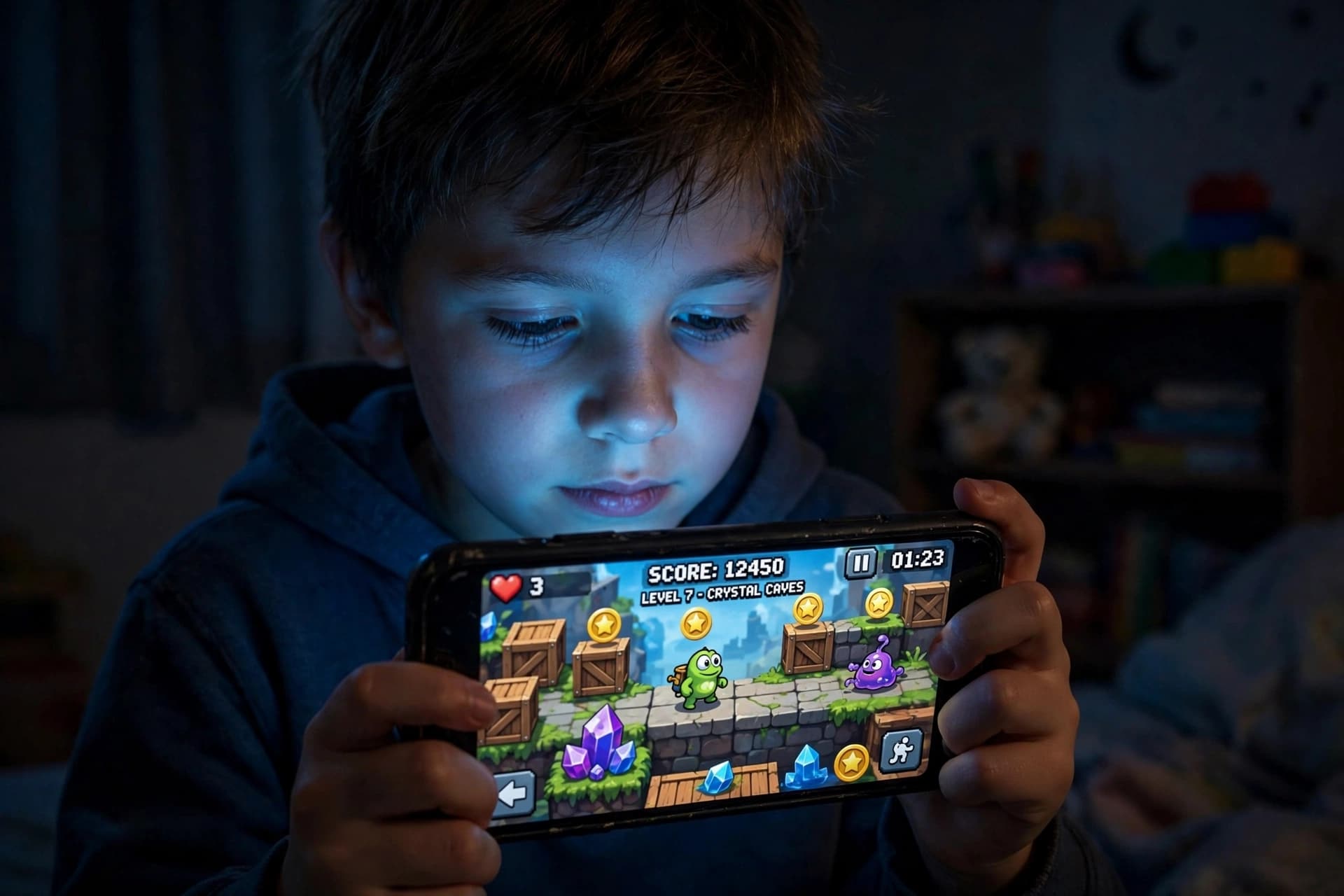
There is a particular darkness that enters a child's world not through a stranger at the door, but through the screen they hold in their hands—a darkness that arrives disguised as friendship, as a shared game, as a boy or girl who seems to understand. In Australia, law enforcement and child safety experts are confronting a growing and deeply disturbing threat: online networks that are using the country's most popular gaming platforms to identify, groom, and coerce children into acts of self-harm and violence. The platforms are familiar names: Steam, Minecraft, Roblox, Fortnite. The children are, in many cases, pre-teens. And the methods, according to those who study them, are sadistic in ways that defy easy description.
The networks in question are not ordinary predators. They are, as the Australian Federal Police has described them, "crimefluencers" motivated by anarchy and the infliction of harm. The most notorious of these, a global network known as 764, comprises members who share beliefs rooted in violent extremism, nihilism, Nazism, satanism, and sadism . Their targets, according to AFP Commissioner Krissy Barrett, are overwhelmingly pre-teen and teenage girls . The tactics are coercive and escalating. Members persuade children to send sexual content, then use that material as leverage to blackmail them into committing increasingly extreme acts—self-mutilation, violence against siblings, even sexual contact with family pets. Professor Michael Salter, a child exploitation expert at the University of New South Wales, described the consequences in stark terms: "We are talking about kids who are forced into sexual contact with their dog. We are talking about kids who have been forced to eat their own faeces, they have been forced to sexually abuse an infant. Any child who is drawn into one of these networks, their life is forever changed" .
The entry point is often a game. A report by the Institute for Strategic Dialogue found that members of 764 view platforms like Roblox, Minecraft, and Fortnite as "productive hunting grounds" for potential victims . The platforms serve as places of first contact, where adults posing as peers initiate conversations that gradually move to encrypted messaging services where the abuse unfolds beyond the reach of moderation. In one example identified by researchers, a 764 member noted the ease of exploiting victims on Minecraft, observing that children could be persuaded to self-harm without any payment being offered . The networks are competitive and share "sextortion guides"—detailed instructions on how to exploit children—and members frequently share victims with one another, extending the abuse and its trauma .
The Australian eSafety Commissioner's office has documented significant gaps in how the major gaming platforms protect children. A report released in October 2026 found that Valve, the owner of Steam and Steam Chat, was the only provider that did not use a type of technology widely adopted by the industry to detect and remove known harmful content . Valve also did not proactively use tools to detect child sexual exploitation or violent material in chats, with its systems mainly flagging scams . Minecraft and Fortnite largely allowed users to self-declare their age, meaning anyone who claimed to be an adult could access "higher-risk communication features" . Roblox had strengthened its age checks since December, and Steam had recently introduced credit card age verification, but the report found inconsistent approaches across the industry and noted that Epic Games, the maker of Fortnite, failed to share instances of breaches under a global programme designed to combat online child sexual abuse .
The scale of the problem extends beyond the networks themselves. In February 2026, Queensland police charged a 27-year-old Australian man with 596 child abuse offenses against 459 victims in Australia and 15 other countries. The man had allegedly targeted children, primarily aged seven to fifteen, through social media and gaming platforms between 2018 and 2025, creating multiple fake profiles to groom, coerce, and threaten young people into sending sexually explicit material . The case was described by Chief Superintendent Denzil Clark as "extremely concerning and disturbing offending," and he noted the increasing prevalence of children being groomed, coerced, or threatened through popular apps, games, and social media sites .
For parents, the warning signs are specific and worth knowing. Sudden changes in behaviour, sleeping or eating habits, withdrawal from previous social circles, unexplained injuries, scarring on the thighs or forearms, or harm to family pets can all be indicators that a child has been drawn into one of these networks . The abuse is designed to be secret, to be shameful, and to isolate the child from anyone who might help. The platforms are working on safeguards, some more than others, but the experts are clear that the responsibility cannot rest solely with the companies. Professor Salter's assessment is one that no parent wants to read and no child should have to live with: "Any child who is drawn into one of these networks, their life is forever changed."
AI Image Disclaimer: The images accompanying this article were generated by artificial intelligence and are for illustrative purposes only.
Sources: The Age, BBC, Australian Federal Police, Institute for Strategic Dialogue, eSafety Commissioner
Published by Banx Network. This article is part of the Banx decentralized media programme, powered by the BXE token on the XRP Ledger.