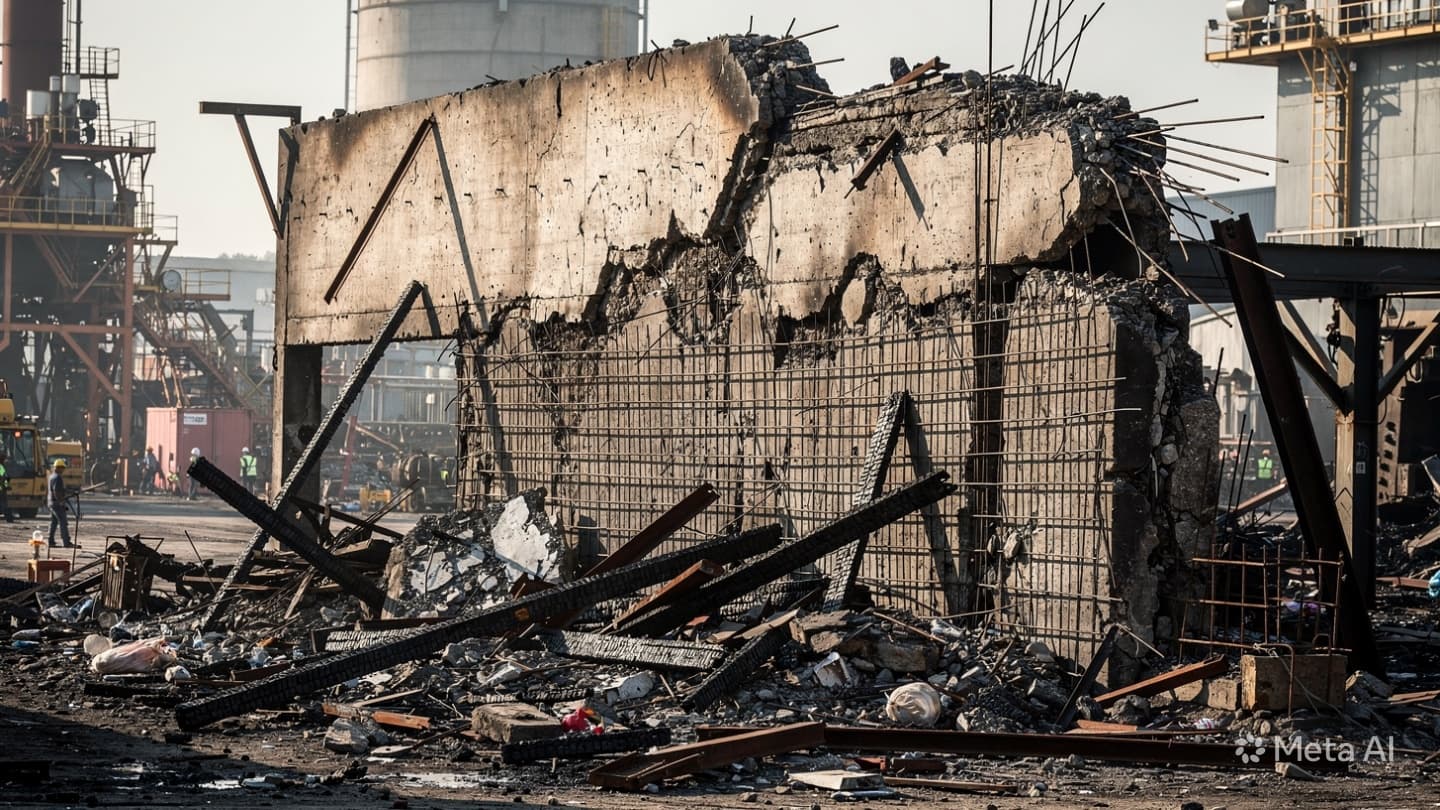
Sabah, Malaysia—A violent localized explosion tore through the extraction wing of a commercial palm oil processing refinery Friday morning, instantly killing two resident technical engineers. The blast shook the industrial estate at 9:15 a.m., shattering concrete walls and sending a dense column of black smoke over the plantation perimeter. Emergency crews arrived within minutes to contain the secondary structural fires fed by leaking processing lipids.
The Department of Occupational Safety and Health dispatched a team of specialized chemical and mechanical inspectors to seal off the affected processing block. Preliminary indicators point to a catastrophic pressure build-up within a primary deodorizer vessel used to purify crude palm oil at high temperatures. The structural integrity of the steel cylinder failed completely, throwing heavy metal fragments across the facility floor.
The two engineers, aged thirty-four and forty-one, were conducting routine pressure valve calibrations directly adjacent to the vessel when the rupture occurred. Both individuals sustained lethal blast trauma and severe thermal burns from the released high-temperature steam and boiling oil. Medical workers confirmed the fatalities at the scene before transferring the bodies to the district mortuary for forensic review.
Plant managers ordered an immediate evacuation of all auxiliary staff as automated safety systems isolated the main fuel storage lines feeding the refinery burners. The fast isolation protocol prevented the fire from spreading to the external crude oil holding tanks nearby. The facility has suspended all manufacturing operations indefinitely while safety specialists evaluate the remaining structural supports.
Investigators are focusing their attention on recent maintenance logs to determine if early pressure warning sensors had malfunctioned or been ignored. A union representative stated that workers had previously raised concerns regarding fluctuating pressure lines in that specific sector over the past week. Corporate officials have declined to comment on those specific allegations, stating they are awaiting the formal agency brief.
Emergency response teams spent the afternoon monitoring the thermal signatures of the adjacent machinery to ensure no underlying hotspots could reignite. The physical force of the explosion warped several overhead steel girders, forcing structural engineers to erect temporary supports before inspectors could safely enter the main blast zone. The immediate perimeter remains heavily restricted.
A formal inquiry board will be established by federal safety regulators to analyze the metallurgical failure of the ruptured vessel components. Pieces of the shattered steel casing will be transported to a central laboratory to determine if fatigue or corrosive chemical wear initiated the cracking.
The state government has requested a comprehensive safety audit of all processing plants operating within the agricultural corridor to ensure compliance with modern industrial codes. Local communities living near the perimeter have been assured that no toxic chemical residues were released into the local air supply during the incident.
Work continues at the site to clear the metallic debris, but the core processing sector will remain closed under federal order until a complete hazard mitigation report is signed off.
Published by Banx Network. This article is part of the Banx decentralized media programme, powered by the BXE token on the XRP Ledger.