

Key Highlights
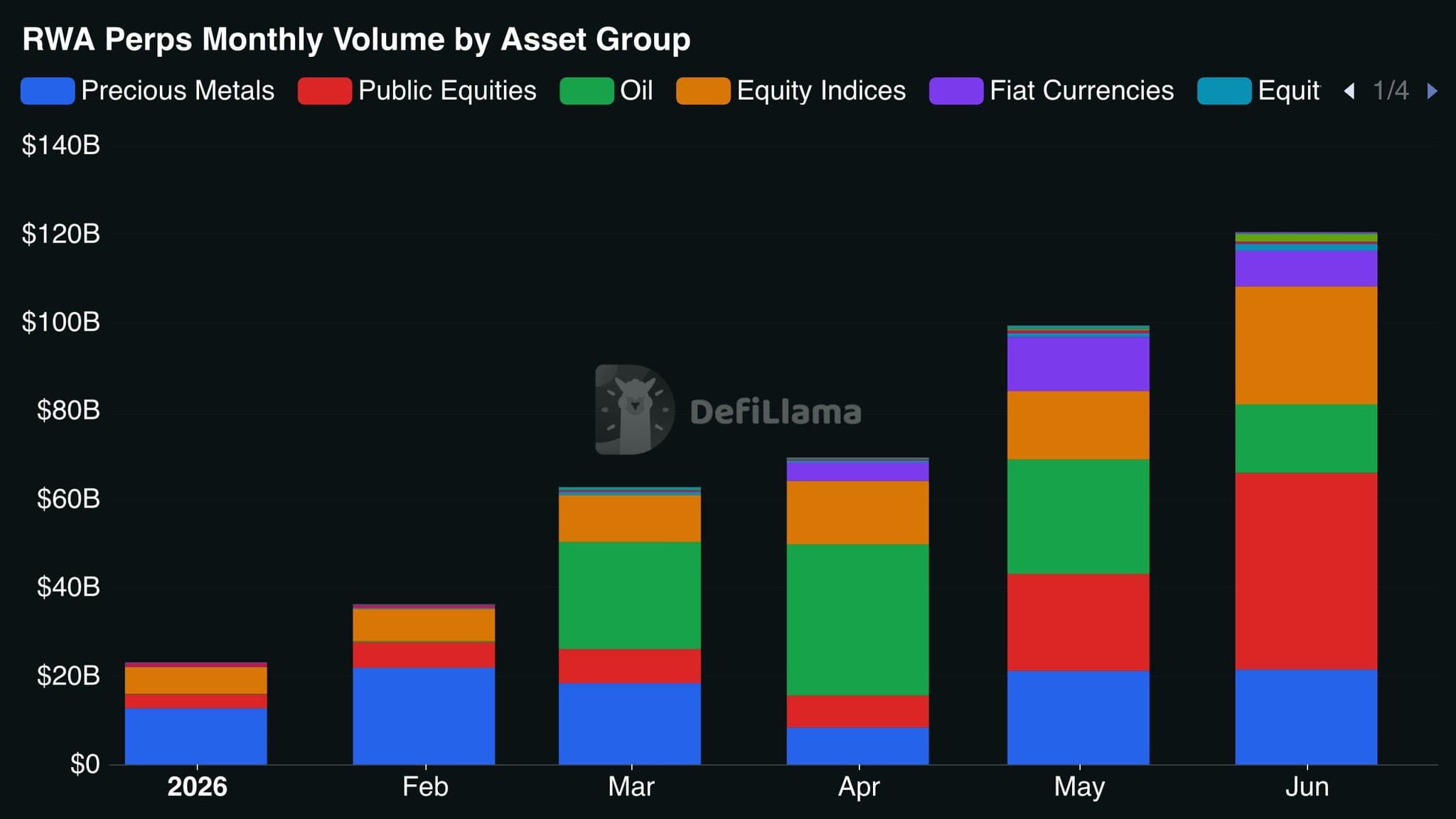
- Record Volume:RWA perpetual futures surpassed $100 billion in June.
- Growing Interest:Increased adoption of tokenized assets drives trading activity.
- Market Trends:Decentralized exchanges expand offerings, attracting investors.
Trading activity in real-world asset (RWA) perpetual futures reached a historic milestone in June, surpassing $100 billion in monthly volume for the first time, according to data from DeFiLlama. This record reflects a growing investor interest in bringing traditional financial assets onto blockchain networks while utilizing crypto-native trading infrastructure.
RWA perpetual futures are derivatives that allow traders to speculate on the price movements of tokenized versions of traditional assets without requiring an expiration date. These products increasingly cover asset classes such as precious metals, equities, stock indices, oil, and foreign exchange markets, providing crypto traders with exposure to familiar financial instruments around the clock.
The latest figures show consistent growth over recent months, with trading volume accelerating as more decentralized exchanges expand their product offerings. Public equities and commodities accounted for much of the increase, while tokenized foreign exchange and index products also experienced notable gains. This trend indicates a shift in how traders engage with traditional markets through innovative blockchain solutions.
Industry observers believe several factors are driving this adoption. Institutional interest in tokenized assets continues to grow as blockchain technology matures, while decentralized finance platforms offer global accessibility, faster settlement, and continuous trading compared to many traditional markets. Lower barriers to entry have also attracted retail traders looking for diversified exposure to various asset classes.
The milestone highlights the broader trend of tokenization, where real-world financial assets are represented digitally on blockchains. Analysts expect this market to expand further as more financial institutions launch tokenized products, regulatory clarity improves, and interoperability between blockchain networks increases. This evolution could reshape the landscape of financial trading, making it more inclusive and efficient.
Although rapid growth is encouraging, the sector still faces challenges. Liquidity varies across platforms, regulations remain inconsistent between jurisdictions, and risk management is essential because perpetual futures can involve significant leverage and price volatility. These factors could impact the sustainability of growth in this emerging market.
Cross-chain infrastructure and reliable oracle networks continue to improve the accuracy of price feeds, helping decentralized platforms support increasingly sophisticated financial products. If adoption continues at its current pace, tokenized derivatives could become a major component of global digital asset markets over the coming years, fundamentally altering how investors interact with financial instruments.
Published by Banx Network. This article is part of the Banx decentralized media programme, powered by the BXE token on the XRP Ledger.




