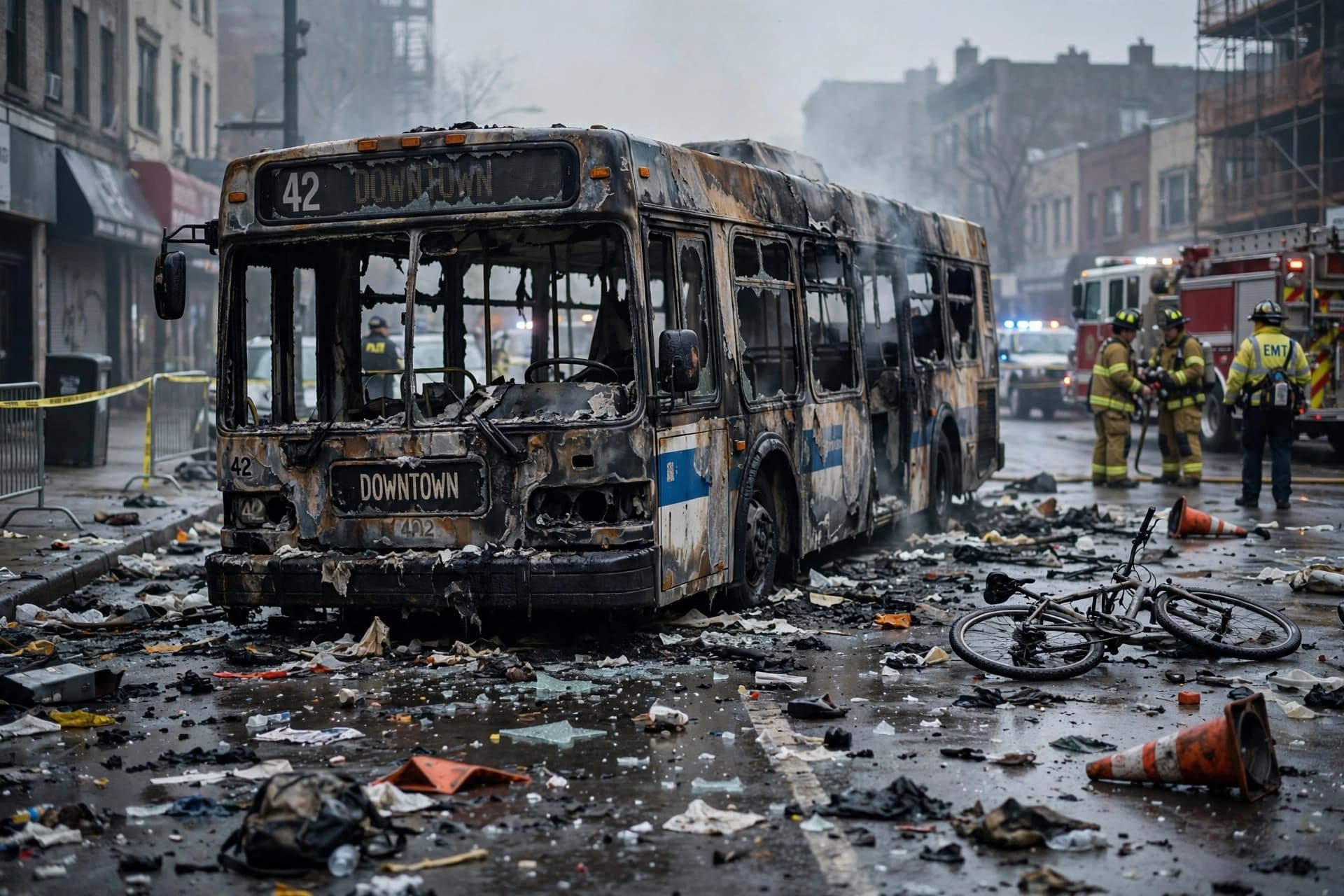
There is a particular horror in an attack that arrives where people are simply waiting—a bus stop, a street corner, a place where the ordinary routines of life bring civilians together. On Thursday morning in Kramatorsk, a city in eastern Ukraine's Donetsk region, that horror arrived. A Russian glide bomb struck a street where two city buses were operating, killing at least 33 people and wounding 18 others. The buses were engulfed in flames. Bodies lay on the ground. And a city that has endured years of war was left to count its dead .
The attack occurred around 10 a.m. local time. According to Ukrainian authorities, Russian forces used a glide bomb—a weapon that is launched from aircraft and guided to its target—to strike the area. Images posted by Ukraine's parliament commissioner for human rights, Dmytro Lubinets, showed the burned-out shell of a bus and several bodies strewn on the ground. "Russia is systematically destroying Kramatorsk and terrorising civilians," Lubinets said . The Kramatorsk City Council called the attack "another horrific crime committed by the Russian army against the civilian population," adding that "the Russians have struck a location where there are absolutely no military targets" .
Kramatorsk is a key stronghold in Ukraine's so-called "fortress belt"—the backbone of its defenses in the Donetsk region. Russia has demanded that Ukraine cede the rest of the region still under its control before it stops fighting, a demand Kyiv has refused. In recent weeks, Moscow's forces have stepped up drone and guided-bomb strikes on Kramatorsk and other cities in the belt, local officials say . The attack on Thursday was one of the largest single attacks this year. Regional governor Vadym Filashkin said he had ordered city authorities in Kramatorsk and Sloviansk to halt public transport, saying "we have no right to risk" citizens' lives .
The strike came just a day after five children were among 22 people killed when a Russian missile struck a five-story apartment block in Pryluky, in the northern Chernihiv region . Together, the two attacks underscored the mounting civilian toll of a war that has now lasted more than three and a half years. The United Nations has verified more than 17,000 civilian deaths throughout the conflict, but says the real number is considerably higher .
Several hours after the Kramatorsk attack, President Volodymyr Zelensky announced that Ukrainian negotiators would visit the United States for talks on Friday and Saturday, urging President Donald Trump to step up pressure on Russia. "One cannot, on the one hand, negotiate with the Russians about future economic projects, whilst on the other hand say that we find ourselves in some sort of diplomatic stalemate," he said . For the families of the 33 people killed in Kramatorsk, the diplomatic maneuvering will matter less than the loss they have suffered. The buses will not run again for now. The street will remain marked by what happened there. And the question of how many more such attacks will occur before the war ends remains unanswered.
AI Image Disclaimer: All images in this article are AI-generated and are intended for illustrative purposes only.
Sources: Australian Broadcasting Corporation, RTE, Xinhua, Ukrinform, Central News Agency Taiwan
Published by Banx Network. This article is part of the Banx decentralized media programme, powered by the BXE token on the XRP Ledger.