

Key Highlights
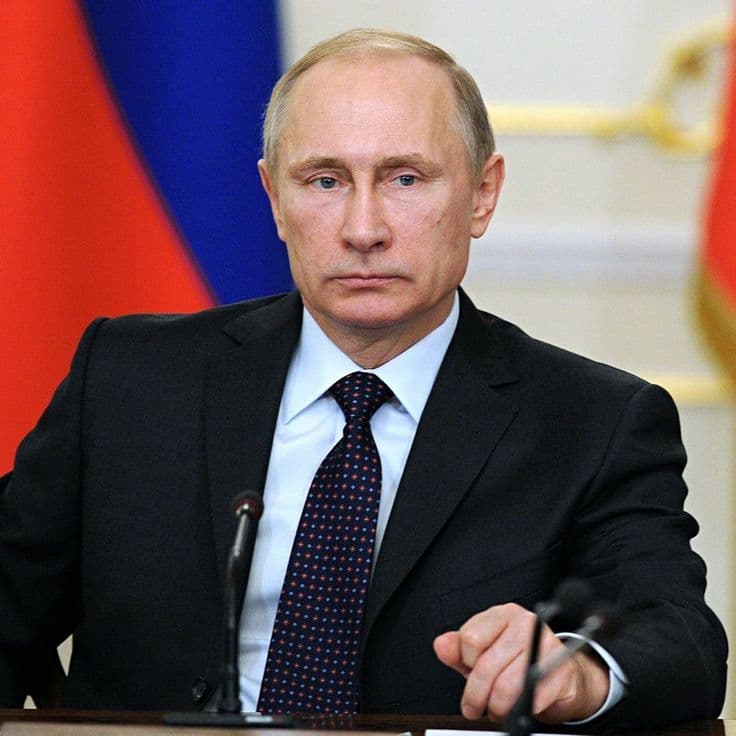
- New Law:Russia's first comprehensive law on digital currencies signed by President Putin.
- Legal Recognition:Digital currencies are now classified as property under Russian law.
- Regulated Market:A licensed cryptocurrency exchange market will be established, supervised by the Central Bank.
Russia has officially entered a new phase of digital finance after President Vladimir Putin signed the country's first comprehensive Law on Digital Currencies and Digital Rights. This landmark legislation, set to be implemented on September 1, 2026, establishes one of the most significant regulatory frameworks for cryptocurrencies in the nation, providing legal certainty for individuals, businesses, financial institutions, and technology providers operating within Russia's growing digital asset ecosystem.
One of the law's most crucial provisions is the legal recognition of digital currencies as property. This classification offers a clearer legal foundation for ownership rights, taxation, inheritance, and commercial disputes involving cryptocurrencies. Rather than existing in a regulatory gray area, Bitcoin and other approved digital assets will now have a defined legal status under Russian law, which is expected to enhance investor confidence and market participation.
The legislation also introduces a licensed cryptocurrency exchange market that will be supervised by the Central Bank of Russia. Only approved exchanges that comply with regulatory standards will be permitted to facilitate digital asset trading. Licensing requirements are anticipated to include cybersecurity standards, anti-money laundering compliance, customer identity verification, financial reporting, and operational transparency. This government oversight aims to reduce fraud while encouraging institutional participation in the digital asset market.
For banks, investment firms, fintech companies, and payment providers, the establishment of a regulated environment may foster greater confidence in operating within the digital asset space. For investors, clearer rules could improve market stability and reduce legal uncertainty surrounding digital asset transactions, which have historically been fraught with ambiguity.
The framework is also designed to strengthen Russia's digital economy amid increasing international financial fragmentation. Following sanctions that limited access to parts of the global financial system, Russia has accelerated efforts to build alternative payment infrastructure and explore blockchain technology for both domestic and international settlements. This strategic move reflects a broader trend among nations seeking to adapt to changing global financial dynamics.
Industry observers note that while the legislation marks a significant step forward, it does not necessarily represent unrestricted crypto adoption. Instead, it creates a structured environment where digital assets can develop under government supervision. The Central Bank retains significant authority over licensing, monitoring, and enforcement, ensuring that the growth of the digital asset market aligns with national interests.
For the broader cryptocurrency industry, Russia's move reflects a continuing global trend toward regulation rather than prohibition. Jurisdictions across Europe, Asia, the Middle East, and the Americas are increasingly introducing comprehensive legal frameworks that seek to balance innovation with investor protection. As institutional adoption continues expanding worldwide, regulatory clarity is becoming one of the strongest drivers of long-term blockchain growth.
Russia's comprehensive crypto law adds another major economy to the list of countries creating formal legal structures for digital assets, reinforcing the industry's gradual transition from a niche market into an increasingly regulated component of global finance. This development is likely to have far-reaching implications for the future of cryptocurrency trading and investment in Russia and beyond.
Published by Banx Network. This article is part of the Banx decentralized media programme, powered by the BXE token on the XRP Ledger.




