
Key Highlights
- Economic Contraction:Russia's GDP contracted by 1.8% in early 2023.
- Government Response:President Putin criticized officials for unmet growth expectations.
- Fiscal Challenges:Oil and gas revenues fell 45% in Q1 2023, widening the budget deficit.
Russia is currently grappling with its sharpest economic decline since 2023, as the gross domestic product (GDP) contracted by 1.8% in January and February. This downturn marks a significant shift from the modest growth seen in previous years and underscores the adverse effects of ongoing external pressures, including international sanctions and the complexities stemming from the war in Ukraine.
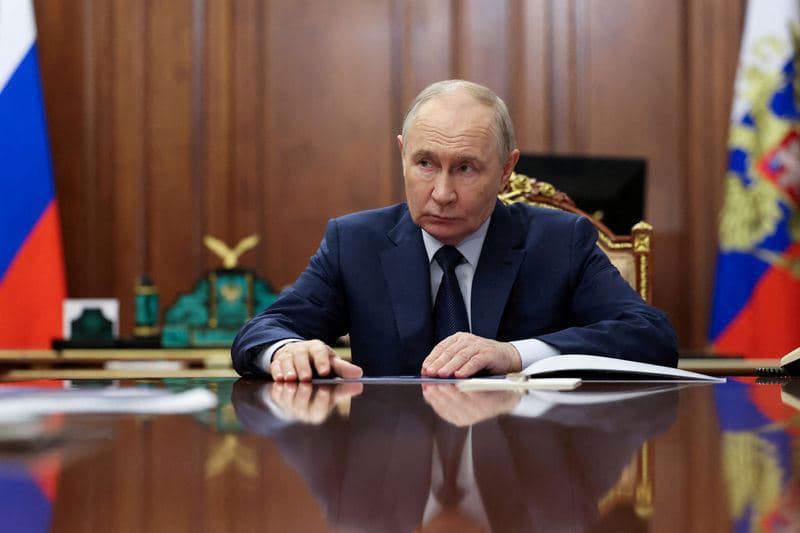
During a recent meeting at the Kremlin, President Vladimir Putin expressed dissatisfaction with economic officials, criticizing their failure to meet growth expectations. He called for detailed strategies aimed at stimulating the economy. Key figures in attendance included Prime Minister Mikhail Mishustin and Central Bank Governor Elvira Nabiullina, all of whom are under immense pressure to revive an economy that has already faced considerable turmoil.
The economic slowdown has been further exacerbated by high interest rates, which have reached double digits, and a contraction in vital sectors. While 2023 initially showed resilience with a reported 4.1% growth rate, projections for 2026 have significantly dropped, with the Kremlin forecasting growth at a mere 1.3%. This stark contrast highlights the challenges ahead for the Russian economy.
The International Monetary Fund (IMF) has been closely monitoring the situation, indicating that external factors, such as rising energy prices due to geopolitical events, could provide some support to the Russian economy. However, persistent issues like labor shortages and high inflation complicate recovery efforts. Central Bank Chief Elvira Nabiullina has pointed out that acute labor shortages present a unique challenge in the current economic landscape, potentially hindering recovery in non-military sectors.
As the Russian government navigates these economic challenges, it faces increasing public spending demands amid declining oil and gas revenues, which have plummeted by 45% in the first quarter compared to the previous year. This decline has resulted in a widening budget deficit, raising concerns about fiscal stability and the sustainability of future growth.
As the leadership works on strategies to address the current contraction, the focus remains on tackling immediate economic challenges while laying the groundwork for longer-term recovery efforts. The outcomes of these ongoing discussions will be critical in determining the trajectory of Russia's economy in the months to come, as officials strive to stabilize the situation and foster conditions for growth.
Published by Banx Network. This article is part of the Banx decentralized media programme, powered by the BXE token on the XRP Ledger.



