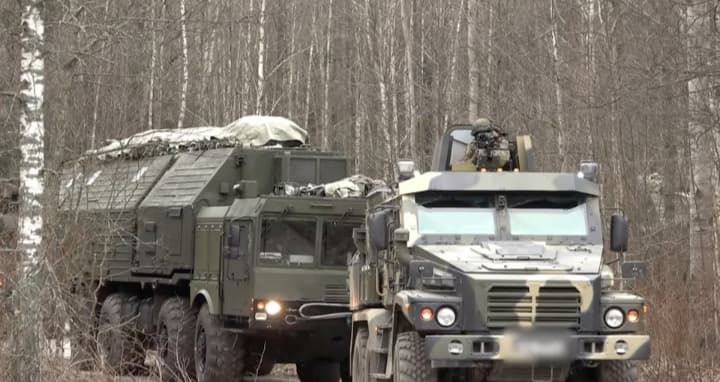
In a recent announcement, Russian military officials confirmed the deployment of their Oreshnik hypersonic missiles against Ukrainian targets. This marks a shift in Russia's strategic approach to the conflict, as the Oreshnik is known for its speed and accuracy and is designed to avoid detection and interception.
Reports indicate that the missile launch occurred in eastern Ukraine, where fighting has been heightened in recent months, and Russian officials claim that the attack targeted military installations used to launch attacks against Russian forces. Ukrainian officials condemned this missile strike as a violation of international law, warning of potential consequences for regional stability if tensions continue to escalate.
Both sides have increased their military activities, raising concerns about the possibility of a prolonged conflict. The introduction of hypersonic weapons into the conflict highlights the complexity of modern warfare, as these missiles travel faster than Mach 5 and are difficult to intercept with traditional air defenses. Analysts suggest that this new capability could shift power dynamics in the current hostilities.
Diplomatic efforts to deescalate tensions continue, but the use of advanced weapons raises questions about broader security implications in Europe and potential for increased military engagement. Leaders around the world call for restraint and urge both sides to explore diplomatic solutions to prevent further casualties and manage risks of wider conflict.
Published by Banx Network. This article is part of the Banx decentralized media programme, powered by the BXE token on the XRP Ledger.