
Key Highlights
- Incident:A mudslide in Quiche, Guatemala, buried a vehicle, resulting in four fatalities.
- Response:Local villagers and emergency services worked tirelessly to recover the victims.
- Infrastructure Concerns:Community leaders voiced frustration over inadequate disaster preparedness measures.
Quiche, Guatemala—A devastating mudslide struck a rural roadway, burying a vehicle and claiming the lives of four occupants. The incident occurred after a week of relentless seasonal rainfall, which destabilized the hillside, causing tons of mud and boulders to cascade down the steep slope. Eyewitnesses reported a sudden rush of earth that engulfed the vehicle as it passed through the area, leaving little time for the occupants to react.
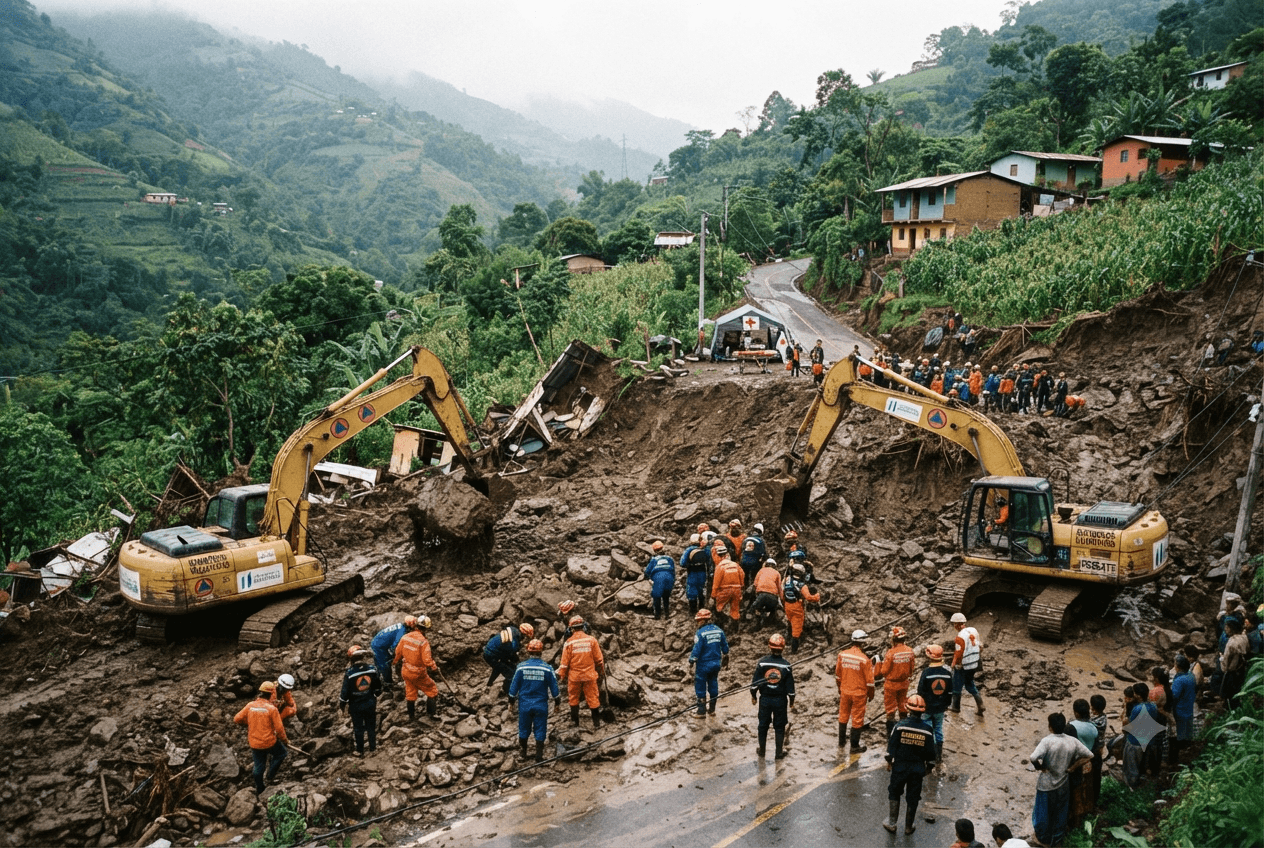
Local villagers, witnessing the disaster unfold, immediately rushed to the scene armed with hand shovels and pickaxes, attempting to dig through the dense sludge before official rescue units could arrive. Their efforts were commendable, but the sheer volume of mud made progress slow and dangerous. Civil defense teams and volunteer fire brigades soon arrived with heavy machinery, including excavators, to assist in the recovery efforts.
Emergency medical personnel confirmed that the four individuals inside the vehicle succumbed to severe impact trauma and asphyxiation before they could be extricated from the wreckage. After hours of arduous manual excavation, search teams were finally able to recover the bodies, but not without significant challenges posed by the continuous rain and shifting mud. In response to the tragedy, municipal authorities established a temporary perimeter around the slide zone to ensure the safety of both rescue workers and curious onlookers.
In the wake of the disaster, regional disaster response agencies ordered a temporary halt to transit across the vulnerable mountain corridor. Geotechnical engineers were dispatched to evaluate the stability of the slope, as meteorological offices warned of ongoing risks for secondary slope failures due to saturated soils. The community's infrastructure has long been a concern, with local leaders expressing frustration over delayed funding for essential improvements such as retaining walls and proper drainage ditches along the rural highway.
As heavy excavators worked to clear the massive volume of mud blocking the vital agricultural transport route, state welfare officers were deployed to assist grieving family members who gathered near the police blockade to identify the victims. The emotional toll of the tragedy was palpable, as community members mourned the loss of their loved ones.
Maintenance crews continued to clear residual debris from the road shoulders, while highway patrol officers enforced strict traffic restrictions for all commercial transport operators traversing the regional highland route. The situation remains precarious, with afternoon storm clouds gathering above the valley, raising concerns about further landslides in the days to come. The community's resilience will be tested as they navigate the aftermath of this tragic event, highlighting the urgent need for improved infrastructure and disaster preparedness in the region.
Published by Banx Network. This article is part of the Banx decentralized media programme, powered by the BXE token on the XRP Ledger.



