
Key Highlights
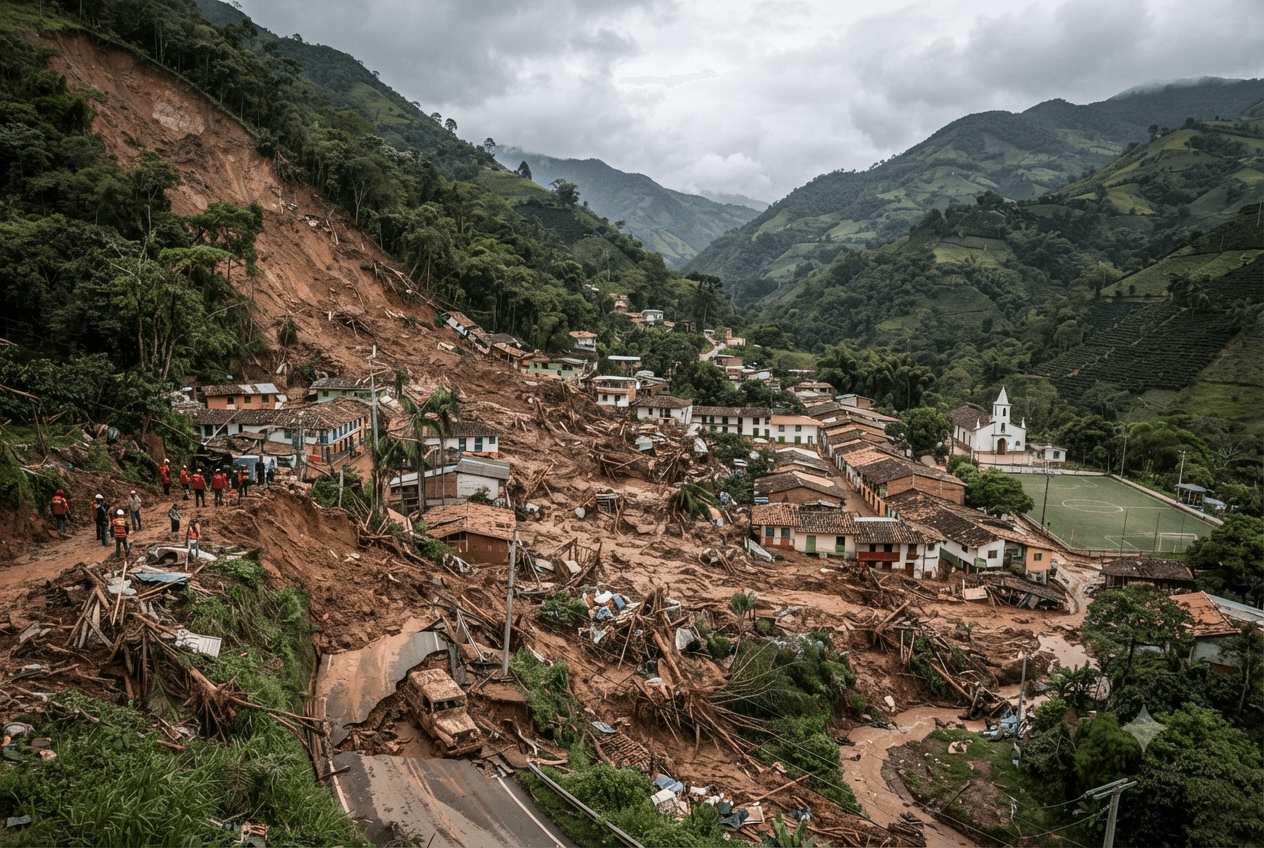
- A massive landslide buried a rural settlement in Antioquia, Colombia, early in the morning.
- Emergency teams are conducting rescue operations amid ongoing heavy rainfall.
- Local authorities had previously warned of unstable conditions due to deforestation and heavy rains.
A devastating landslide struck a remote rural settlement in Antioquia, Colombia, early this morning, burying homes under thousands of tons of mud and debris. The disaster unfolded just before dawn, leaving villagers with no warning as the saturated hillside collapsed. Neighbors from higher ground rushed to the scene with flashlights and shovels, desperately searching for survivors as emergency dispatchers received fragmented satellite calls reporting dozens of missing residents.
Civil defense rescue teams quickly mobilized, deploying specialized canine units and heavy excavation machinery to the isolated valley. The relentless rainfall continued to pound the unstable slope, raising concerns about secondary mudslides that could jeopardize the safety of rescue workers. Paramedics established a triage station along the dirt road leading into the community, where several injured survivors were pulled from mud pockets and airlifted to local hospitals by military helicopters. Emergency trauma protocols were activated in hospitals across the departmental capital to prepare for incoming casualties.
Geologists have confirmed that the seasonal rains have saturated the mountain soil beyond critical stability limits, leading to the catastrophic landslide. Deforestation along the upper ridge has exacerbated the erosion risk during heavy tropical downpours. Provincial authorities had issued yellow weather alerts for the region days before the landslide occurred, highlighting the precarious conditions. Local residents had previously petitioned municipal offices for funds to construct retaining walls along the slope, but those requests remained stalled in bureaucratic planning committees as the rainy season intensified.
As family members gathered outside the municipal disaster coordination center seeking news of their loved ones, national army engineering battalions joined local firefighters in manual digging operations through the thick red clay. Rescue dogs indicated several points of interest buried beneath collapsed timber and roofing iron, providing hope for finding survivors. In response to the disaster, state prosecutors have opened an administrative review into the land-use permits issued for the hillside zone, raising questions about the safety of construction in such vulnerable areas.
Heavy fog rolled into the canyon as afternoon light faded, forcing helicopter evacuations to pause temporarily. Rescue workers continued to probe the mud banks using long metal poles and thermal imaging cameras, determined to locate any remaining survivors. Provincial governors declared a state of emergency across the affected municipality to expedite the release of disaster funds. Food and medical supplies were trucked in along partially blocked secondary access routes, as the scarred mountainside stood silent under the steady downpour, with recovery efforts ongoing.
The community faces a long road to recovery as they grapple with the aftermath of this tragic event, highlighting the urgent need for improved infrastructure and disaster preparedness in vulnerable rural areas.
Published by Banx Network. This article is part of the Banx decentralized media programme, powered by the BXE token on the XRP Ledger.



