In the cold, dark reaches of the outer solar system, Neptune stands as a silent blue giant, guarded by a retinue of moons that tell a violent history. For years, astronomers believed these satellites formed peacefully from the same disk of gas and dust that created the planet. However, new evidence suggests a more chaotic origin story: Neptune’s moons were likely born from cosmic disasters, shattered and reformed in the aftermath of colossal collisions. This revelation reshapes our understanding of planetary formation in the distant icy realms.
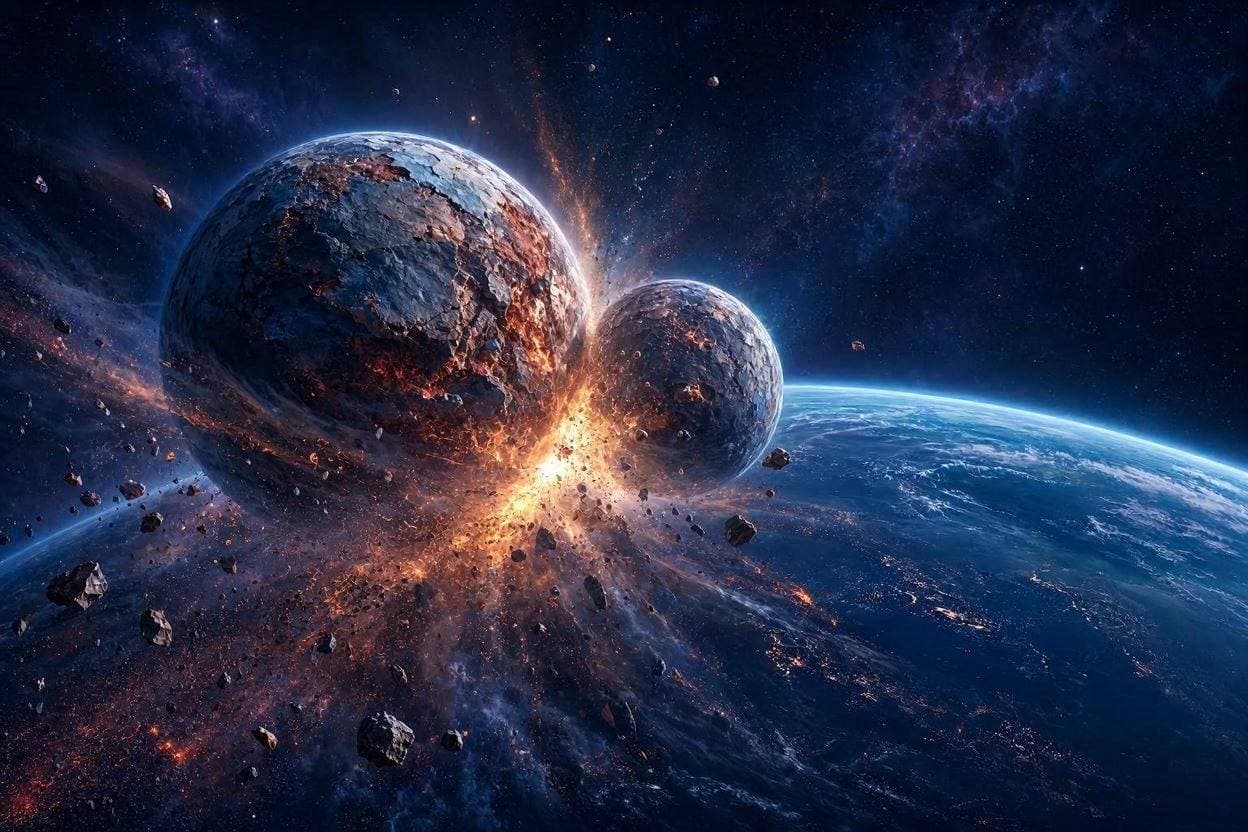
The study focuses on Triton, Neptune’s largest moon, which orbits in a direction opposite to the planet’s rotation. This retrograde motion has long been a clue that Triton did not form alongside Neptune but was instead captured from the Kuiper Belt. New simulations indicate that when Triton was pulled into Neptune’s gravity, its presence destabilized any existing moon system, leading to a cascade of collisions among the smaller bodies.
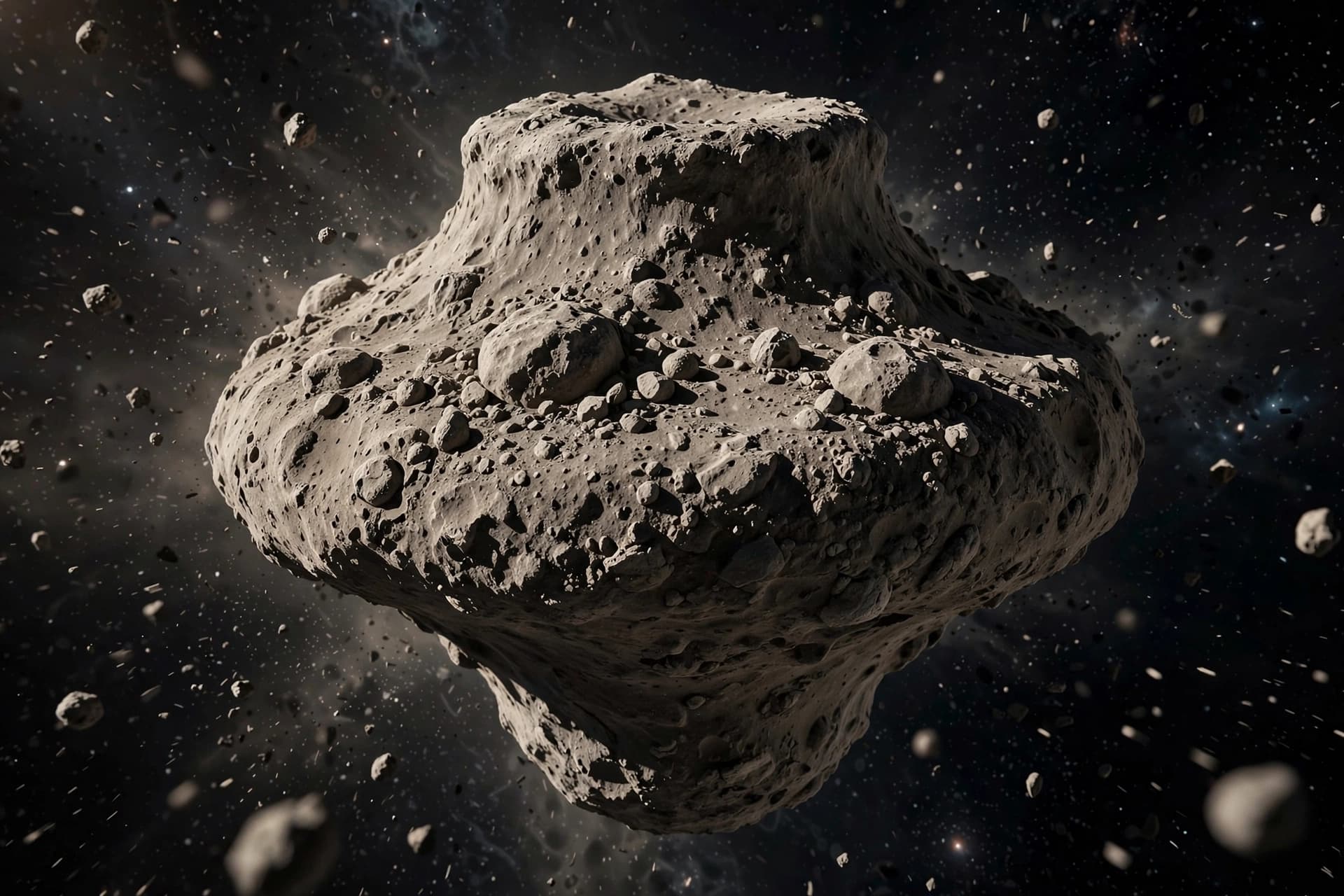
These collisions were not merely destructive but creative. The debris from shattered moons coalesced over millions of years to form the smaller, irregular moons we see today. This process, known as "collisional evolution," suggests that the current arrangement of Neptune’s satellites is a second-generation family, born from the ruins of the first. It is a narrative of destruction giving way to creation, played out on a celestial scale.
Scientists used advanced computer models to simulate the gravitational interactions and impact dynamics of the early Neptunian system. The results matched the observed orbits and physical characteristics of the current moons, providing strong support for the disaster-born hypothesis. This method allows researchers to peer back in time, reconstructing events that occurred billions of years ago with increasing accuracy.
The implications extend beyond Neptune. If large moons can disrupt entire satellite systems, similar processes may have occurred around other ice giants like Uranus. It suggests that chaos and instability are fundamental parts of planetary development, not just anomalies. Our solar system may be far more dynamic and violent in its youth than previously imagined, with order emerging from disorder.
For astronomers, this discovery is both stunning and humbling. It highlights the limitations of our earlier assumptions and the power of new technology to reveal hidden truths. Each moon becomes a fossil record of ancient impacts, holding clues to the history of the solar system. Studying them helps us piece together the puzzle of how our cosmic neighborhood came to be.
The story of Neptune’s moons is a testament to the resilience of matter and the transformative power of gravity. From the ashes of cosmic disasters, a new family of worlds emerged, continuing to orbit the blue giant in a delicate dance. As we learn more about these distant bodies, we gain a deeper appreciation for the complex and often violent history of our solar system.
AI Image Disclaimer: Visuals associated with this report are AI-generated to illustrate the theoretical and astronomical concepts discussed.
Sources: Nature Astronomy Space.com NASA Jet Propulsion Laboratory
Published by Banx Network. This article is part of the Banx decentralized media programme, powered by the BXE token on the XRP Ledger.