U.S. Senator Marco Rubio’s decision to skip a high-level Ukraine meeting with European leaders at the Munich Security Conference has injected fresh uncertainty into transatlantic coordination at a delicate moment in the war.
The meeting, convened alongside the annual security gathering in Munich, was expected to reinforce Western unity on military support, sanctions enforcement, and long-term reconstruction planning for Ukraine. Rubio’s absence, while not officially framed as a diplomatic signal, quickly became one.
Politically, symbolism matters in Munich. The conference has evolved into a stage for strategic messaging as much as policy design. When senior U.S. figures are not present in key rooms, European capitals notice. For leaders already navigating domestic fatigue over Ukraine aid, the optics risk feeding narratives that Washington’s consensus is softening or fragmenting.
Behind the scenes, the absence may reflect more complex positioning. Rubio, a prominent voice within Republican foreign policy circles, has in recent months walked a calibrated line—supporting Ukraine while signaling greater scrutiny of long-term funding commitments. Skipping a high-visibility multilateral session could be read less as disengagement and more as tactical distance from collective pledges that might constrain future political maneuvering in Washington.
At the same time, European governments are under pressure to demonstrate strategic autonomy. France and Germany have both argued for a stronger European defense pillar within NATO, partly in response to uncertainties in U.S. domestic politics. Rubio’s decision, intentional or not, reinforces that conversation. It subtly shifts the burden back onto European capitals to lead publicly while Washington manages internal debates.
There is also a domestic lens. With U.S. election dynamics sharpening, foreign policy gestures are increasingly scrutinized through partisan filters. Participation in multilateral Ukraine forums can be portrayed either as steadfast leadership or as open-ended commitment. Absence, by contrast, offers flexibility.
None of this necessarily signals a policy reversal. The Biden administration continues to coordinate closely with European allies, and congressional support for Ukraine funding—while more contested—remains intact. But in geopolitics, tone and timing carry weight.
Munich has long served as a barometer of Western cohesion. Rubio’s nonattendance will not redefine the alliance, yet it underscores a subtle recalibration underway: Europe testing its leadership bandwidth, and Washington navigating political crosscurrents at home.
AI Image Disclaimer
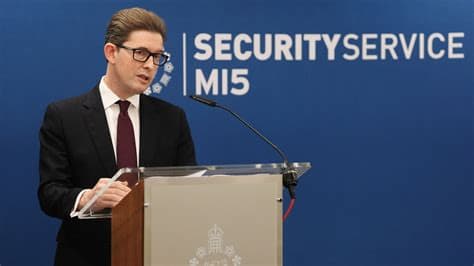
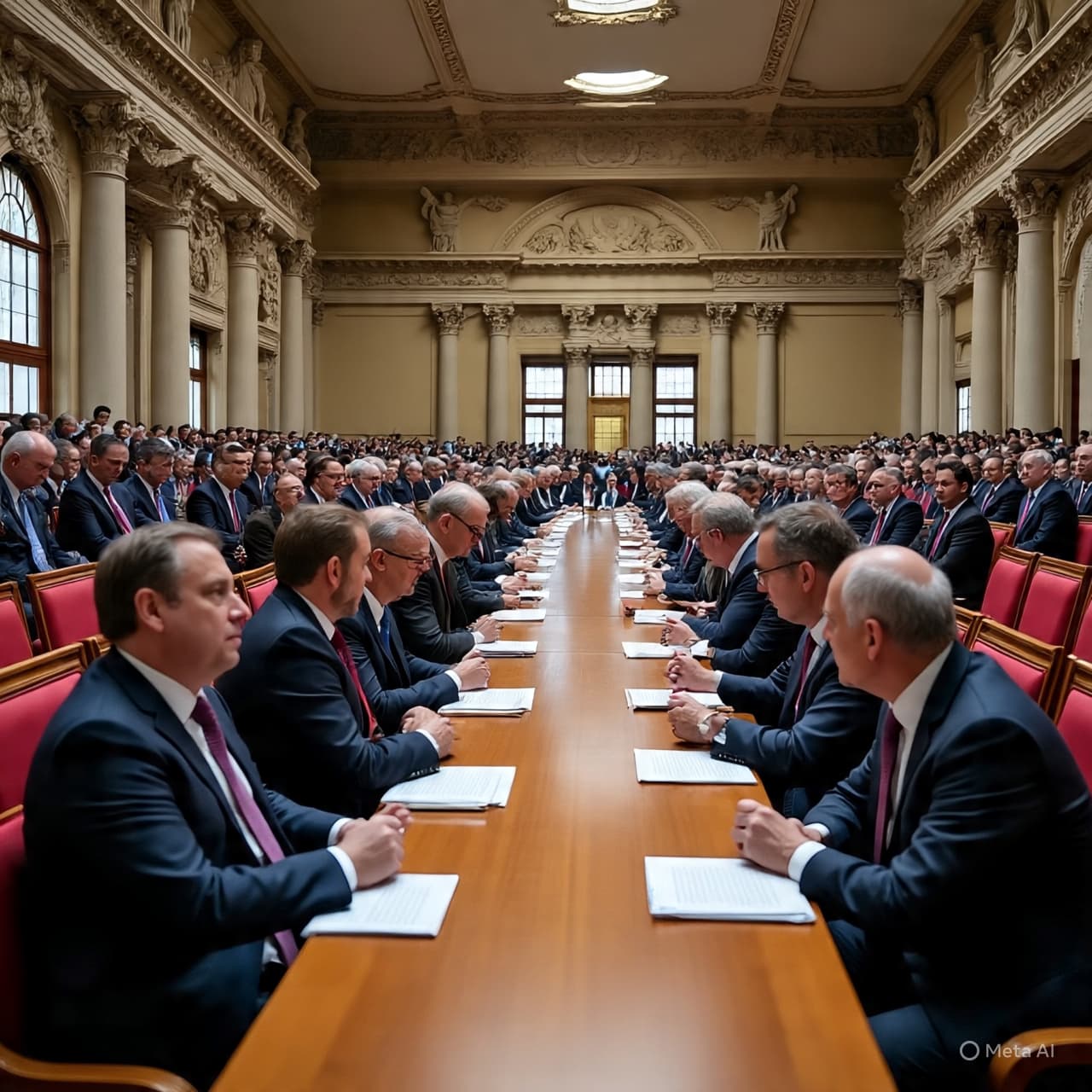
Images are AI-generated for illustrative purposes only and do not depict real events or official scenes from the meeting.
Published by Banx Network. This article is part of the Banx decentralized media programme, powered by the BXE token on the XRP Ledger.