
Key Highlights
- Fatal Accident:Two motorists died in a head-on collision on Route 27.
- Weather Conditions:Investigators suspect hydroplaning due to heavy rain.
- Traffic Impact:The incident caused significant delays for holiday travelers.
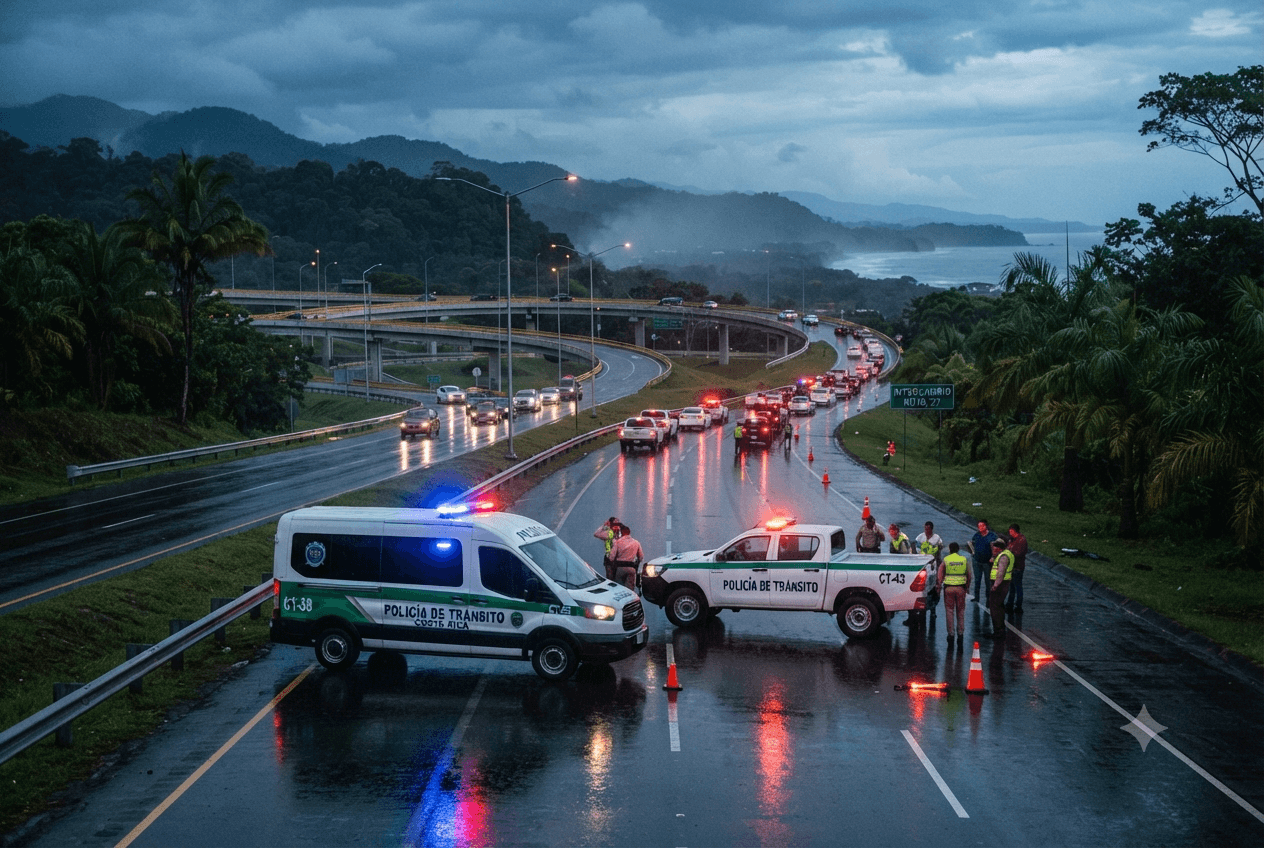
Orotina, Costa Rica—A tragic vehicle collision occurred on Friday morning when a compact sedan collided head-on with an SUV on Route 27 near the Orotina toll interchange, resulting in the deaths of both occupants of the sedan. Transit police units responded promptly to the scene, where they found the vehicles mangled across the highway's middle lanes. Paramedics confirmed that both individuals in the sedan had sustained fatal injuries and showed no vital signs upon examination.
Initial investigations revealed that the accident was likely caused by the sedan hydroplaning while navigating a sweeping curve during a heavy tropical downpour. The driver lost control, veering across the center line and into the path of the oncoming SUV. Rescue teams from the fire department utilized hydraulic tools to extricate the victims from the wreckage, which was complicated by the ongoing rain.
The collision triggered significant traffic congestion, with backups extending several miles toward the capital's western exit checkpoints. Holiday travelers faced extensive delays as highway patrol officers implemented alternating single-lane detours around the accident site. Concessionaire maintenance crews quickly set up high-visibility warning signs and directed traffic through an emergency bypass lane to alleviate the situation.
In the aftermath of the crash, transport ministry officials issued urgent warnings regarding the slippery road conditions that often accompany seasonal downpours along the coastal expressway. Family members of the deceased were notified through consular and judicial channels to begin formal identification procedures at the forensic pathology department in Heredia.
Tow truck operators worked diligently to clear the heavily damaged vehicles from the roadway shortly after noon, loading them onto flatbed transport carriers. Meanwhile, highway engineers assessed the drainage systems surrounding the curve to determine if standing water contributed to the hydroplaning incident. Once judicial authorities completed their forensic documentation, all westbound lanes were reopened to traffic.
Cleanup crews continued to address the aftermath of the accident, scrubbing oil and transmission fluid spills from the asphalt using specialized chemical detergents. Transit police units remained stationed near the interchange to monitor traffic flow and prevent further congestion as the situation stabilized.
Published by Banx Network. This article is part of the Banx decentralized media programme, powered by the BXE token on the XRP Ledger.



