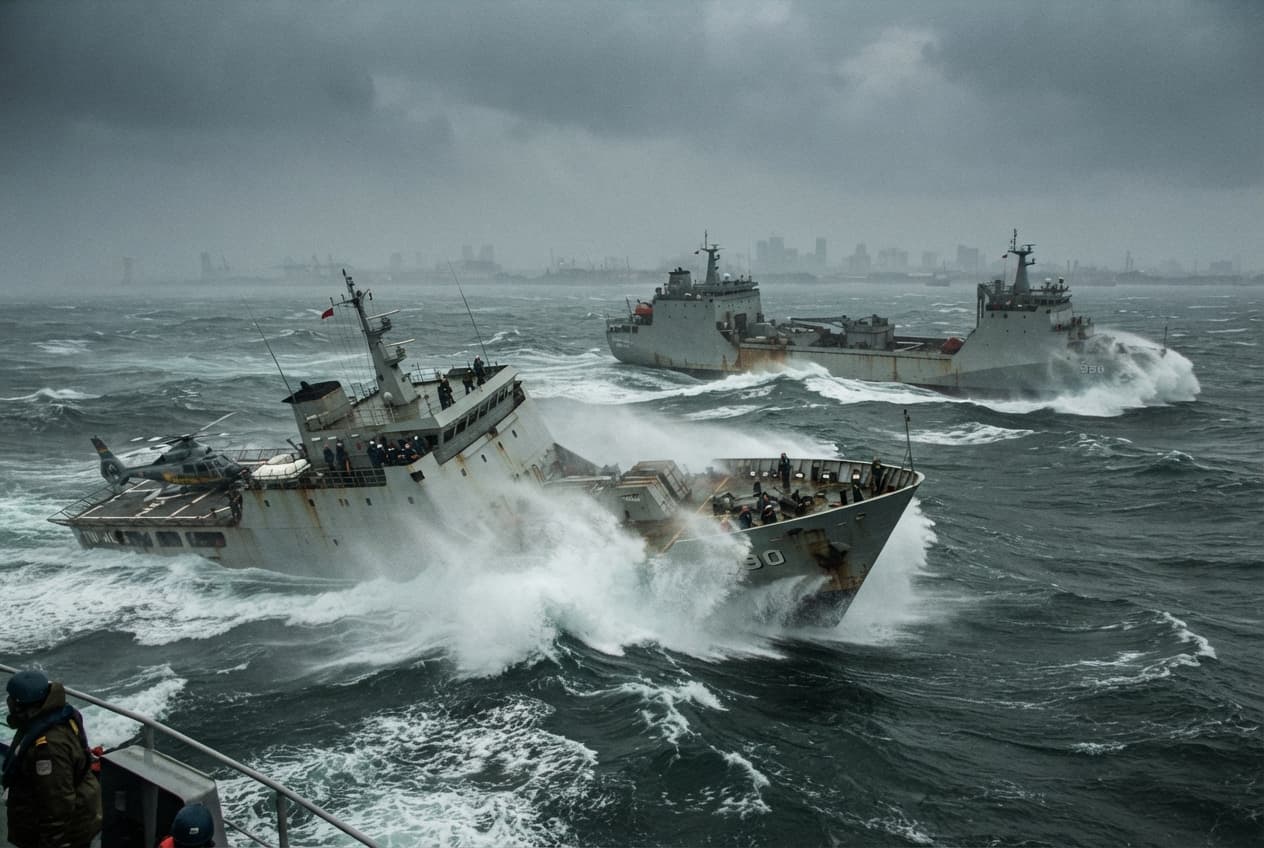
Jakarta, Indonesia—Dangerous meteorological conditions and turbulent swells severely hampered emergency rescue operations Monday across the Java Sea following the tragic sinking of a regional passenger ferry. National search and rescue coordinators reported that high waves exceeding three meters and gale-force wind gusts forced surface vessels and small inflatable craft to exercise extreme caution. Rescue divers and underwater ROV deployment teams faced near-zero visibility and strong undercurrents that prevented safe submersion near the wreckage site.
Despite the adverse weather, military pilots flying long-range reconnaissance aircraft persevered through heavy rain squalls to scan surface waters for life rafts and floating survivors. Naval commanders emphasized that while air assets maintained continuous observation, turbulent sea states made it perilous for surface cutters to pull people from the water safely. Emergency medical personnel stationed at port reception docks prepared specialized hypothermia treatment bays to receive any incoming survivors evacuated by helicopter.
Meteorological agencies noted that an unexpected seasonal storm system generated sudden high-amplitude swells across the central shipping lanes of the Java Sea. Maritime safety advocates reiterated long-standing concerns regarding the vulnerability of inter-island transport vessels during severe weather shifts. Port authorities temporarily suspended all departures for smaller commercial watercraft throughout the regional jurisdiction until sea states stabilize.
Rescue coordination teams utilized satellite tracking and oceanographic drift models to predict the movement of floating debris amidst the raging swells. Frustrated family members waiting at the harbor terminal expressed deep anguish over weather-related delays slowing the active search for missing loved ones. Provincial disaster relief agencies delivered hot meals and emergency supplies to exhausted relatives maintaining their vigil at the docks.
The multi-agency rescue mission continues to adapt tactical strategies, prioritizing aerial reconnaissance and large naval platforms capable of withstanding heavy seas. Emergency response leaders remain in constant communication with meteorological forecasters to identify brief weather windows for underwater exploration. The search operation persists around the clock despite ongoing environmental challenges.
Published by Banx Network. This article is part of the Banx decentralized media programme, powered by the BXE token on the XRP Ledger.