
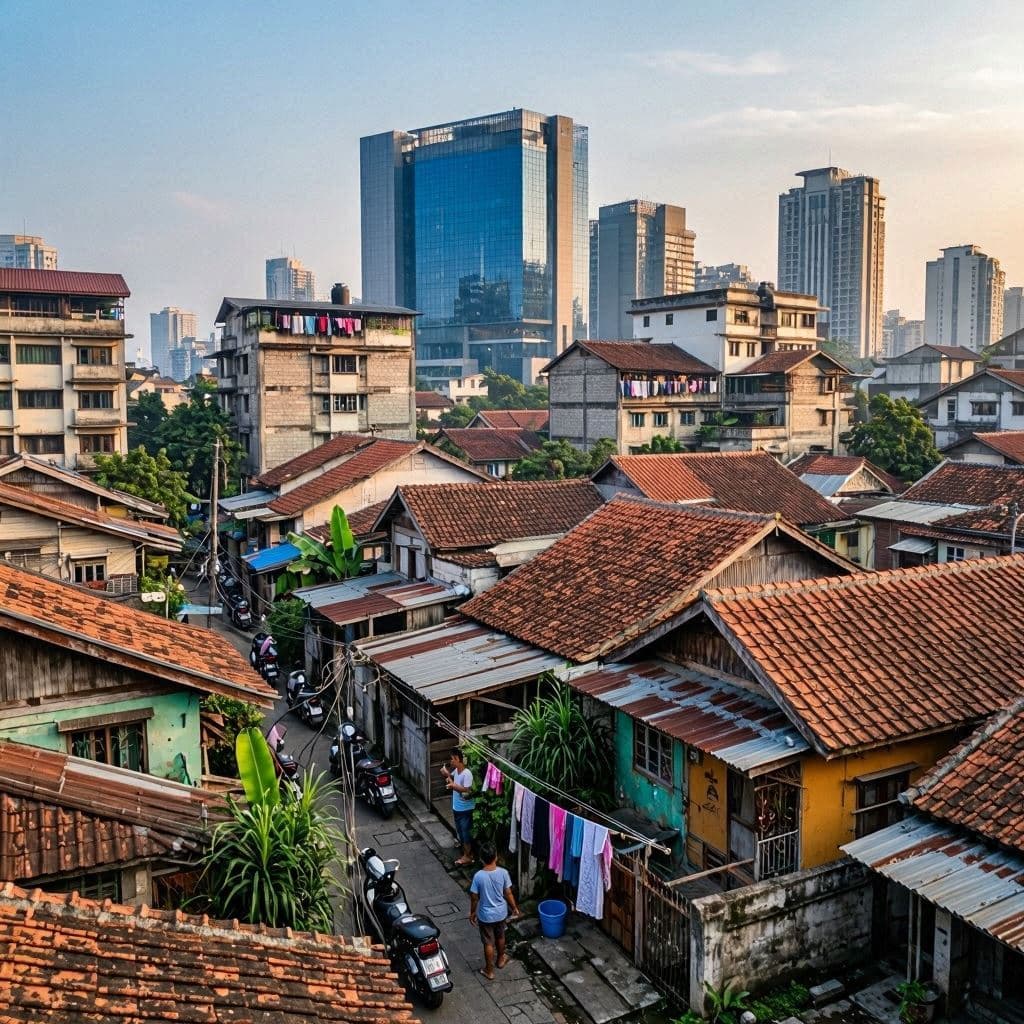
Key Highlights
- Community Resistance:Residents in Central Jakarta resist eviction, claiming historical ties to the land.
- Generational Heritage:The neighborhood's lineage spans five generations, predating Indonesia's independence.
- Urban Development Debate:The conflict raises questions about the balance between progress and preserving community identity.
In Central Jakarta, a community is standing firm against eviction, asserting a lineage that stretches back five generations, predating Indonesia's independence. Their resistance is not merely about land rights but about identity, memory, and the right to belong. This standoff invites reflection on the tension between urban development and historical continuity, prompting us to consider what is lost when roots are pulled from the soil.
The residents argue that their presence is integral to the area’s history. They claim their ancestors settled there long before the modern state was formed, establishing a deep cultural and social connection to the land. The phrase "before Indonesia merdeka" (before Indonesia’s independence) underscores the depth of their claim, linking their residency to the nation’s foundational era. For them, the threat of eviction is not just a displacement of bodies but an erasure of heritage.
Urban development in Jakarta has been rapid and often controversial. As the city expands and modernizes, older settlements are frequently targeted for redevelopment into commercial complexes or high-rise apartments. Proponents of these projects argue that they bring economic growth and improved infrastructure. However, critics contend that such progress often comes at the expense of vulnerable communities who lack formal land titles but possess historical legitimacy.
The residents’ refusal to leave has sparked a broader debate about justice and urban planning. Legal experts note that while property laws are clear, the moral and historical dimensions are complex. Many of these communities have lived in informal settlements for decades, contributing to the city’s fabric in ways that are often overlooked. Their sudden removal disrupts social networks and livelihoods that have been built over generations.
Government officials face the challenge of balancing legal mandates with social sensitivity. Eviction processes must follow due process, but they also require dialogue and negotiation. In this case, the residents are seeking recognition of their historical status and fair compensation or relocation options that respect their community bonds. The outcome of this dispute could set a precedent for how similar cases are handled in the future.
Community solidarity plays a crucial role in the resistance. Neighbors support one another, sharing resources and organizing peaceful protests. This unity strengthens their position and draws attention from civil society organizations and media outlets. The narrative of "five generations" resonates with the public, evoking empathy and a sense of shared history.
The emotional toll on the residents is significant. Uncertainty about their future creates anxiety and stress, particularly for the elderly who have spent their entire lives in the neighborhood. For them, the home is not just a structure but a repository of memories and family history. Losing it feels like losing a part of themselves.
As the standoff in Central Jakarta continues, it highlights the need for inclusive urban development policies. Recognizing the historical rights of long-standing communities is essential for a just society. The residents’ plea is a reminder that progress should not come at the cost of erasing the past, but rather by integrating it into the future.
Published by Banx Network. This article is part of the Banx decentralized media programme, powered by the BXE token on the XRP Ledger.



