In the quiet darkness of space, a new eye is opening. The Nancy Grace Roman Space Telescope, launched in late August 2026, has begun its commissioning phase, with NASA successfully powering on its primary instruments for the first time. This milestone marks the transition from a journey of engineering to a mission of discovery, as the telescope prepares to survey the universe with unprecedented width and depth. The "waking up" of Roman is a moment of anticipation for astronomers worldwide, promising new insights into dark energy, exoplanets, and infrared astronomy.
The first instrument to be activated was the Wide Field Instrument (WFI), a 300-megapixel infrared camera that will capture vast swathes of the sky. Unlike the narrow focus of previous telescopes, Roman’s WFI is designed to scan large areas efficiently, creating detailed maps of the cosmos. This capability is essential for studying the distribution of galaxies and the effects of dark energy, the mysterious force driving the accelerated expansion of the universe. The successful power-on test confirms that the instrument is functioning as expected, a critical step toward full operational status.
Following the WFI, the team began activating the Coronagraph Instrument, a technology demonstrator designed to block the light of stars to reveal faint planets orbiting them. This instrument represents a significant leap forward in direct exoplanet imaging, allowing scientists to study the atmospheres and compositions of distant worlds. The initial tests showed promising results, with the coronagraph achieving the precise alignment needed to suppress starlight effectively. It is a tool that could revolutionize our search for habitable planets.
The commissioning process is delicate and methodical, involving a series of checks and calibrations to ensure every component is working correctly. Engineers and scientists monitor the telescope’s temperature, orientation, and data transmission, making adjustments as needed. This phase will last several months, during which the team will verify the performance of all systems. It is a time of careful attention, ensuring that Roman is ready for its decade-long mission of exploration.
Roman’s position at the Sun-Earth L2 Lagrange point provides a stable and cold environment, ideal for infrared observations. From this vantage point, the telescope can observe the universe without the interference of Earth’s atmosphere or heat. This location, also used by the James Webb Space Telescope, allows for continuous viewing of large sections of the sky, maximizing the efficiency of its surveys. It is a strategic choice that enhances the telescope’s scientific potential.
The excitement surrounding Roman is palpable in the astronomical community. Its wide field of view complements the deep but narrow observations of other telescopes, filling in gaps in our knowledge. By surveying billions of galaxies, Roman will help constrain the properties of dark energy and dark matter, two of the biggest mysteries in modern physics. It is a mission that aims to answer fundamental questions about the nature of reality.
For the public, Roman represents the next chapter in space exploration. Its images and data will be shared widely, inspiring curiosity and wonder. The telescope’s ability to find thousands of new exoplanets will expand our understanding of planetary systems and the potential for life elsewhere. It is a machine built not just for science, but for the human desire to know our place in the universe.
As Roman continues to wake up, we stand on the threshold of a new era in astronomy. The data it will collect over the coming years will reshape our understanding of the cosmos. In its silent vigil, the telescope carries the hopes of scientists and dreamers alike, ready to reveal the hidden secrets of the stars.
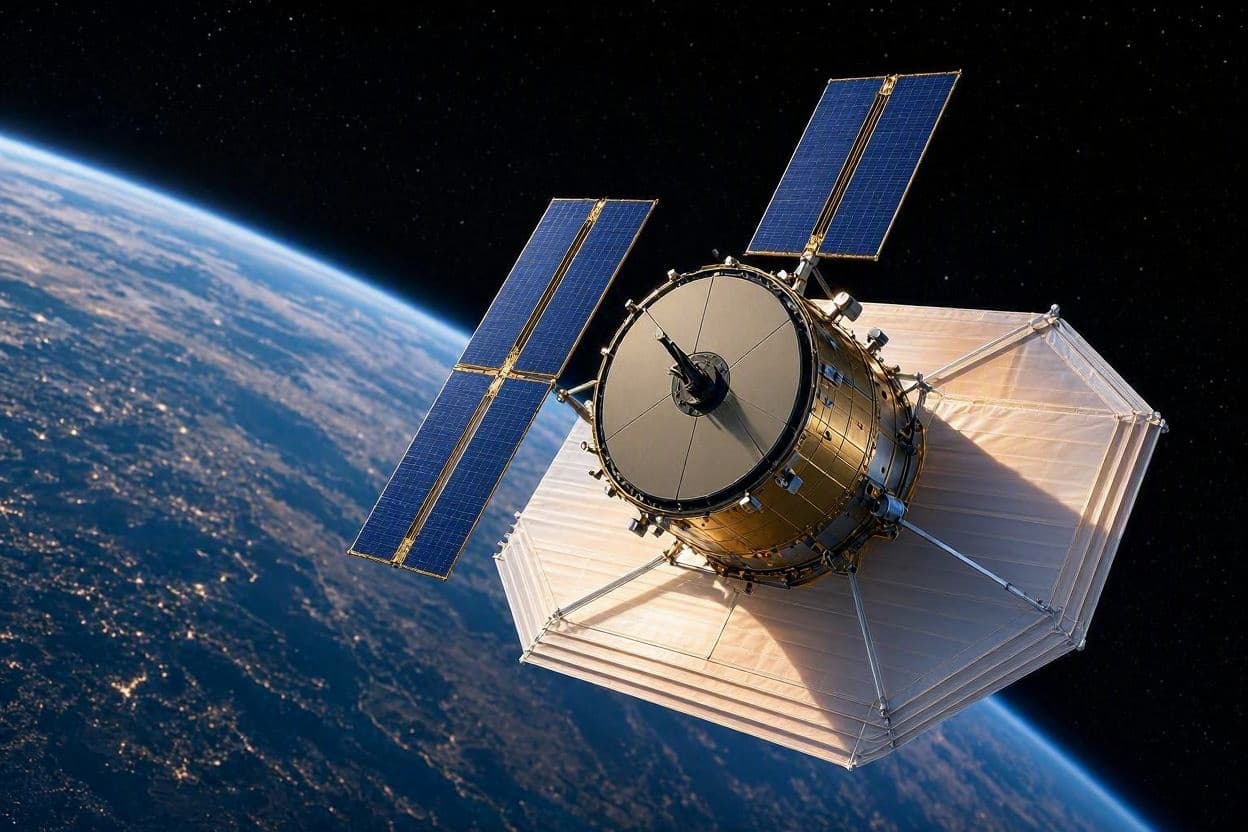
AI Image Disclaimer: The visual aids included here are AI-generated illustrations of the Roman Space Telescope and its instruments, not actual photographs from the mission.
Sources: NASA Blogs Space.com The New York Times
Published by Banx Network. This article is part of the Banx decentralized media programme, powered by the BXE token on the XRP Ledger.

.jpg&w=3840&q=75 "New Wild Cat Species Identified for First Time in 100 Years, Researchers Say")