The surface of the Sun is often perceived as a static, blazing orb, a constant source of light and warmth that governs our days. Yet, beneath this serene appearance lies a turbulent ocean of plasma, churned by magnetic forces and fluid dynamics that defy simple explanation. Recent observations have highlighted the pervasive role of Kelvin–Helmholtz instabilities—wave-like patterns that form when two fluids move at different velocities—in driving the mixing of solar plasma. These invisible ripples are not merely aesthetic curiosities; they are fundamental mechanisms that shape the behavior of our star.
Kelvin–Helmholtz instabilities occur at the boundary between two layers of fluid moving at different speeds or in different directions. On Earth, we see them in cloud formations that resemble rolling waves or in the curling crests of ocean swells. On the Sun, however, the stakes are far higher. The solar atmosphere is composed of superheated plasma, governed by complex magnetic fields. When these fields interact with flowing plasma, they create shear zones where instabilities can grow, leading to significant mixing of material and energy.
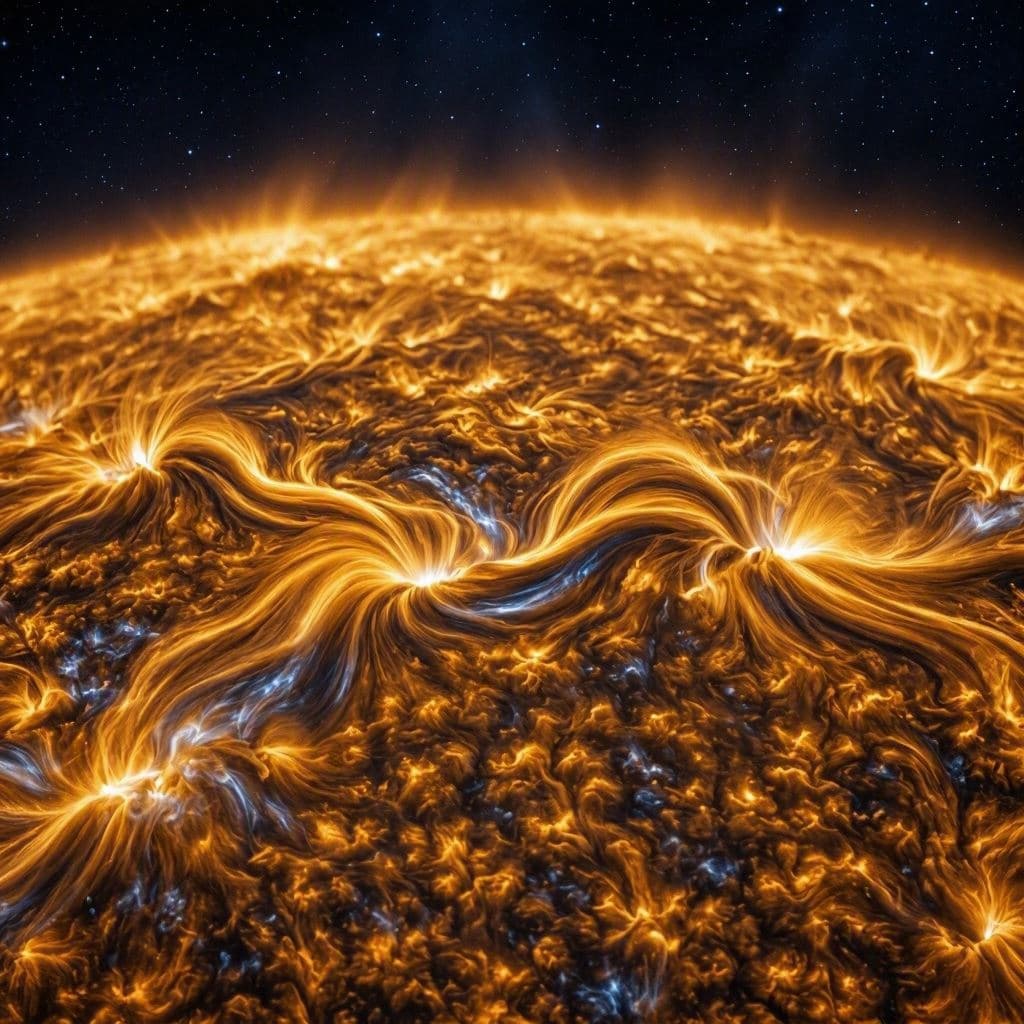
High-resolution images from space-based observatories have revealed these structures in unprecedented detail. They appear as delicate, finger-like projections along the edges of solar prominences and coronal loops. For decades, such features were difficult to resolve, but modern instrumentation has allowed scientists to track their evolution in real time. The data suggests that these instabilities are not rare events but ubiquitous phenomena, occurring across various scales and regions of the solar atmosphere.
The implications for solar physics are profound. Mixing driven by these instabilities helps transport heat and mass from the lower layers of the Sun to the corona, the outermost part of the atmosphere. This process may play a crucial role in solving the long-standing mystery of why the corona is millions of degrees hotter than the surface below. By facilitating the transfer of energy, Kelvin–Helmholtz waves contribute to the thermal balance of the star.
Furthermore, these instabilities influence the stability of magnetic structures. As plasma mixes, it can trigger reconnection events, releasing stored magnetic energy in the form of solar flares or coronal mass ejections. Understanding the onset and growth of these waves allows researchers to better predict space weather events that can impact satellite operations and power grids on Earth. It is a connection between microscopic fluid dynamics and macroscopic cosmic events.
Scientists continue to refine their models, incorporating these findings into simulations of solar activity. The goal is to create a more accurate picture of how the Sun functions as a dynamic system. Each observation adds a piece to the puzzle, revealing the intricate dance of matter and energy that sustains our nearest star.
The discovery of ubiquitous Kelvin–Helmholtz instabilities on the Sun underscores the complexity of stellar physics. These subtle waves are key drivers of plasma mixing and energy transport, offering new insights into the heating of the solar corona. As we look closer, the Sun reveals itself not as a static ball of fire, but as a vibrant, churning engine of fluid dynamics.
AI Image Disclaimer: The visual elements accompanying this report are AI-generated interpretations designed to reflect the scientific and astronomical context of the story.
Sources: NASA Solar Dynamics Observatory The Astrophysical Journal Space.com
Published by Banx Network. This article is part of the Banx decentralized media programme, powered by the BXE token on the XRP Ledger.