There is a particular kind of tension that settles over a region when missiles arc across borders and ships vanish beneath quiet waters. It is not the loudness of conflict that lingers, but the uncertainty—the sense that the familiar rules of passage and peace are being rewritten in real time. In the Strait of Hormuz, where the world's oil flows through a narrow corridor, and in the skies above Riyadh, recent events have reminded observers that the distance between calm and crisis is often measured in minutes.
The Saudi-led coalition reported Wednesday that it intercepted and destroyed a ballistic missile launched by Yemen's Houthi movement toward Riyadh, the kingdom's capital and a city of more than seven million people . The Houthis, who have been engaged in a protracted conflict with Saudi-backed forces in Yemen, claimed a broader assault that included targeting King Khalid International Airport and Aramco facilities in Riyadh and Dammam . While the coalition described the interception as successful, the psychological impact of such attacks—the air raid sirens, the debris falling on residential neighborhoods—extends well beyond the physical damage they cause.
In the waters below, a separate narrative unfolded. Iran's Islamic Revolutionary Guard Corps announced that a container ship had struck a naval mine in the Strait of Hormuz, causing an explosion and subsequent sinking . The IRGC characterized the vessel as carrying "contraband" and navigating an "unauthorized route" through the strategically vital waterway. According to the UK Maritime Trade Operations center, two container ships were struck by unknown projectiles on Tuesday, though both sustained only minor damage and were able to continue their journeys .
This pattern—competing claims, murky attribution, and strategic ambiguity—has become a defining feature of maritime tensions in the region. The United States has previously disputed Iranian accounts of similar incidents, and the gap between what different parties report can be as wide as the strait itself . For global shipping and energy markets, the uncertainty is itself a form of disruption, raising questions about insurance, routing, and the reliability of passage through one of the world's most critical chokepoints.
The Houthi attacks on Saudi infrastructure represent an escalation of a conflict that has already displaced millions and drawn in regional powers with competing interests. Saudi Arabia has accused Iran of supplying the Houthis with the missiles and drones used in these strikes, a charge Tehran has consistently denied . Meanwhile, the Saudi-led coalition has conducted its own operations targeting what it describes as Houthi fuel facilities and military assets in Yemen, arguing that these sites power the militia's war effort .
What remains consistent across these events is the quiet resilience of ordinary life in the face of geopolitical turbulence. Flights continue to depart from Riyadh's airport. Ships still navigate the strait, albeit with heightened caution. The machinery of commerce and daily existence grinds forward, even as the security architecture around it strains under the weight of competing ambitions.
The coming days will likely bring further statements, denials, and counter-claims. Diplomats will work quietly in the background, seeking to prevent the kind of miscalculation that can turn a contained confrontation into a broader conflagration. For now, the missile has been intercepted, the ship has sunk, and the region holds its breath—waiting to see whether the next chapter brings de-escalation or deepening conflict.
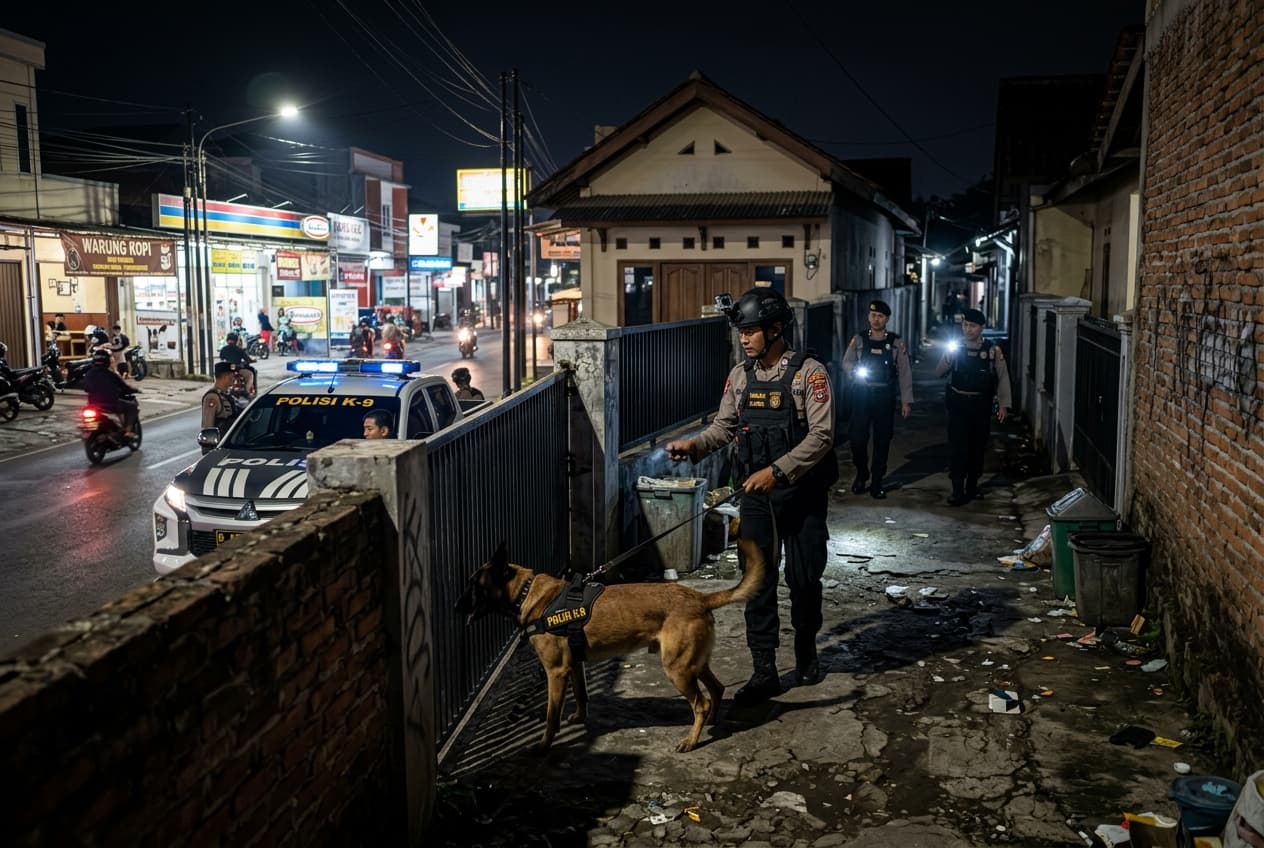
The images accompanying this article are AI-generated and intended for illustrative purposes only.
Sources: ABC News, The Canadian Press, Reuters, Kashmir Examiner, Trends MENA
Published by Banx Network. This article is part of the Banx decentralized media programme, powered by the BXE token on the XRP Ledger.