There is a particular kind of silence that follows a missile strike on a place meant for departures. Airport terminals are built for motion—for the shuffle of luggage, the murmur of announcements, the quiet anticipation of journeys about to begin. When a projectile tears through that space, it does not simply kill; it interrupts the promise that ordinary life will continue. In Riyadh this weekend, that promise was broken.
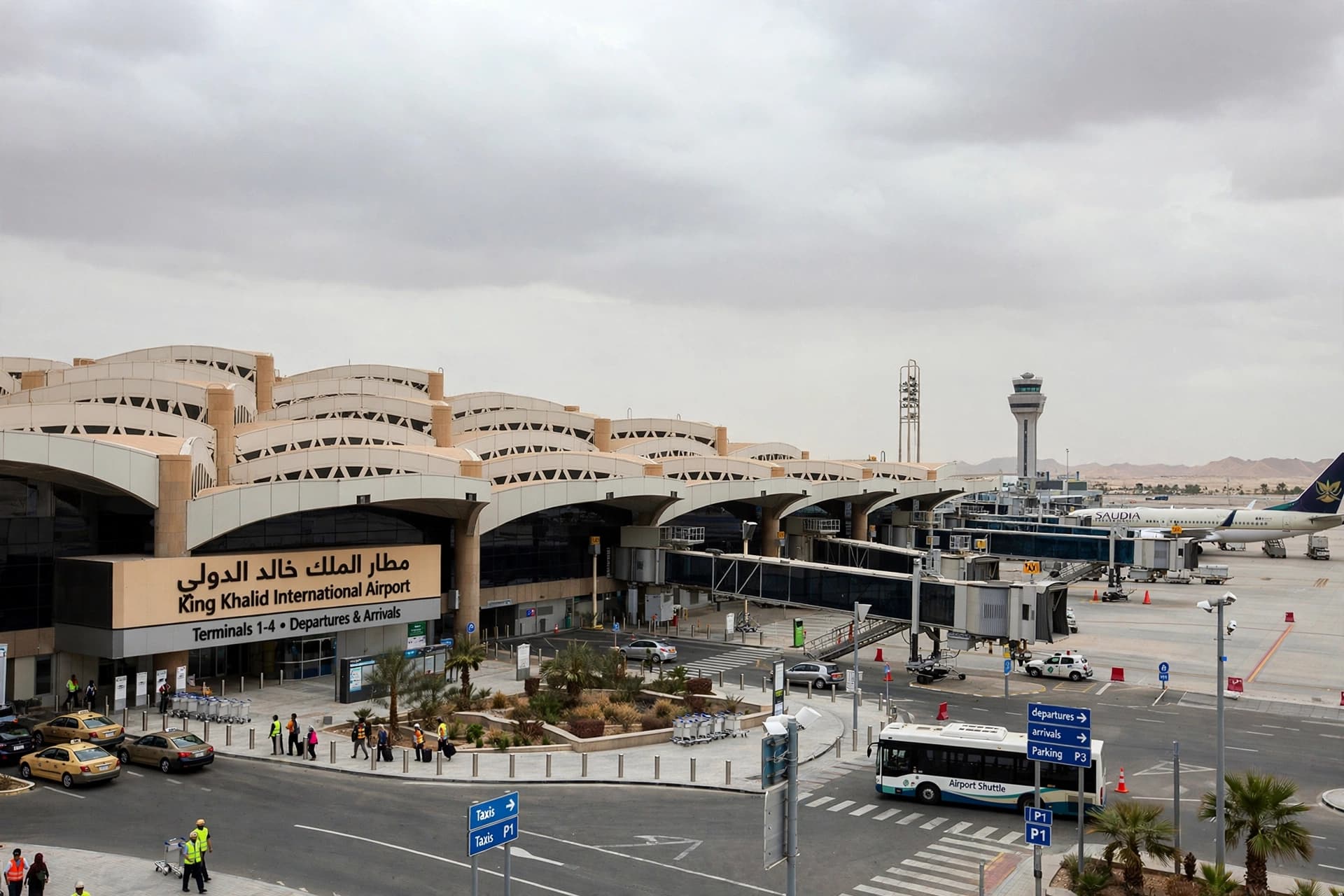
On Saturday, a missile struck King Khalid International Airport, killing at least 12 people and injuring more than 300. The dead included four Saudi citizens and eight foreign nationals from the United States, Bangladesh, Egypt, Jordan, Syria, Palestine, and Sudan . Several of the injured remained in critical condition . The attack was the deadliest on the kingdom in more than a decade and the fourth strike on the airport within twenty days .
The Saudi-led military coalition, which has been fighting the Iran-backed Houthi rebels in Yemen since 2015, quickly blamed the group and vowed a decisive response. Coalition spokesman Maj. Gen. Turki al-Maliki called the targeting of the airport a “fully-fledged war crime,” accusing the Houthis of deliberately targeting civilians, including passengers and airport workers . He said the joint forces command would respond firmly in accordance with international humanitarian law, though he did not specify the nature or timing of any retaliatory action .
The Houthis had renewed warnings to airlines and travelers against using Saudi airports, saying the facilities could be targeted and that Riyadh would bear responsibility for failed interceptions . The group had claimed earlier attacks on the airport during the same week, though it did not immediately claim Saturday’s strike .
In Washington, President Donald Trump said the attack was “not acceptable” and indicated he was considering whether the United States would join Saudi strikes against the Houthis. “We may,” he told reporters. “We’re going to look at it” . Secretary of State Marco Rubio condemned the attack, noting that an American citizen was among the dead. “These reprehensible attacks demonstrate a blatant disregard for innocent civilian life,” he wrote . The Washington Post reported that the United States was already providing intelligence support to Saudi Arabia, though no decision had been announced on direct participation .
The United Nations also condemned the strike, with Secretary-General António Guterres reiterating that attacks against civilians and civilian infrastructure violate international law. The UN’s special envoy for Yemen, Hans Grundberg, described the situation as a “grave escalation” .
For the families of the twelve dead and the hundreds wounded, the geopolitics of the moment matter less than the simple fact of loss. An airport is a threshold between the known and the unknown, a place where journeys begin and loved ones depart. On Saturday, that threshold became something else entirely. The coalition has promised a response; the region waits to see what shape it will take.
AI Image Disclaimer: All images accompanying this report are AI-generated and intended for illustrative purposes only, not as documentary records of the event described.
Sources: Hespress English, Australian Broadcasting Corporation, RSI Radiotelevisione svizzera, The New Arab, Jordan Times, Bhaskar English
Published by Banx Network. This article is part of the Banx decentralized media programme, powered by the BXE token on the XRP Ledger.