
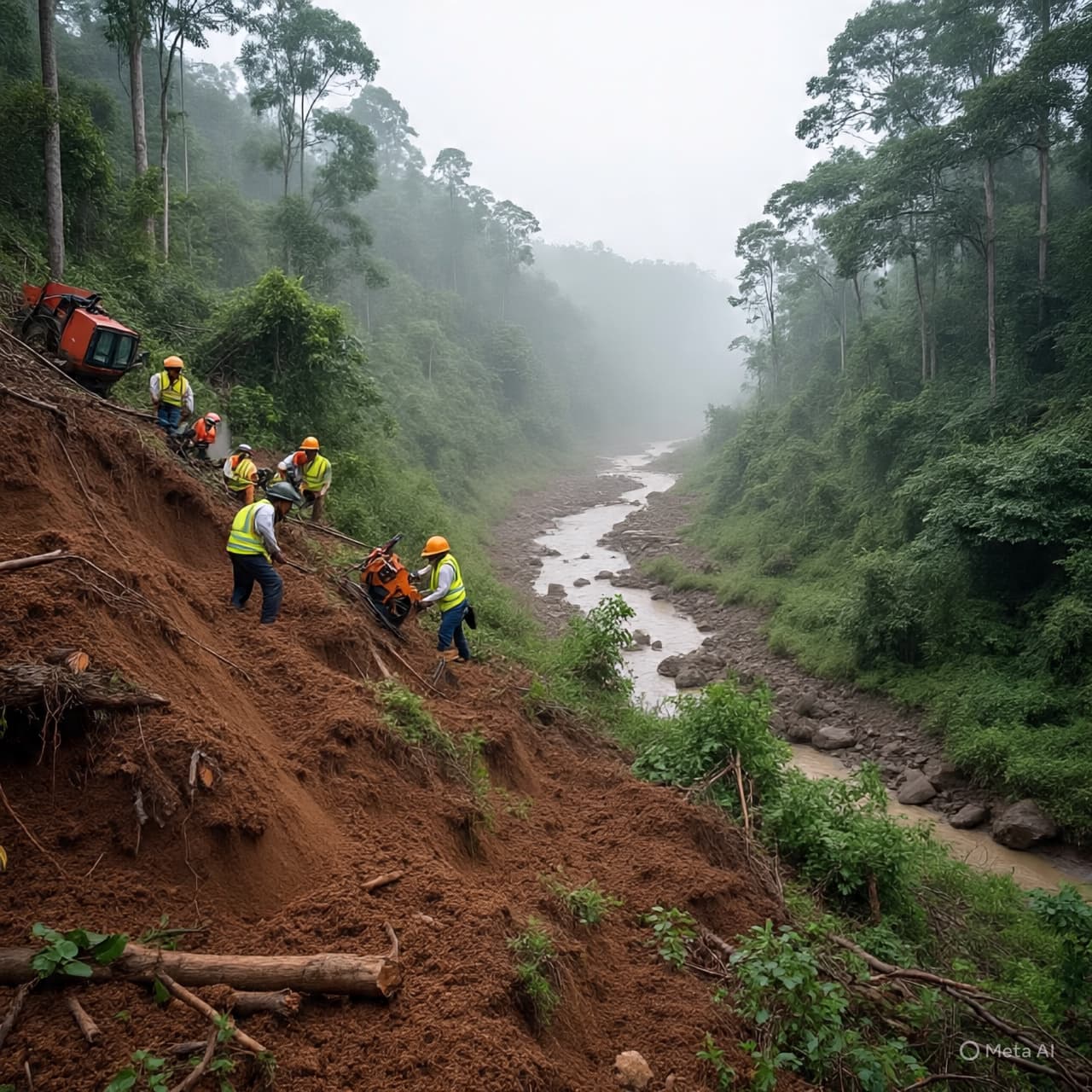
In the soft hush before dawn, when riverbanks seem still and the world holds its breath, water does not always move in silence. Across Southeast Asia this year, floods have roared like forgotten storms — sweeping away homes, lives, and long-held certainties. What unfolded was not random misfortune, but a harsh reminder: nature’s pulse has changed, and the warning echoes in every swollen river and waterlogged village.
This year, more than 1,400 lives were lost across Indonesia, Sri Lanka, Thailand and other countries as unusually severe floods and landslides ravaged communities. Entire villages were cut off, roads and bridges washed away, and thousands were displaced — some still unaccounted for. Governments struggled to respond; emergency aid came, but for many the damage was already done.
What feels unprecedented, scientists warn, is precisely what a warming planet had promised. Atmospheric concentrations of greenhouse gases spiked sharply in 2024 — fueling climate patterns that “turbocharged” storms and rainfall. The region as a whole is warming nearly twice as fast as the global average, making weather extremes more frequent and more violent.
Warmer seas and air now hold more moisture, offering storms more fuel. Rising seas augment storm surges. And when storms arrive late — after monsoon season, when infrastructure and communities are ill-prepared — devastation hits even harder. Some scientists caution that although the total number of storms may not drastically rise, their intensity and unpredictability almost certainly will.
Beyond climate — ecosystems and human actions play a role too. In parts of Indonesia, flood damage was worsened by deforestation and degraded landscapes, reducing natural water absorption and increasing landslide risk.
The toll — human and economic — is immense. Agriculture, homes, infrastructure, and the livelihoods of millions have been lost or disrupted. For many communities already marginalized, this calamity deepens existing inequalities.
Yet amid the water and wreckage, the floods send a clear message: this is not a one-off tragedy. It is a warning — an alarm that climate change is no longer distant; it is here, reshaping seas, storms, and lives. The region stands at a crossroads. Without urgent, meaningful adaptation — better infrastructure, early-warning systems, ecosystem restoration, and climate-responsible policies — the next deluge may not spare even more.
As Southeast Asia grapples with grief and loss, this moment calls for reflection — and action. Because the rising waters are not just a reflection of rain; they are a mirror held up to humanity’s choices.
AI image disclaimer: “Illustrations were produced with AI and serve as conceptual depictions.”
Sources (media/organization names only): Associated Press; The Guardian; WMO (World Meteorological Organization); Weather.com; Global Forest Watch
Published by Banx Network. This article is part of the Banx decentralized media programme, powered by the BXE token on the XRP Ledger.


