They set out at dawn, families loaded, suitcases perched like fragile promises atop roofs, hearts full of memory and a private urgency to return. And so began the migration back: a tide of humanity heading toward city lights and the everyday. When a holiday meant escape, now its end turns into a test of patience — and of infrastructure stretched beyond its quiet means.
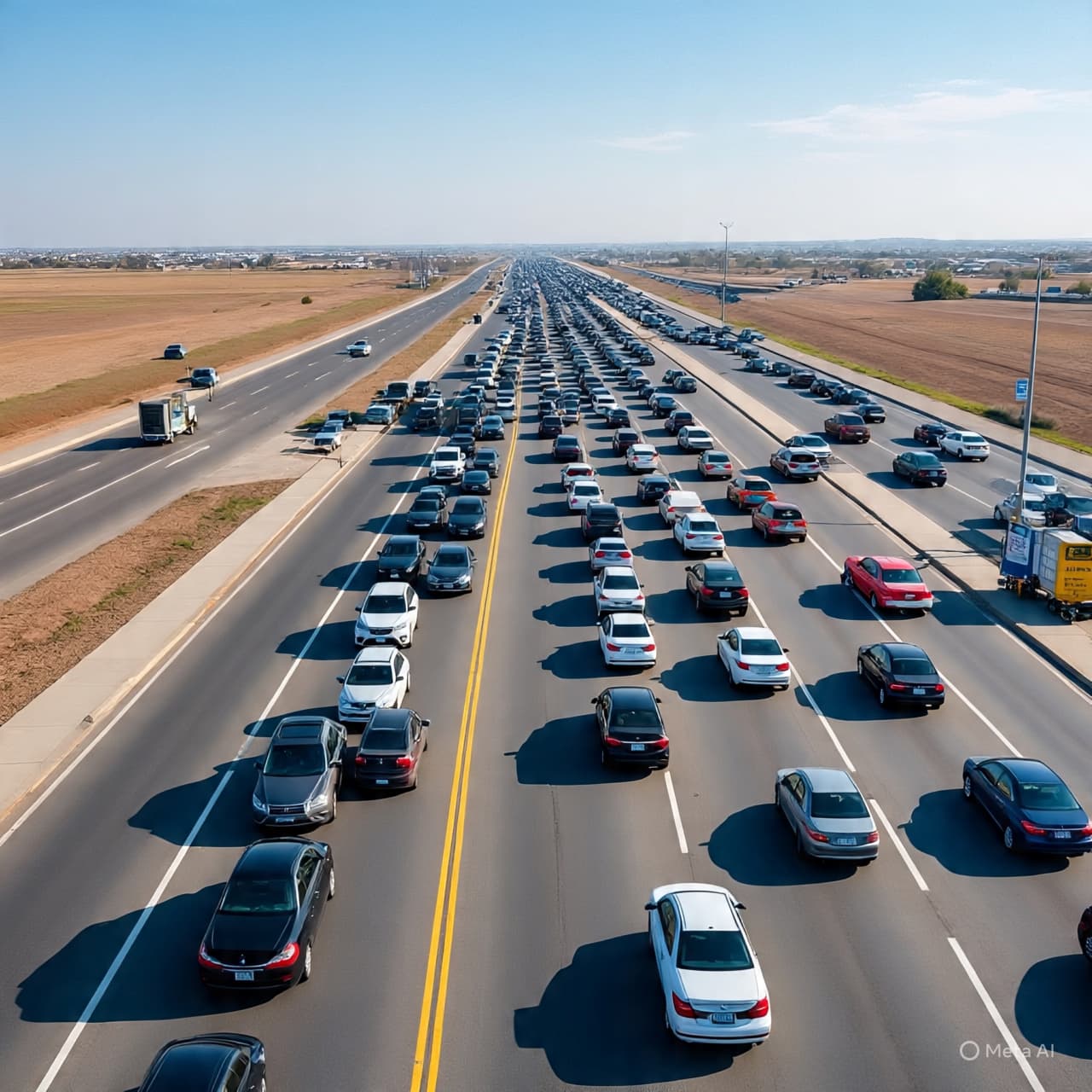
In China, the conclusion of the extended National Day break—this year merged with Mid-Autumn Festival observance—has unleashed a tidal wave of vehicles returning east, south, north. The roads that once carried dreams now carry the weight of delays. At the widening arteries, especially around the capital region and along the major expressways, hope crawls on wheels. Thousands of cars funnel toward the Beijing–Hong Kong–Macau Expressway, spreading across fifty lanes before being squeezed into far narrower stretches. What ought to be a 10-hour journey now drags into 20 to 25 hours of slow, sinuous movement.
The traffic jam crystallizes more than congestion: it reflects a country’s mobility, its social rhythms, and the tension between celebration and chore. Around 888 million trips were recorded this year — a surge over previous years — as citizens seized the chance to travel, reunite, and rest. But now, as they return, the same roads that carried them out become obstacles in their path. The Wuzhuang Toll Station in Anhui province became one of the flashpoints: a 36-lane gate glowing in red tail lights, vehicles compressing, merging, waiting. Drone footage and social media images show cars inching forward, then pausing in pressure, lane after lane coalescing into narrower queues.
This isn’t merely about bottlenecks. It is about momentum lost, about hours stretched into fatigue, about people who leave home in expectation and find delay as their companion on return. Critics say the mismatch between road capacity and flow is no accident but a reflection of planning deferred, of infrastructure lagging behind ambition, of a nation where mobility is a promise sacred until it is tested by scale.
Others see something more intimate: the distance between city and countryside, the longing for rootedness, the pause in rhythm when transition becomes trial. For a moment, the roar of engines becomes a chorus, not of arrival but of striving. In that chorus, one hears not just frustration, but a reminder: that movement, once essential, can become fate’s slow echo.
China’s days of holiday will give way to its days of work again; yet this congestion will linger as memory — proof that in the rush to return, the very roads meant to free us can also bind us.
The Chinese authorities reported that the massive post-holiday traffic jam significantly delayed travel times, with some routes taking two to two-and-a-half times longer than usual.
AI Image Disclaimer: “Visuals are created with AI tools and are not real photographs.”
Sources: Reuters, NDTV, Travel & Tour World, China’s Culture & Tourism Ministry
Published by Banx Network. This article is part of the Banx decentralized media programme, powered by the BXE token on the XRP Ledger.