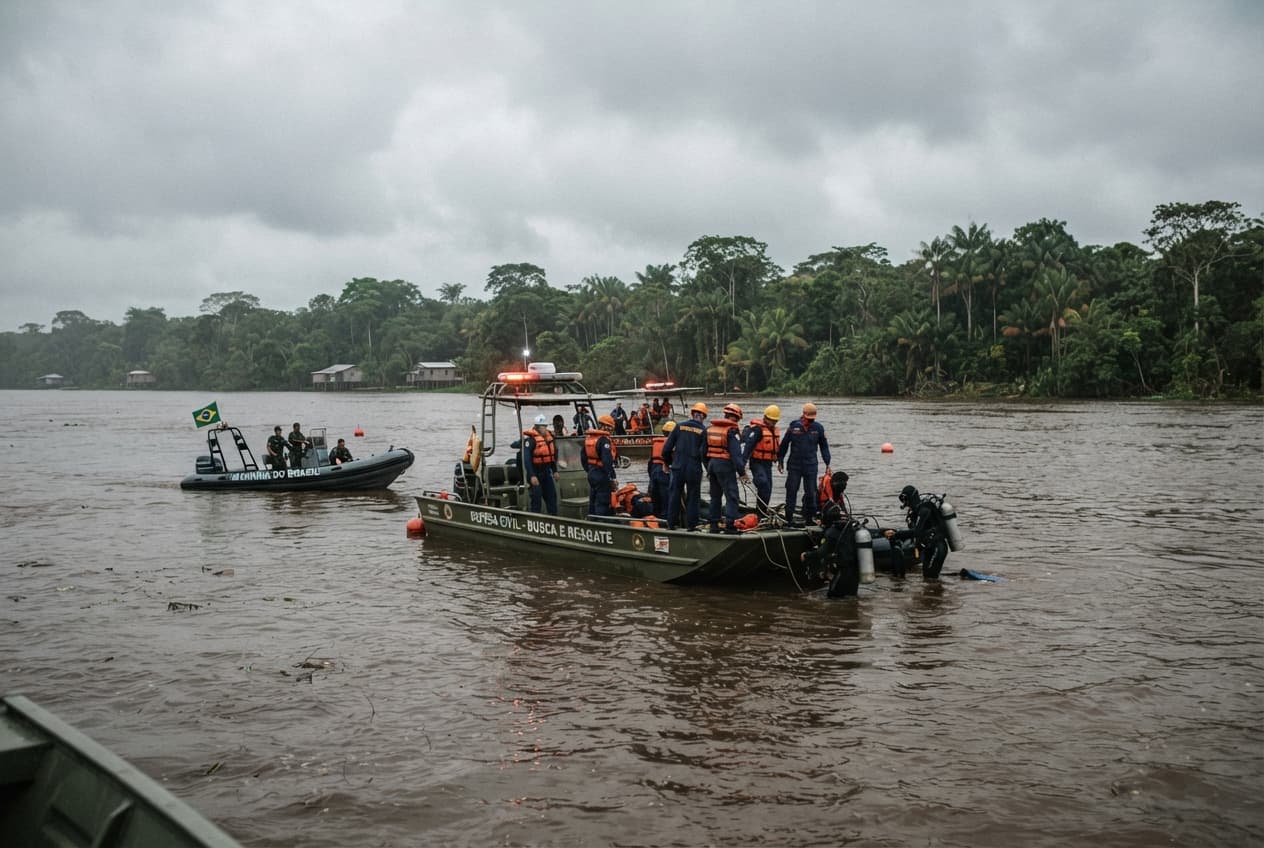
Manaus, Brazil—Emergency rescue teams fought against treacherous river currents to search for several passengers still unaccounted for following a fatal vessel capsize on the Amazon River. The wooden riverboat was carrying dozens of local commuters and cargo when violent squalls struck the waterway, destabilizing the hull. Survivors reported that the vessel rolled over within minutes, plunging passengers into the dark, churning brown water without warning. Local fishermen operating small motorized skiffs managed to pull several shivering survivors from the current before official patrols arrived.
State security forces confirmed that four bodies were recovered from the river cabin compartments during initial sweeps by civil defense divers. Hospitals in the regional capital prepared trauma bays to receive casualties suffering from hypothermia, shock, and secondary drowning complications. Relatives of the missing gathered frantically along the municipal docks, demanding information from transport authorities about passenger manifests. Maritime police noted that river transport regulations are frequently flouted on remote tributary routes, complicating accurate casualty headcounts.
Naval inspectors boarded surviving crew members to interrogate them regarding cargo weight limits and mandatory life vest inventories. Witnesses claimed the vessel sat dangerously low in the water due to an excessive load of consumer goods stacked on the lower deck. The regional waterways agency launched an immediate administrative inquiry into the operational status of the sunken commercial craft. Salvage tugboats arrived at the coordinates to secure the partially submerged hull before it drifted further downstream into deep shipping lanes.
The tragedy exposed persistent infrastructural vulnerabilities plaguing remote river communities heavily dependent on informal water transit networks. Local politicians expressed routine condolences while civil society groups demanded stricter safety enforcement and mandatory vessel tracking transponders. Nightfall forced search coordinators to temporarily suspend surface sweeps, leaving only radar-equipped patrol boats on station. Families huddled under plastic tarps near the riverbank, holding vigil through the damp tropical night as searchlights swept the dark water.
Rescue coordinators warned that strong underwater currents and massive floating debris fields would severely complicate diving operations scheduled for dawn. The federal transport ministry promised increased funding for riverine safety inspections, though local unions dismissed the pledges as empty rhetoric. Commercial shipping traffic along the central Amazon artery faced temporary restrictions to clear the search zone for emergency craft.
The sunken hull shifted slightly against the sandy river bottom as the powerful current battered the twisted aluminum superstructure.
Investigators continued interviewing dock workers who handled the initial loading manifest prior to the vessel's fateful departure.
Published by Banx Network. This article is part of the Banx decentralized media programme, powered by the BXE token on the XRP Ledger.

.jpg&w=3840&q=75 "Building Collapse, Iraq: Gas Cylinder Explosion Destroys Baghdad Residential Tenement, Leaving Four Dead")