In certain corners of science, discovery arrives not with light but with motion.
Across the universe, far beyond the reach of ordinary telescopes, massive objects drift through darkness. Black holes circle one another slowly, neutron stars spiral inward across ages, and at the final moment their motion becomes so violent that space itself shudders. These tremors do not travel as light or matter. Instead, they move as ripples in the very fabric of spacetime.
For most of human history, such events unfolded unnoticed. The waves passed silently through planets, stars, and galaxies, their presence too subtle to detect.
Only recently have instruments on Earth become sensitive enough to hear them.
Since the first confirmed detection of gravitational waves in 2015, observatories such as the Laser Interferometer Gravitational-Wave Observatory (LIGO) and the Virgo detector have gradually opened a new window on the universe. Their detectors measure distortions smaller than a fraction of a proton’s width—tiny shifts caused by waves traveling across billions of light-years.
Now, researchers have released a new catalog of detections that significantly expands the known population of these cosmic signals. The updated dataset roughly doubles the number of recorded gravitational-wave events, capturing dozens of additional mergers involving black holes and neutron stars.
Each signal begins with a faint whisper in the detectors: a rising oscillation that grows stronger and faster as two massive objects spiral closer together. In the final milliseconds, the waveform climbs to a peak before fading abruptly as the objects merge into a single, heavier remnant.
To scientists, these patterns are more than signals. They are fingerprints of extreme physics. From them, researchers can estimate the masses of the merging objects, the distance to the event, and the energy released as gravitational radiation.
Some collisions involve black holes tens of times heavier than the Sun. Others reveal neutron stars—collapsed stellar cores packed so densely that a teaspoon of their material would weigh billions of tons.
As the catalog expands, the events begin to form a statistical portrait of the universe’s most violent environments. Astronomers can examine how frequently black holes merge, how massive they tend to be, and whether certain types of stellar remnants appear more often than theory predicts.
The growing record also helps answer questions about how these systems form. Some may originate from binary stars that evolve together until collapse. Others might arise inside dense stellar clusters, where gravitational encounters push black holes into close orbits.
Each detection adds another line to the story.
The instruments themselves continue to improve. With upgrades to detectors and analysis techniques, scientists expect future observing runs to capture even more signals—perhaps hundreds each year. As sensitivity increases, events from farther reaches of the cosmos will gradually enter the record.
For now, the expanding catalog marks a quiet milestone. What began as a single detection has become a growing archive of cosmic collisions, each ripple carrying information across immense distances.
The newly released catalog reports that the number of confirmed gravitational-wave detections has roughly doubled, providing scientists with a larger dataset for studying black hole and neutron star mergers across the universe.
AI Image Disclaimer
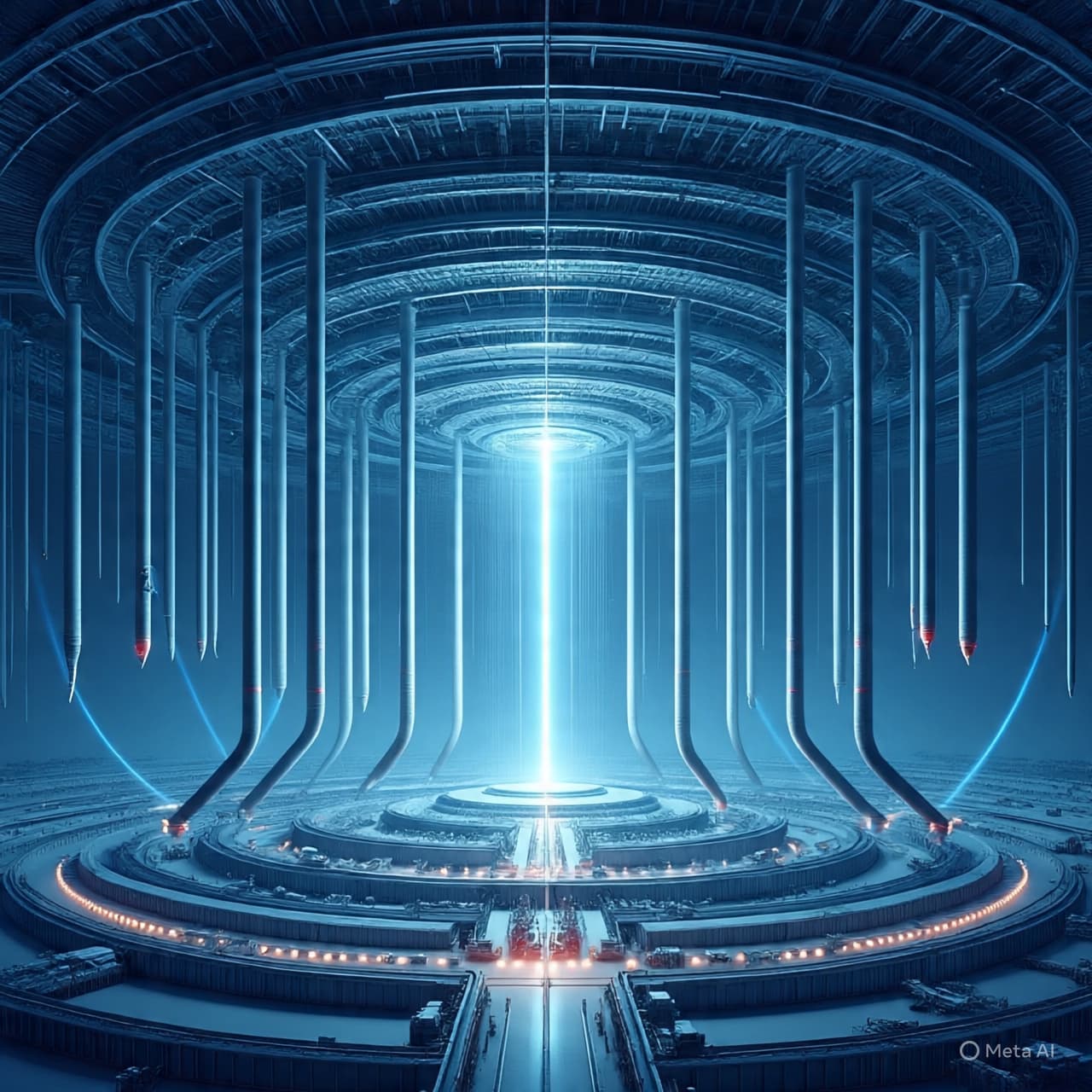
Images are AI-generated conceptual visuals and do not depict actual astrophotography.
Source Check
Credible coverage and/or primary reporting exist from: Nature ScienceDaily Phys.org Space.com The Guardian
Published by Banx Network. This article is part of the Banx decentralized media programme, powered by the BXE token on the XRP Ledger.