
Key Highlights
- Ripple has ceased onboarding new banks, shifting focus to becoming its own bank.
- The company targets the $30 trillion global cash market using XRP as digital cash.
- XRP offers fast, low-cost transactions, positioning it as an alternative to physical cash.
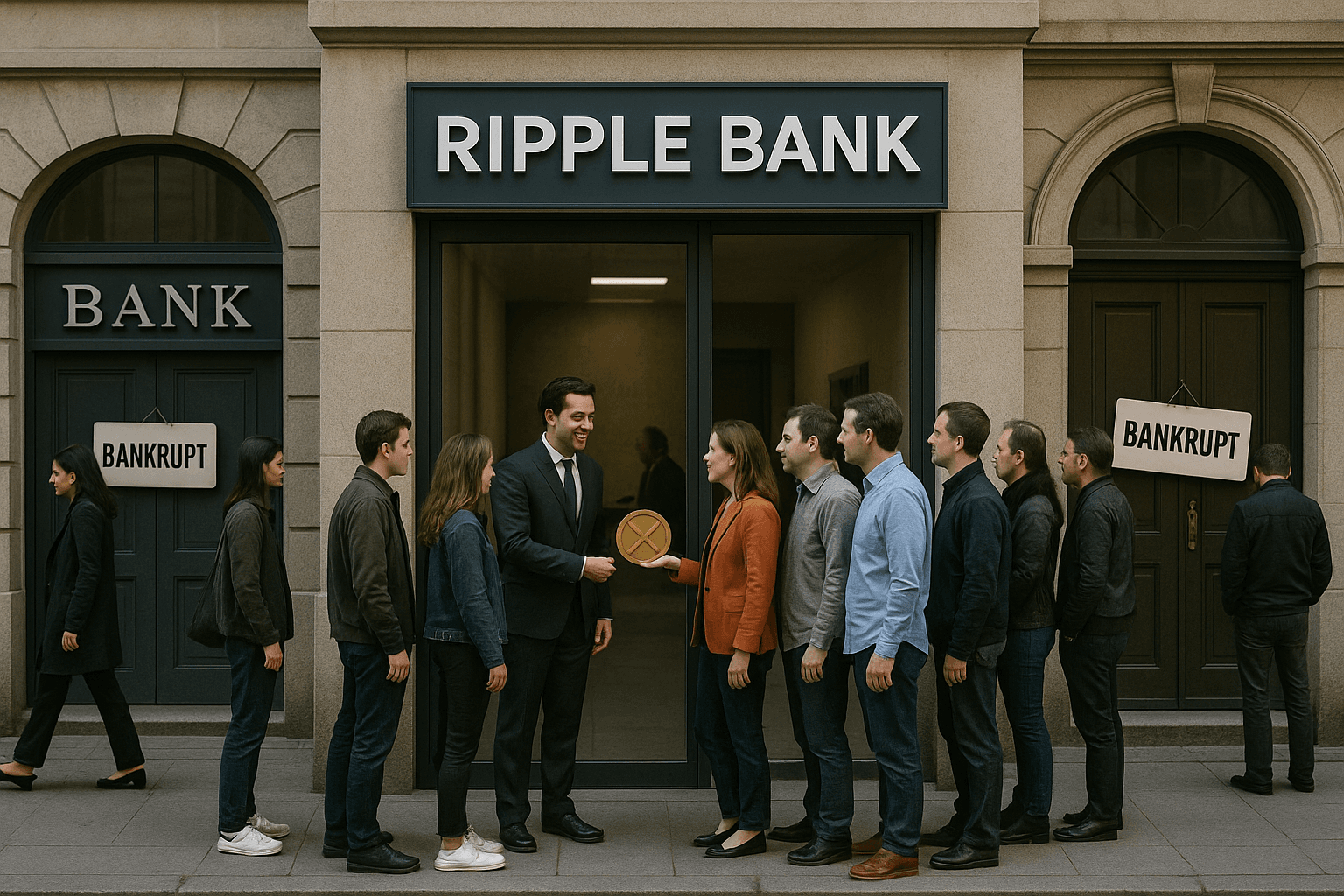
Ripple Labs, a prominent player in the cryptocurrency space, has announced a significant strategic pivot. According to David Schwartz, the company's Chief Technology Officer, Ripple will no longer pursue partnerships with traditional banks. This marks a departure from its previous strategy of integrating its On-Demand Liquidity (ODL) product with over 300 financial institutions worldwide. Schwartz stated, "We’ve closed a lot of deals, but we’re done adding new banks. They simply move too slow." This shift indicates Ripple's intention to establish itself as a standalone financial entity, utilizing XRP as a direct substitute for cash in transactions.
The global cash market presents a lucrative opportunity for Ripple, estimated at $30 trillion annually. Despite the increasing digitization of finance, cash remains a dominant form of transaction, particularly in developing economies. According to data from the International Monetary Fund (IMF) and the Bank for International Settlements (BIS), between $8 trillion and $10 trillion in physical currency is currently in circulation. Furthermore, the World Bank and the ATM Industry Association report that over $25 trillion is withdrawn from ATMs each year. With approximately 30% to 35% of global consumer transactions still conducted in cash, Ripple's strategy to position XRP as a digital alternative could allow it to capture a significant share of this market.
XRP has long been recognized for its potential as a bridge asset in cross-border payments. However, its attributes also make it suitable as a form of digital cash. The XRP Ledger boasts impressive settlement speeds of approximately 3 to 5 seconds, with transaction costs under $0.0005. Additionally, XRP is noted for its energy efficiency, being around 57,000 times more efficient than Bitcoin, and its scalability, capable of processing up to 1,500 transactions per second natively. As of mid-2025, the XRP Ledger processes over 5 million transactions daily, with increasing burn rates due to heightened network demand, contributing to XRP's deflationary characteristics.
Ripple's ambition to become a regulated financial institution or digital bank extends beyond mere payment processing. By establishing itself as a bank, Ripple aims to offer a range of services directly to consumers and businesses, including wallets, custodial services, tokenized deposits, stablecoin transfers, and central bank digital currency (CBDC) settlements. This approach would enable Ripple to provide real-time liquidity and settlement solutions across various regions, leveraging XRP as the primary unit of value for everyday transactions.
The decision to stop courting traditional banks may seem counterintuitive at first glance. However, it reflects Ripple's vision of a decentralized finance future. If successful, Ripple could circumvent outdated financial systems and integrate XRP into the core of global commerce, facilitating everything from micropayments to large-scale liquidity flows. With trillions in fiat currency still circulating through antiquated systems, the potential for disruption is immense, and Ripple is poised to act swiftly in this evolving landscape.
Published by Banx Network. This article is part of the Banx decentralized media programme, powered by the BXE token on the XRP Ledger.



