Ex-Ripple Executive Now Holds One of the Most Powerful Seats in U.S. Finance as Blockchain Adoption Accelerates
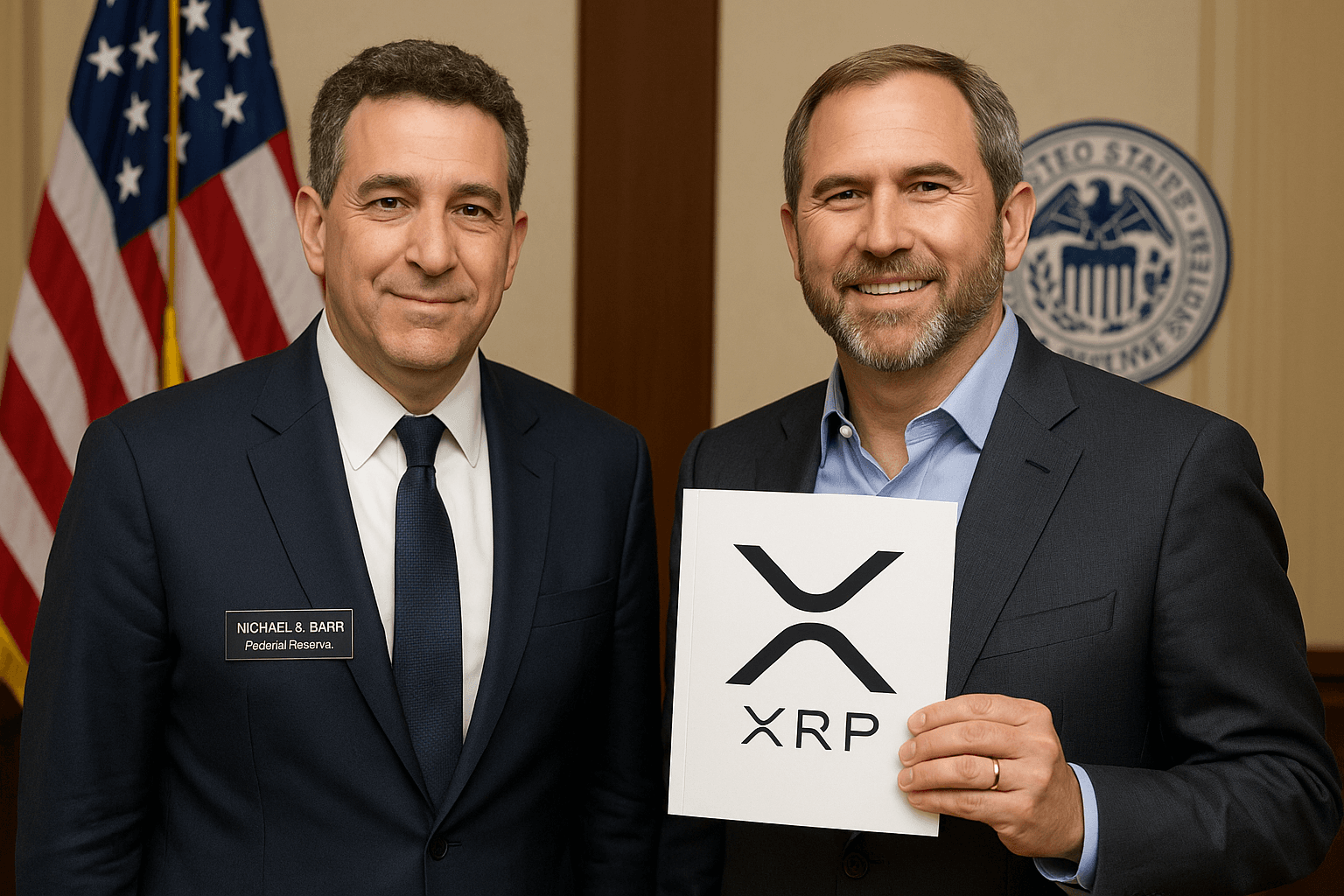
🧠 Who Is Michael Barr? Michael S. Barr is the current Vice Chair for Supervision at the U.S. Federal Reserve, a role he assumed on July 19, 2022, after being nominated by President Joe Biden and confirmed by the U.S. Senate. As Vice Chair for Supervision, Barr oversees the regulation and supervision of the largest banking institutions in the United States — arguably making him the most powerful banking regulator in the country.
But before stepping into this role, Barr served as an advisor to Ripple Labs, the blockchain company behind the XRP Ledger (XRPL), from July 2015 onward.
🔗 Ripple Connection: Since 2015 Ripple Labs announced Barr’s appointment to its advisory board in a press release dated July 29, 2015, highlighting his expertise in financial regulation and innovation. At the time, Barr stated:
“I’m excited to be joining the Advisory Board of Ripple Labs. Our global payments system is badly outdated. Innovation in payments can help make the financial system safer, reduce cost, and improve access and efficiency for consumers and businesses alike.” — Michael Barr, 2015 (Ripple Labs Press Release)
Barr’s deep understanding of Ripple’s mission — specifically around modernizing cross-border payments and leveraging XRP for liquidity — makes him uniquely informed in the regulatory landscape shaping blockchain’s future in banking.
🏛️ Now at the Helm of U.S. Financial Oversight At the Federal Reserve, Barr is now responsible for:
Supervising systemically important banks
Evaluating emerging financial technologies, including blockchain
Overseeing the development of new payment infrastructures
This puts Barr in a direct position to influence U.S. policy around:
Stablecoins
Tokenized banking systems
Interbank settlement frameworks — the very area Ripple specializes in
His dual experience — private sector innovation with Ripple and public sector regulatory leadership — uniquely positions him to shape how technologies like XRP Ledger could be integrated into the U.S. banking system.
🧩 Policy Shifts Aligned With Ripple's Vision Since Barr’s appointment:
The Fed has expanded its exploration of tokenized assets and faster settlement rails, which Ripple’s ODL and RLUSD stablecoin aim to solve.
The GENIUS Act (passed in July 2025) created a regulatory framework for stablecoins like Ripple’s RLUSD, opening the door for blockchain-native settlement instruments in U.S. finance.
Ripple has applied for a federal banking charter, which would require Federal Reserve approval to access the master account — a decision Barr may have influence over.
🧠 Why This Matters While Barr has not publicly advocated for XRP integration, his past affiliation with Ripple, combined with his current regulatory power, has raised eyebrows across both the crypto and financial policy communities. Critics and supporters alike recognize that Ripple’s vision for cross-border payments is now being reviewed and regulated by someone who once helped shape it.
This convergence of public policy leadership and private-sector blockchain experience is rare — and potentially transformative.
🔍 Final Thoughts Michael Barr’s journey from Ripple advisor to Fed supervisor is not just a career arc — it’s a case study in how blockchain is making its way into the heart of global finance. With XRP’s use case centered around fast, efficient banking and liquidity flows, Barr’s oversight role could significantly affect how — and when — Ripple’s technology is formally adopted within U.S. banking infrastructure.
As the regulatory and financial world evolves rapidly, all eyes are on the intersection of crypto-native innovation and traditional policy power — and Michael Barr is sitting directly at that crossroads.
Published by Banx Network. This article is part of the Banx decentralized media programme, powered by the BXE token on the XRP Ledger.