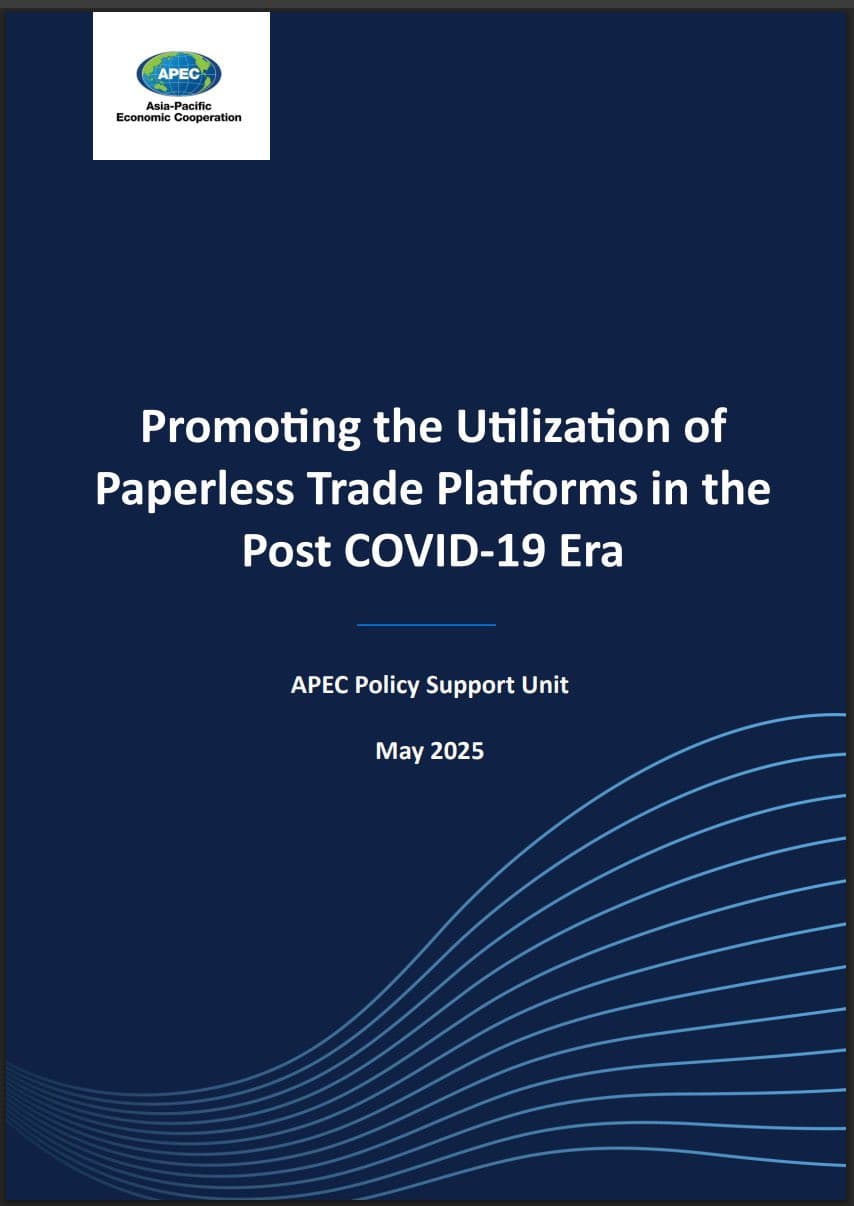
In a world still reeling from the COVID-19 chaos, where supply chains snapped like brittle twigs and paperwork piled up like forgotten relics, a digital renaissance is underway. Imagine slashing trade costs by up to 6.7% and boosting economies by billions—all without a single sheet of paper. That's the power of paperless trade platforms, as spotlighted in the groundbreaking 2025 APEC report, "Promoting the Utilization of Paperless Trade Platforms in the Post COVID-19 Era." This isn't just tech jargon; it's a seismic shift that's adding USD 383 billion in value to key APEC economies and supporting over 8.5 million jobs. Let's rewind to the roots of this innovation. Trade has always been bogged down by bureaucracy—bills of lading, letters of credit, customs forms—documents that could take days or weeks to shuffle across borders. Pre-COVID, global trade relied on an estimated 4 billion paper documents annually, contributing to massive delays and environmental waste. But the pandemic exposed these vulnerabilities: lockdowns halted physical exchanges, forcing a pivot to digital. Enter paperless platforms, blending blockchain, AI, and cloud tech to digitize everything from document prep to payments. The result? A 17% faster decision-making time for goods entry, as seen in the UK's Ecosystem of Trust pilot, and potential CO2 savings equivalent to planting 400 million trees across Asia-Pacific. Background facts paint a vivid picture of evolution. In the 1980s, early electronic data interchange (EDI) systems laid the groundwork, but they were clunky and limited. Fast-forward to the 2010s: Blockchain exploded onto the scene, offering immutable, secure ledgers. Platforms like IBM's TradeLens (though it folded in 2022 due to governance hiccups) proved the concept, paving the way for survivors like GSBN, which has issued over 300,000 electronic bills of lading (eBLs) and released 1.5 million shipments involving 20,000+ companies. WaveBL dominates with a 65% eBL market share, covering 136 economies, turning what was once a fraud-prone paper chase into a tamper-proof digital highway. Amid this, APEC's report crunches the numbers: In 2021, these platforms juiced exports by USD 236.2 billion across eight economies—think China's USD 96.9 billion boost or Mexico's 4.8% trade flow surge. Full digitalization across five core processes (docs, finance, shipping, customs, payments) yields 8-9% savings, far outpacing partial efforts. SMEs, often the underdogs, gain the most, bridging digital divides and empowering women-led businesses through accessible tools. Spotlight on innovation: Singapore's TradeFinex, launched in 2018, partners with the XDC Trade Network to revolutionize trade finance via blockchain. XDC, a hybrid blockchain powerhouse, enables decentralized apps (dApps) for seamless, interoperable trade—cutting out middlemen, reducing fraud, and speeding up financing. This partnership, highlighted in the APEC report, exemplifies how fintech is democratizing global trade. XDC's network, with roots in XinFin's enterprise-grade tech, handles real-time settlements and integrates with platforms like TradeGo, which even pilots digital currency payments. It's not just efficient; it's eco-friendly, slashing paper use and emissions while curbing illicit flows that drain USD 100+ billion yearly. But challenges loom: High switching costs (20% of annual ops) and skills gaps hinder adoption, especially for SMEs. Governments must step up with subsidies and training, as APEC urges, to unlock full potential—potentially adding USD 257 billion in annual exports. In essence, paperless trade isn't a fad; it's the future. From pandemic survival tool to economic turbocharger, it's proving that innovation thrives in crisis. As Psalm 34:19 reminds us, rescue comes in unexpected forms—here, through code and collaboration. With XDC leading the charge, global trade is poised for a paper-free boom, resilient and revolutionary. (2,298 characters)
Published by Banx Network. This article is part of the Banx decentralized media programme, powered by the BXE token on the XRP Ledger.