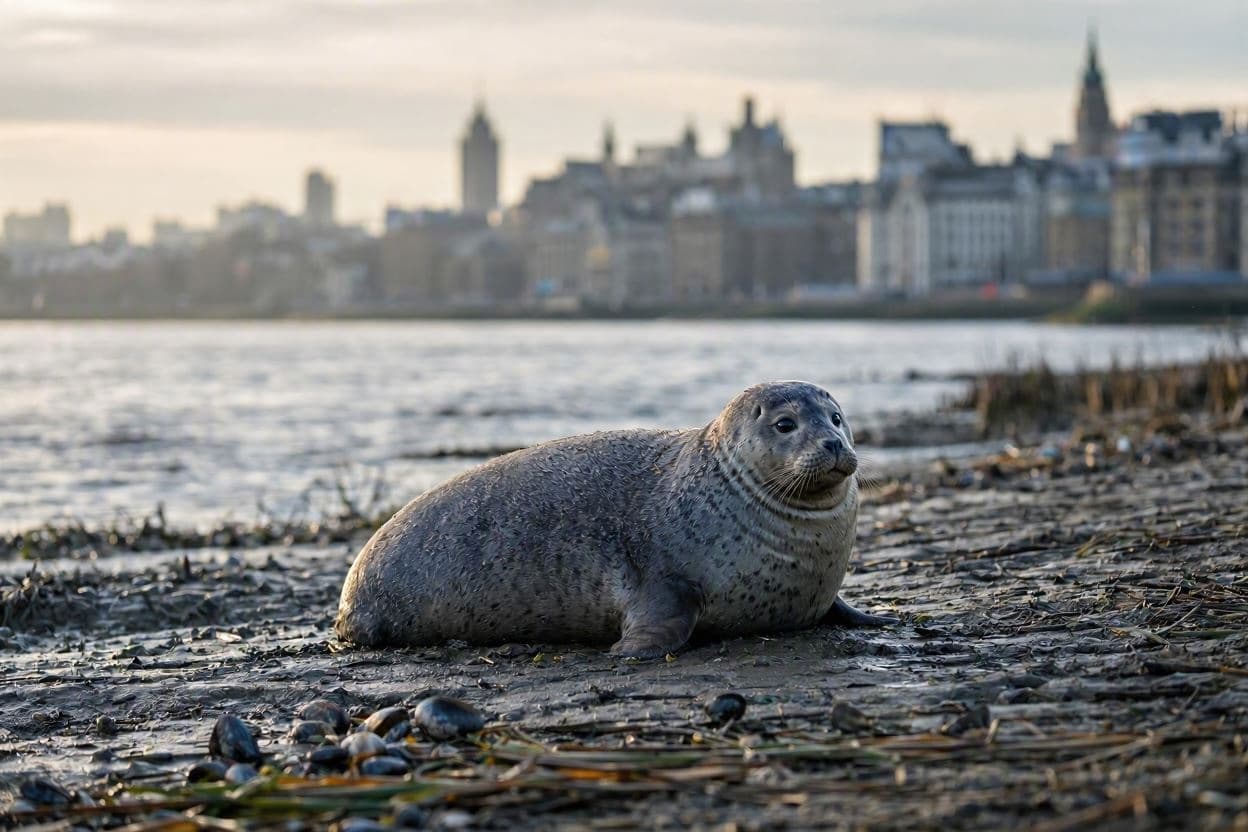
The River Thames, a historic artery that has long defined the rhythm of London, is no longer just a conduit for commerce and transport. In recent years, it has become a sanctuary for wildlife, most notably the harbor seals that have made its banks their home. These curious creatures, often seen basking on mudflats or swimming near busy embankments, have captured the public imagination. However, their growing presence has sparked a gentle but urgent plea from conservationists: to give them space, for the safety of both the animals and the people who admire them.
Seals are wild animals, instinctively cautious yet increasingly accustomed to human proximity in urban environments. While their playful demeanor may invite interaction, experts warn that close encounters can lead to stress for the seals and potential danger for humans. A startled seal may react defensively, and its powerful jaws, designed for catching fish, can cause serious injury if it feels threatened. This dynamic creates a delicate balance between appreciation and respect for boundaries.
The issue is compounded by the popularity of social media, where close-up photos and videos of seals often garner significant attention. Well-meaning individuals may approach too closely to capture the perfect shot, inadvertently disturbing the animals’ rest or feeding patterns. Conservation groups emphasize that observing from a distance is not only safer but also more beneficial for the seals’ well-being, allowing them to behave naturally without human interference.
Local authorities and wildlife organizations have launched awareness campaigns to educate the public on proper etiquette. Signs along the riverbanks remind visitors to keep a safe distance, typically recommending at least fifty meters. These guidelines are not meant to discourage engagement with nature but to foster a more sustainable and respectful form of coexistence. By stepping back, observers can enjoy the spectacle of these marine mammals without disrupting their habitat.
The presence of seals in the Thames is a sign of environmental recovery, indicating improved water quality and a healthier ecosystem. Their return is a success story of conservation efforts over the past few decades. Protecting them now ensures that this positive trend continues, allowing future generations to witness the same natural wonders that have emerged in the heart of the city.
Community involvement plays a crucial role in this effort. Local residents and regular river users are often the first to notice distressed animals or unsafe interactions. By reporting such incidents to wildlife rescue services, they contribute to the protection of the seals. This collective vigilance helps maintain a safe environment for all species sharing the riverine landscape.
Ultimately, the plea for space is a call for mindfulness. It invites Londoners and visitors alike to view the seals not as attractions to be approached, but as neighbors to be respected. This shift in perspective enriches the urban experience, adding a layer of wildness to the cityscape that is both precious and fragile.
As the seal population in the Thames continues to thrive, the importance of maintaining a respectful distance becomes clear. By giving these animals the space they need, we ensure their safety and our own, fostering a harmonious relationship between urban life and the natural world.
AI Image Disclaimer: The visual representations accompanying this article are generated by artificial intelligence to illustrate the subject matter.
Sources: BBC News Zoological Society of London (ZSL) The Guardian
Published by Banx Network. This article is part of the Banx decentralized media programme, powered by the BXE token on the XRP Ledger.