Science has often advanced through specialization, with researchers dedicating entire careers to understanding increasingly narrow domains of knowledge. Yet many of the world's most pressing challenges—climate change, disease, and energy security among them—demand collaboration across disciplines. A newly introduced artificial intelligence model aims to help bridge those boundaries.
Researchers have unveiled a universal AI framework designed to operate across multiple scientific disciplines. Unlike systems trained for highly specific tasks, the new model seeks to analyze, interpret, and generate insights spanning fields ranging from biology and chemistry to physics and environmental science.
The developers describe the system as an effort to create a shared computational foundation capable of processing diverse scientific data. Such a platform could allow researchers from different disciplines to work with common analytical tools while preserving the unique requirements of their respective fields.
According to the research team, the model has been trained using large collections of scientific literature, datasets, and experimental results. By integrating information from multiple sources, the AI may be able to identify relationships that would otherwise remain difficult to detect.
Scientists suggest that universal scientific AI could accelerate research by reducing repetitive tasks, assisting with data interpretation, and helping formulate new hypotheses. In some cases, the technology may reveal unexpected connections between seemingly unrelated areas of study.
However, experts also emphasize that significant challenges remain. Scientific data vary widely in structure, quality, and complexity, making it difficult to develop a truly universal system capable of performing consistently across disciplines.
Questions surrounding transparency, reproducibility, and bias continue to occupy researchers working in AI-enabled science. Ensuring that results can be independently verified remains essential to maintaining scientific integrity.
While still in an early stage, the emergence of universal scientific AI reflects a broader trend toward increasingly interdisciplinary research. Many scientists believe such tools could become valuable companions in future efforts to understand the natural world.
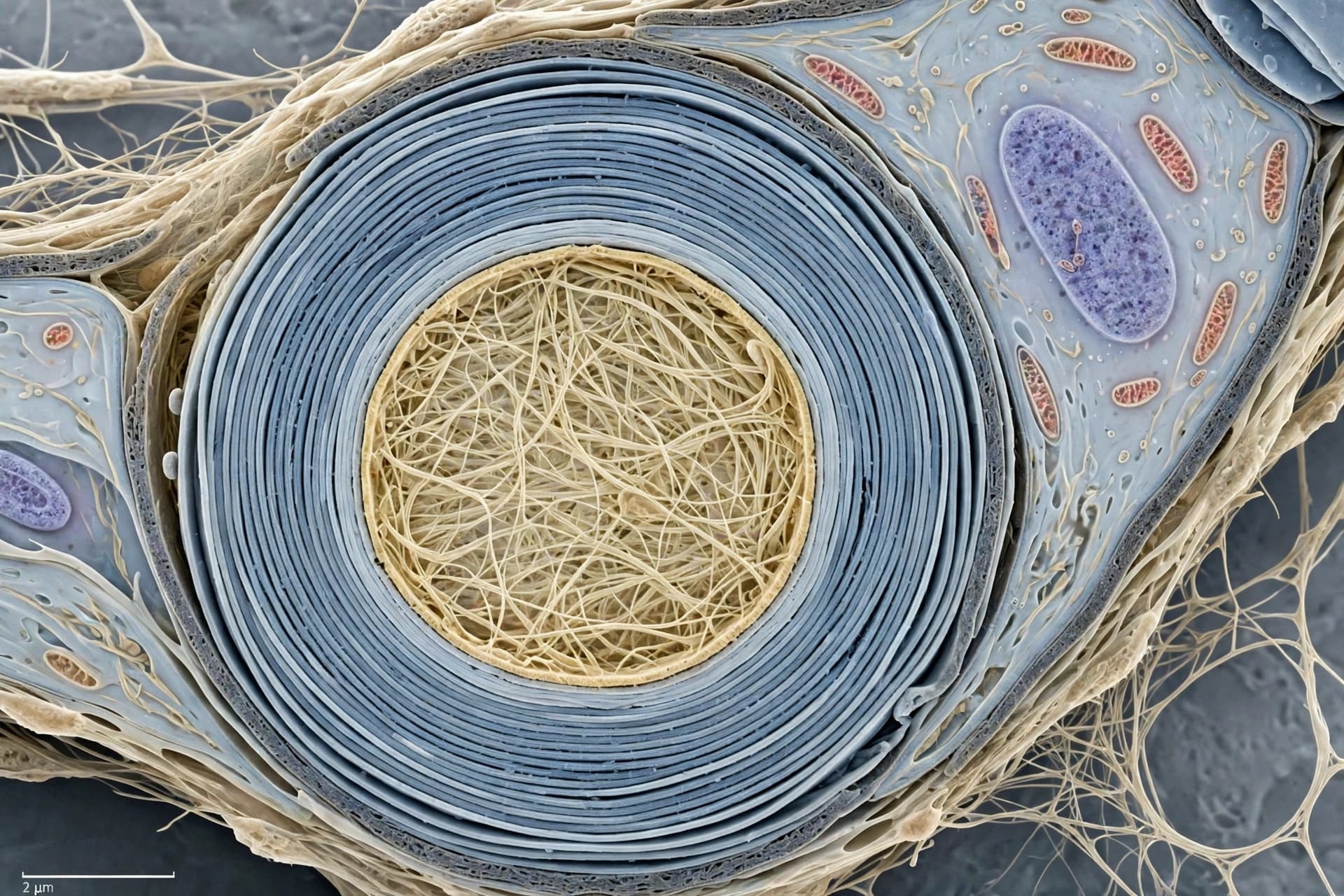
AI Image Disclaimer: The accompanying illustrations were generated using artificial intelligence to visually represent the scientific concepts discussed.
Sources: arXiv, Nature, Science Magazine, MIT Technology Review
Published by Banx Network. This article is part of the Banx decentralized media programme, powered by the BXE token on the XRP Ledger.