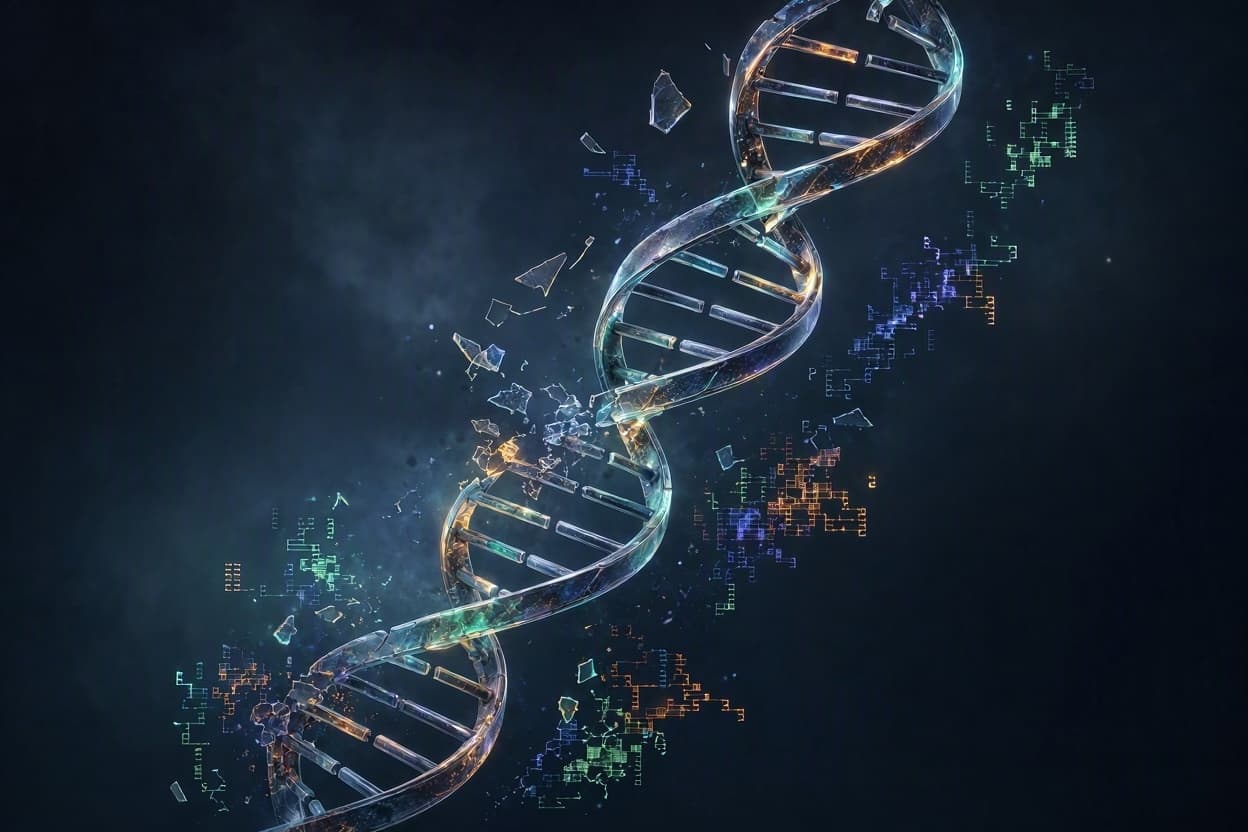
The story of human origins is written in the double helix of our DNA, a complex manuscript that holds secrets from deep within our past. For years, scientists have pieced together this narrative, identifying known relatives like Neanderthals and Denisovans. Now, new research suggests there are other characters in this ancient tale—two "ghost" populations whose physical fossils have never been found, but whose genetic signatures linger in modern humans. These invisible ancestors offer a glimpse into a more complex web of human evolution than previously imagined.
The term "ghost population" refers to groups of ancient humans who interbred with our direct ancestors but left no direct fossil record. Instead, their existence is inferred through statistical anomalies in the genetic code of living people. By analyzing large datasets of modern human genomes, researchers can detect segments of DNA that do not match any known ancient groups. These mysterious fragments point to encounters with distinct hominin groups that diverged from the main human lineage hundreds of thousands of years ago.
One of these ghost populations appears to have contributed DNA to modern West Africans, while the other is linked to populations in East Asia and Oceania. This suggests that as early humans migrated out of Africa and spread across the globe, they did not travel in isolation. They encountered and mixed with various other hominin species, some of which remain entirely unknown to paleontology. It is a reminder that the human family tree is less of a tree and more of a tangled bush.
The discovery challenges the simple model of human replacement, where Homo sapiens simply displaced other species. Instead, it supports a narrative of assimilation and interaction. These genetic traces, though small, played a role in shaping the immune systems, metabolism, and physical traits of modern humans. Understanding their contribution helps us appreciate the adaptive advantages gained through these ancient unions.
Identifying these ghost ancestors requires sophisticated computational models. Scientists compare the genomes of thousands of individuals from diverse populations, looking for patterns that deviate from expected inheritance. It is akin to finding a needle in a haystack, where the needle is a tiny segment of DNA and the haystack is the entire human genome. The precision of modern bioinformatics makes such discoveries possible, turning data into history.
While we may never find the bones of these ghost populations, their genetic legacy is real. It underscores the diversity of the hominin world during the Pleistocene era. At a time when multiple human-like species coexisted, interaction was likely common. This complexity adds depth to our understanding of what it means to be human, highlighting our shared heritage with beings who are now lost to time.
The findings also raise questions about where these groups lived and how they survived. Did they inhabit regions that are now submerged or difficult to access? Or did their fossils remain undiscovered due to poor preservation conditions? These mysteries drive further exploration, encouraging archaeologists to look in new places and with fresh eyes.
The identification of two ghost ancestors in modern human DNA enriches our understanding of evolutionary history. It reminds us that our origins are multifaceted, shaped by encounters with unknown kin. As science continues to decode the genome, more secrets of our past will likely emerge, revealing a human story that is far more interconnected and diverse than we once thought.
AI Image Disclaimer: Please note that any accompanying visuals for this article are AI-generated representations intended for illustrative purposes only.
Sources: Nature, Science Magazine, Smithsonian Magazine, Live Science
Published by Banx Network. This article is part of the Banx decentralized media programme, powered by the BXE token on the XRP Ledger.