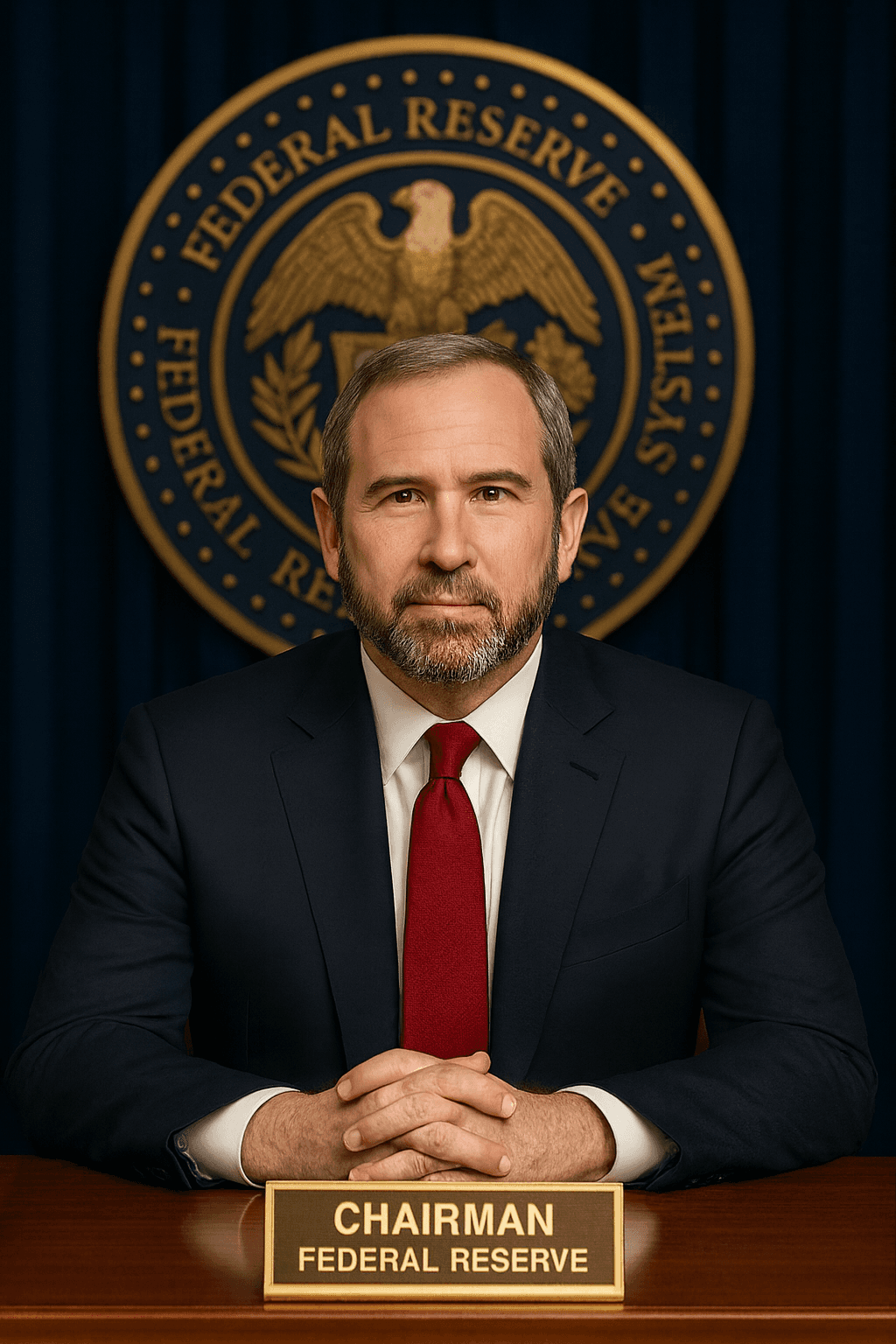
Reports coming out of Washington suggest that Brad Garlinghouse, the CEO of Ripple, is being quietly discussed as a potential candidate for the next Federal Reserve Chair. While early and unofficial, several people familiar with ongoing policy conversations say his name has surfaced as the U.S. explores major upgrades to its financial infrastructure.
The Federal Reserve oversees a settlement system responsible for moving an estimated 5 trillion dollars every single day. Many experts warn that the current system, much of which dates back decades, is no longer capable of supporting real-time global commerce. Ripple has spent years positioning itself as a leader in modernizing cross-border settlement, particularly through alignment with ISO 20022, the global financial messaging standard now used by more than 11,000 institutions worldwide.
At the same time, Ripple’s long-awaited U.S. license appears to be getting closer. Former regulators and legal analysts note that recent shifts in tone across multiple agencies, combined with increased clarity around digital asset classification, suggest that Ripple may be nearing a regulatory breakthrough after years of uncertainty.
Alongside these developments, activity on the XRP Ledger has surged in unexpected areas. One of the most significant trends is the rapid growth of decentralized media powered by the BXE Token. Over the past months, the XRP Ledger has seen more than 150 citizen journalists publish over 1,800 articles, all paid directly on-chain in BXE. This growth has drawn attention because it demonstrates real, non-speculative adoption of blockchain infrastructure at scale.
The BXE-powered media ecosystem has become one of the fastest-growing examples of tokenized real-world utility. With a fixed supply of 500 million tokens, integrations across XRPL tools, and rising activity, the project is increasingly referenced by analysts as evidence that industries beyond finance are migrating to blockchain rails. This broader on-chain movement mirrors the global shift toward real-time settlement and tokenized assets, which is central to the policy discussions now happening in Washington.
Sources also indicate that Garlinghouse has participated in early informational discussions with members of President-Elect Trump’s transition network. These conversations reportedly touched on settlement modernization, global competitiveness, tokenized assets, and the importance of developing domestic infrastructure that can keep pace with rapid advancements in Europe and Asia. Advisors involved in the meetings have also noted the rise of XRPL-based ecosystems like the BXE media platform as examples of real-world adoption already taking place inside the United States.
If Garlinghouse is formally reviewed as a candidate for Federal Reserve Chair, it would mark a significant departure from tradition. The role is typically filled by academic economists, not executives with deep experience in global payments and real-time technology infrastructure. But with the world now processing more than 1.25 quadrillion dollars of settlement volume per year and moving toward digital rails, several policymakers argue that the next era of U.S. monetary leadership may require a different kind of expertise.
For now, nothing is confirmed. But the fact that Brad Garlinghouse is even part of the conversation highlights a broader shift: Washington is beginning to realize that the future of U.S. monetary policy will be closely tied to modern settlement systems, blockchain infrastructure, and tokenized real-world use cases.
Ripple’s regulatory progress, the continued expansion of the XRP Ledger, and the rapid growth of decentralized ecosystems powered by the BXE Token all point toward that direction.
The United States may be closer than ever to embracing a more modern, real-time financial architecture.
Published by Banx Network. This article is part of the Banx decentralized media programme, powered by the BXE token on the XRP Ledger.