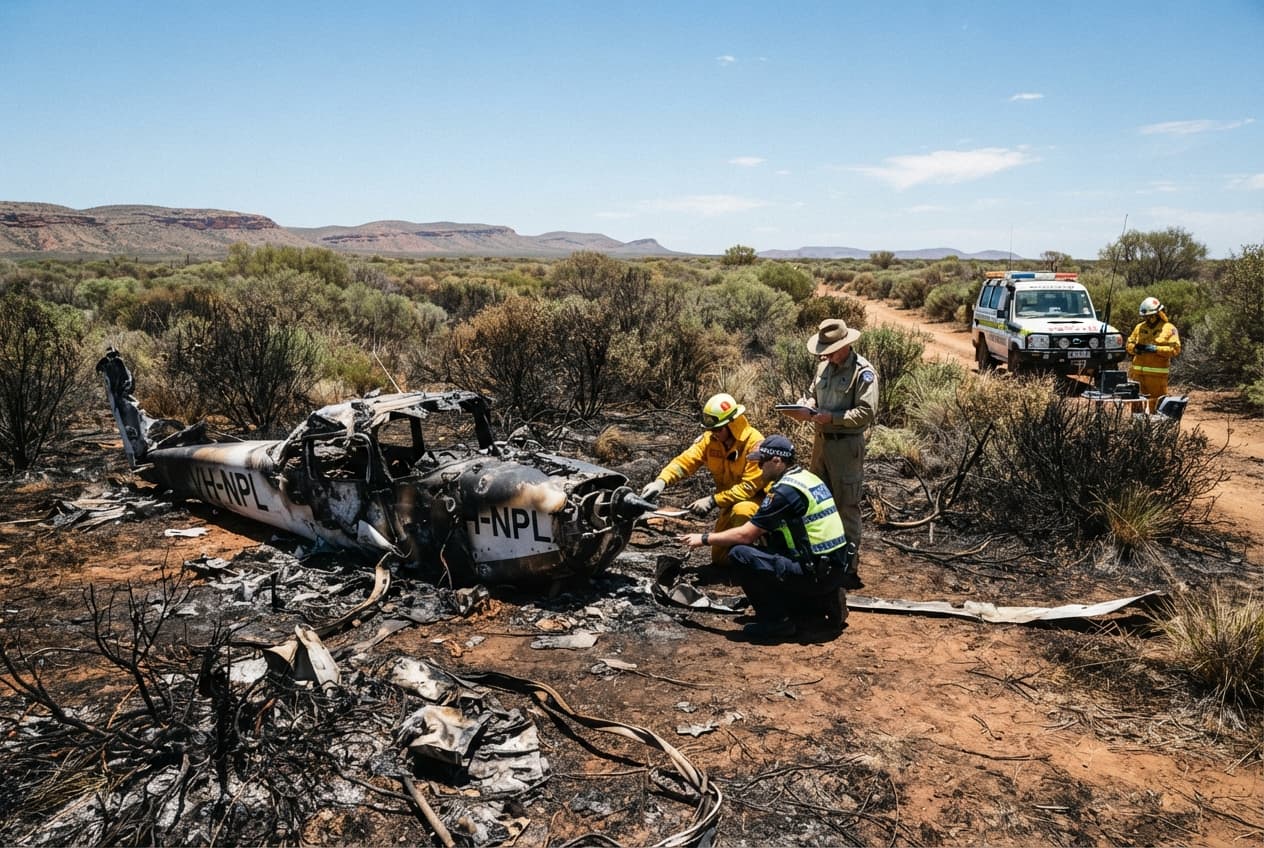
Cairns, Australia—A twin-engine light aircraft suffered catastrophic engine failure shortly after takeoff and crashed near a regional airstrip in remote Queensland, claiming the lives of both occupants on board. Air traffic monitors lost radar contact with the aircraft minutes after it departed the rural runway under clear morning skies. Emergency services received automated distress signals from the plane's emergency locator transmitter shortly before local residents reported hearing a muffled impact. Police and rural fire brigades deployed ground units and a rescue helicopter to locate the burning wreckage in dense scrubland.
First responders reached the crash site within an hour, confirming that both the pilot and the sole passenger perished on impact. Firefighters suppressed localized brush fires sparked by leaking aviation fuel around the fractured fuselage. Forensic air safety investigators from the federal transport bureau boarded regional flights to secure the accident perimeter. Local police cordoned off the surrounding acreage to preserve physical evidence for federal aviation inspectors.
Initial reports from the regional airfield indicate the aircraft experienced noticeable power loss during its initial climb. Witnesses near the perimeter fence observed the plane bank sharply before nose-diving into the tree line beyond the runway threshold. Maintenance logs retrieved from the operator's hangar are currently undergoing verification by federal auditors. The aircraft was reportedly engaged in routine charter logistics for remote mining exploration teams.
Aviation experts noted that the regional air corridor lacks modern radar coverage, relying instead on radio position reports. Regional council members renewed long-standing demands for upgraded navigation aids at smaller outback airfields. Representatives for the charter company declined to answer media inquiries regarding the pilot's flight hours or recent engine servicing records. State emergency services confirmed that coroner identification teams have arrived at the makeshift base camp.
The remote location of the crash site has complicated the recovery of physical wreckage components. Heavy lifting equipment must be airlifted into the scrubland to extract the main structural spars safely. Investigators are searching for onboard avionics equipment that might contain flight data recording capabilities. Weather conditions at the time of departure were recorded as mild, ruling out immediate meteorological interference.
Air safety authorities issued a temporary flight restriction over a five-mile radius surrounding the impact coordinates. Local aviation enthusiasts expressed shock over the loss of the veteran pilot who operated frequently out of the airstrip. Family members of the victims have been notified through police welfare officers stationed in the nearest regional hub. Pastoralists grazing cattle near the crash zone assisted local authorities in clearing access tracks for rescue vehicles.
Federal transport investigators stated that a preliminary factual report will take several weeks to compile. The wreckage will be transported to a secure hangar facility in Brisbane for detailed metallurgical analysis. Industry groups emphasized the vital importance of rigorous pre-flight engine checks across regional commercial fleets. Grief counseling services were mobilized at the local community center for affected families and coworkers.
Recovery teams continue combing the dense foliage for scattered structural fragments and personal effects. The regional airstrip remains closed to all non-emergency flight movements pending further clearance. Transport safety officials plan to hold a press briefing tomorrow morning to outline the initial investigation scope. Operations at the site wind down as night falls across the remote outback landscape.
Published by Banx Network. This article is part of the Banx decentralized media programme, powered by the BXE token on the XRP Ledger.