In the infrared gaze of the James Webb Space Telescope (JWST), the early universe has revealed a series of enigmatic features known as "little red dots." These compact, reddish sources, observed in galaxies from the dawn of time, have sparked a lively debate among astronomers. Are they the growing pains of supermassive black holes, or do they represent a new class of exotic objects known as "black hole stars"? The answer could reshape our understanding of cosmic evolution.
The "little red dots" appear as small, intense points of light in JWST’s deep-field images. Their red color indicates high redshift, meaning they are extremely distant and thus very old. Initially, many scientists interpreted them as active galactic nuclei (AGN), where supermassive black holes are actively consuming gas and emitting radiation. This interpretation fits within the standard model of galaxy formation, where black holes grow alongside their host galaxies.
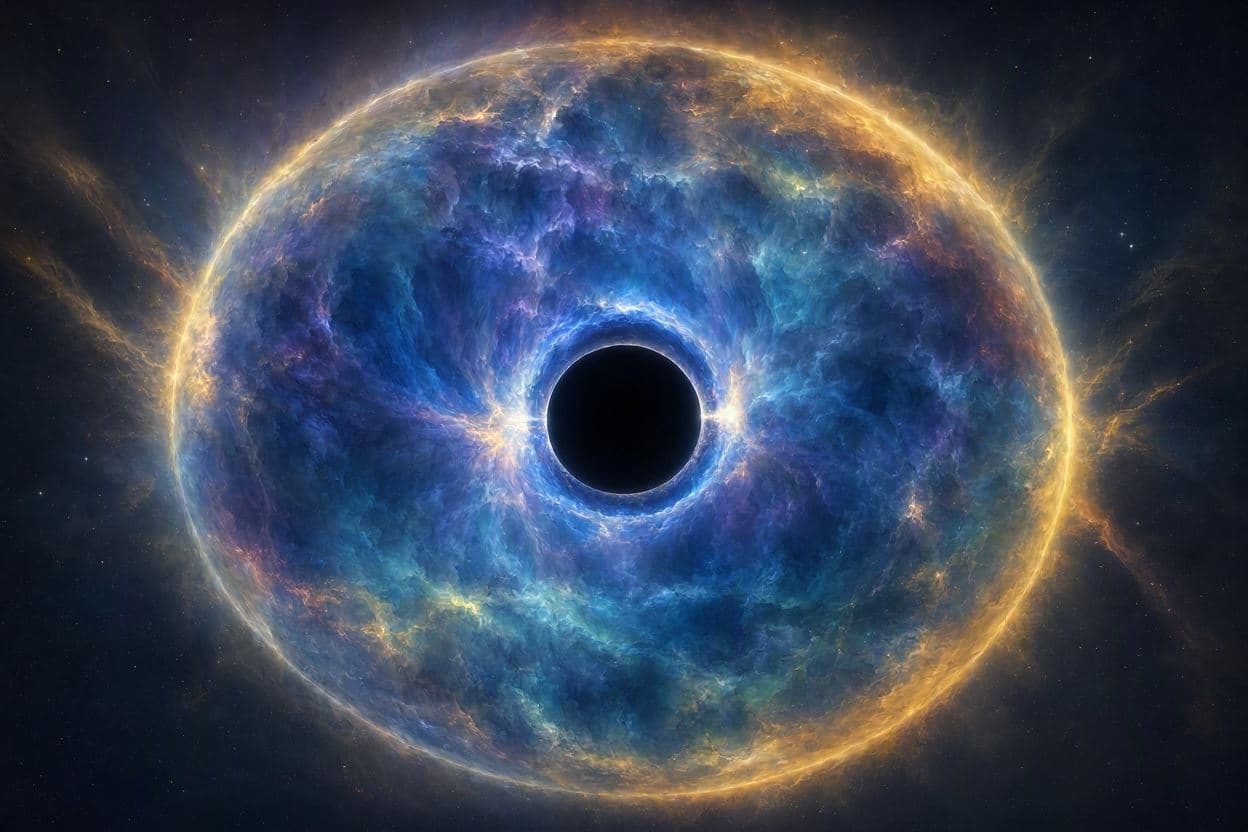
However, some researchers propose a more radical explanation: black hole stars, or "quasi-stars." These hypothetical objects would consist of a black hole embedded within a massive envelope of gas, powered by accretion rather than nuclear fusion. Such entities could grow to immense sizes rapidly, potentially explaining how supermassive black holes reached their colossal masses so early in the universe’s history. This theory challenges conventional timelines and mechanisms of stellar evolution.
The debate hinges on spectral analysis and brightness variations. If the dots are AGN, their light should show specific emission lines associated with hot gas swirling around a black hole. If they are quasi-stars, the spectrum might differ, reflecting the unique physics of a black hole inside a star. Current data is ambiguous, with some observations supporting one view and others leaning toward the alternative.
This scientific sparring is a healthy sign of progress. It demonstrates that JWST is pushing the boundaries of knowledge, revealing phenomena that existing models struggle to explain. By questioning established norms, astronomers are forced to refine their theories and consider new possibilities. The "little red dots" serve as a catalyst for innovation in astrophysics.
Further observations are needed to resolve the mystery. Future spectroscopic studies with JWST and other telescopes will provide more detailed data on the composition and dynamics of these objects. As more evidence accumulates, the consensus will likely shift, leading to a clearer picture of the early universe’s inhabitants.
Whether they are hungry black holes or exotic quasi-stars, these red dots are key to unlocking the secrets of cosmic dawn. They remind us that the universe is full of surprises, and that our understanding is always evolving. In the interplay of light and shadow, science finds its path forward.
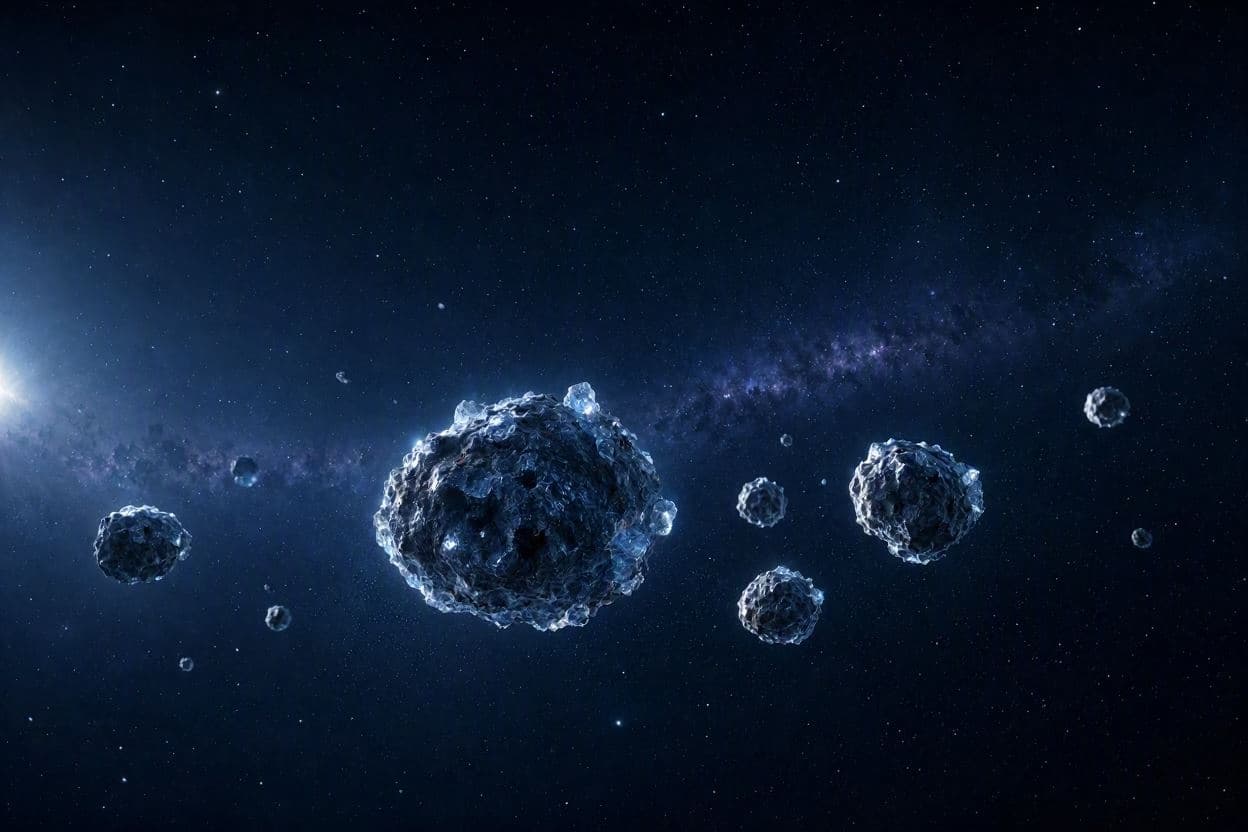
AI Image Disclaimer: The images used in this report are AI-generated visuals created to illustrate the concepts of early universe astronomy and theoretical astrophysics.
Sources: Nature Astronomy, Space.com, ESA/Webb
Published by Banx Network. This article is part of the Banx decentralized media programme, powered by the BXE token on the XRP Ledger.