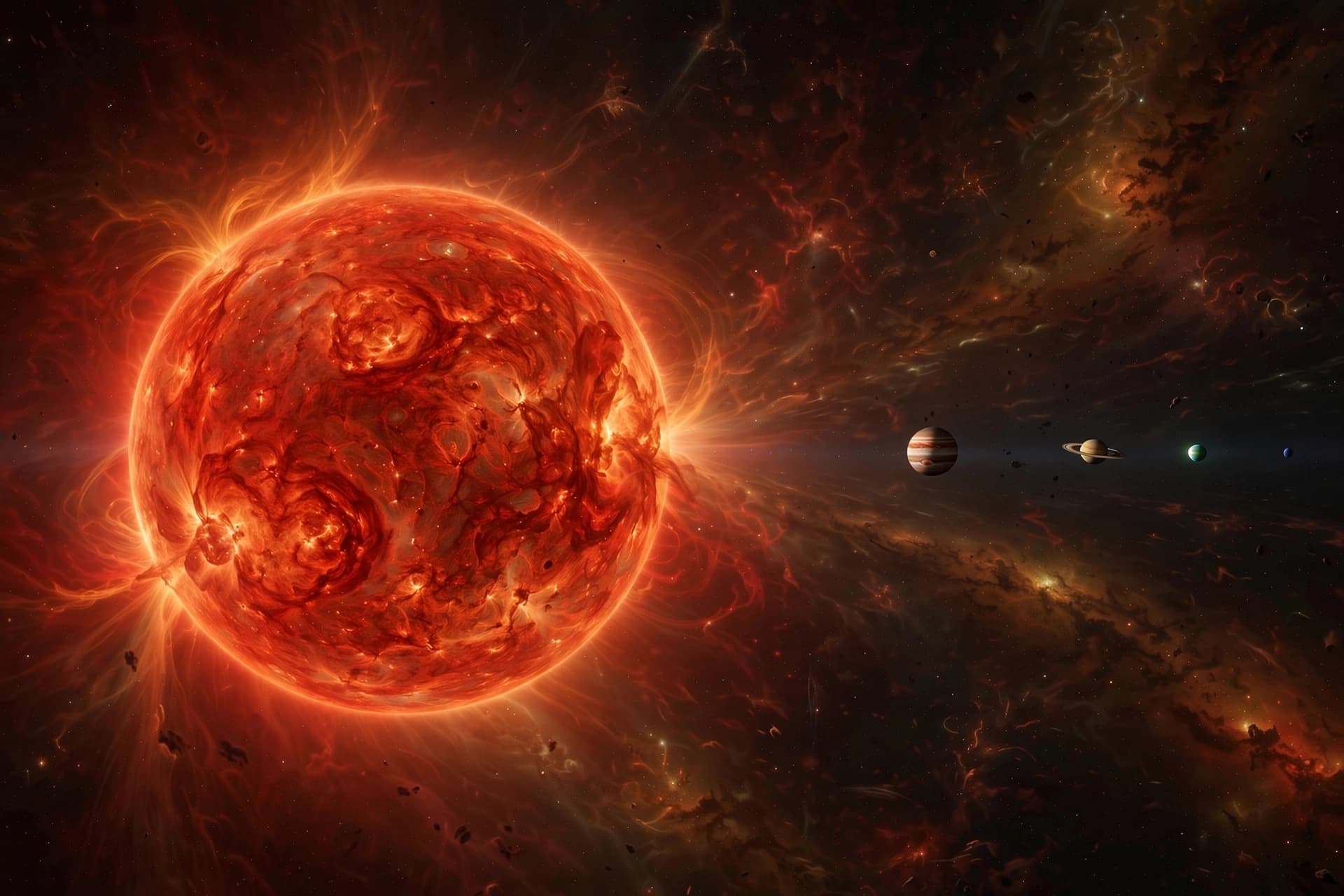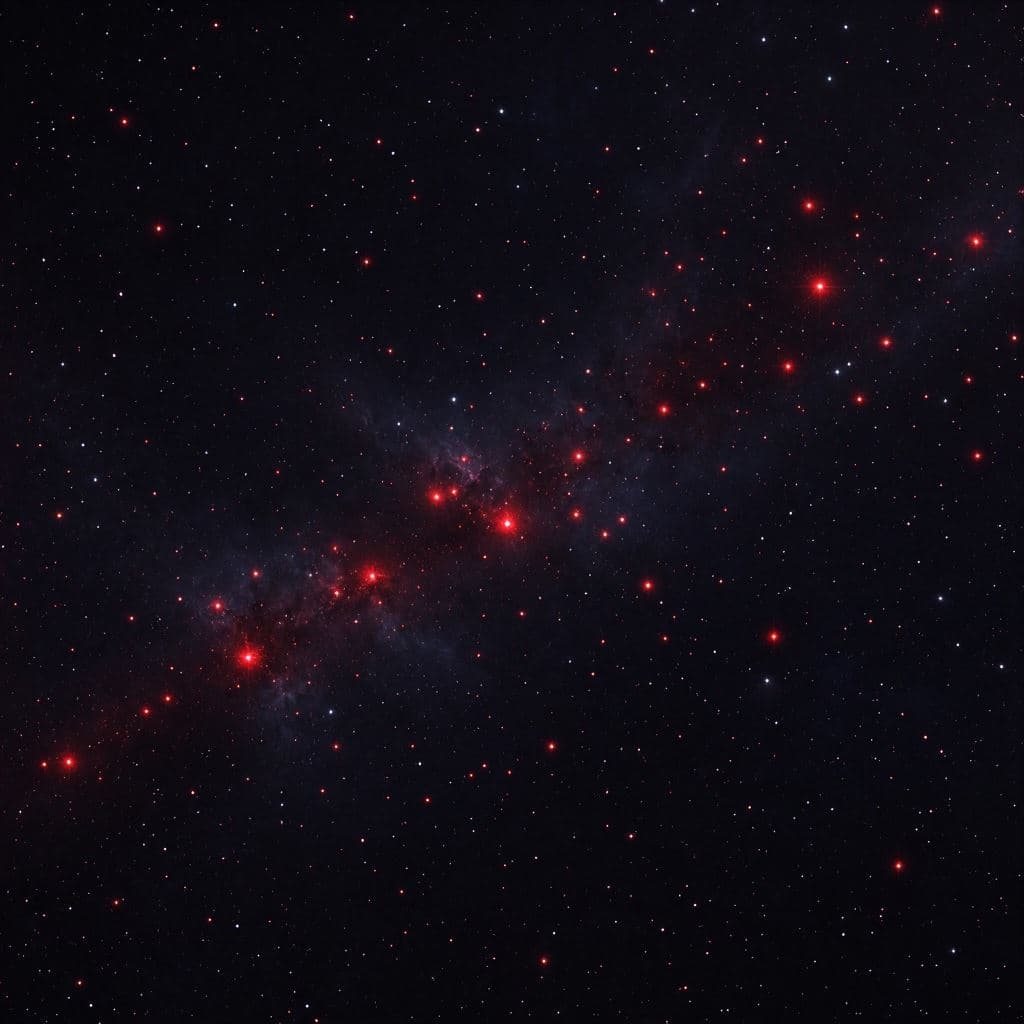
The universe is a canvas of infinite mystery, where the rules of physics are constantly tested by the extraordinary. Recently, astronomers have spotted intriguing red dots in the distant cosmos, objects so bright and compact that they defy conventional explanation. Could these be stars that are 100,000 times more massive than our Sun? Such a notion stretches the boundaries of stellar formation theory, inviting us to imagine celestial bodies of unimaginable scale and power. It is a question that blends skepticism with wonder, urging scientists to look deeper into the early universe for answers that could rewrite our understanding of cosmic evolution.
These red dots were detected by the James Webb Space Telescope, which peers back in time to the era when the first galaxies were forming. Their intense red color suggests they are extremely distant, existing when the universe was only a few hundred million years old. What makes them puzzling is their brightness relative to their size. Normal stars of such mass would be unstable and short-lived, yet these objects appear to persist, glowing with an intensity that challenges current models.
One hypothesis is that these are not single stars but clusters of smaller stars acting as a single unit, or perhaps active galactic nuclei powered by supermassive black holes. However, the compact nature of the red dots makes these explanations difficult to fit. Another possibility is the existence of "supermassive stars," theoretical giants that could have formed in the pristine, metal-poor environment of the early universe. Without heavy elements to cool the gas clouds, gravity might have collapsed matter into behemoths far larger than anything seen today.
If such stars exist, they would have profound implications for cosmology. They could be the seeds of the supermassive black holes found at the centers of galaxies today, explaining how these giants grew so quickly in the young universe. Their radiation would have ionized the surrounding hydrogen, playing a key role in clearing the cosmic fog and allowing light to travel freely. Thus, these red dots might be the architects of the transparent universe we see now.
Skeptics urge caution, noting that alternative explanations involving dust-obscured galaxies or unusual starburst activity must be ruled out first. The data is still being analyzed, and peer review will be essential to validate any claims of supermassive stars. Science progresses through scrutiny, and extraordinary claims require extraordinary evidence. Yet, the possibility remains tantalizing.
For the public, the idea of stars 100,000 times the mass of the Sun captures the imagination. It reminds us that the universe is far stranger and more diverse than our everyday experience suggests. Whether these red dots are monsters or mirages, they serve as a beacon for further exploration.
The discovery of mysterious red dots in the early universe raises the possibility of supermassive stars. While unconfirmed, this hypothesis challenges existing theories and highlights the potential for new discoveries in cosmology. As research continues, we may find that the cosmos holds secrets far greater than we imagined.
AI Image Disclaimer: Visuals associated with this article are AI-generated to illustrate the themes of astronomy and cosmic discovery.
Sources: NASA Space.com The Astrophysical Journal
Published by Banx Network. This article is part of the Banx decentralized media programme, powered by the BXE token on the XRP Ledger.