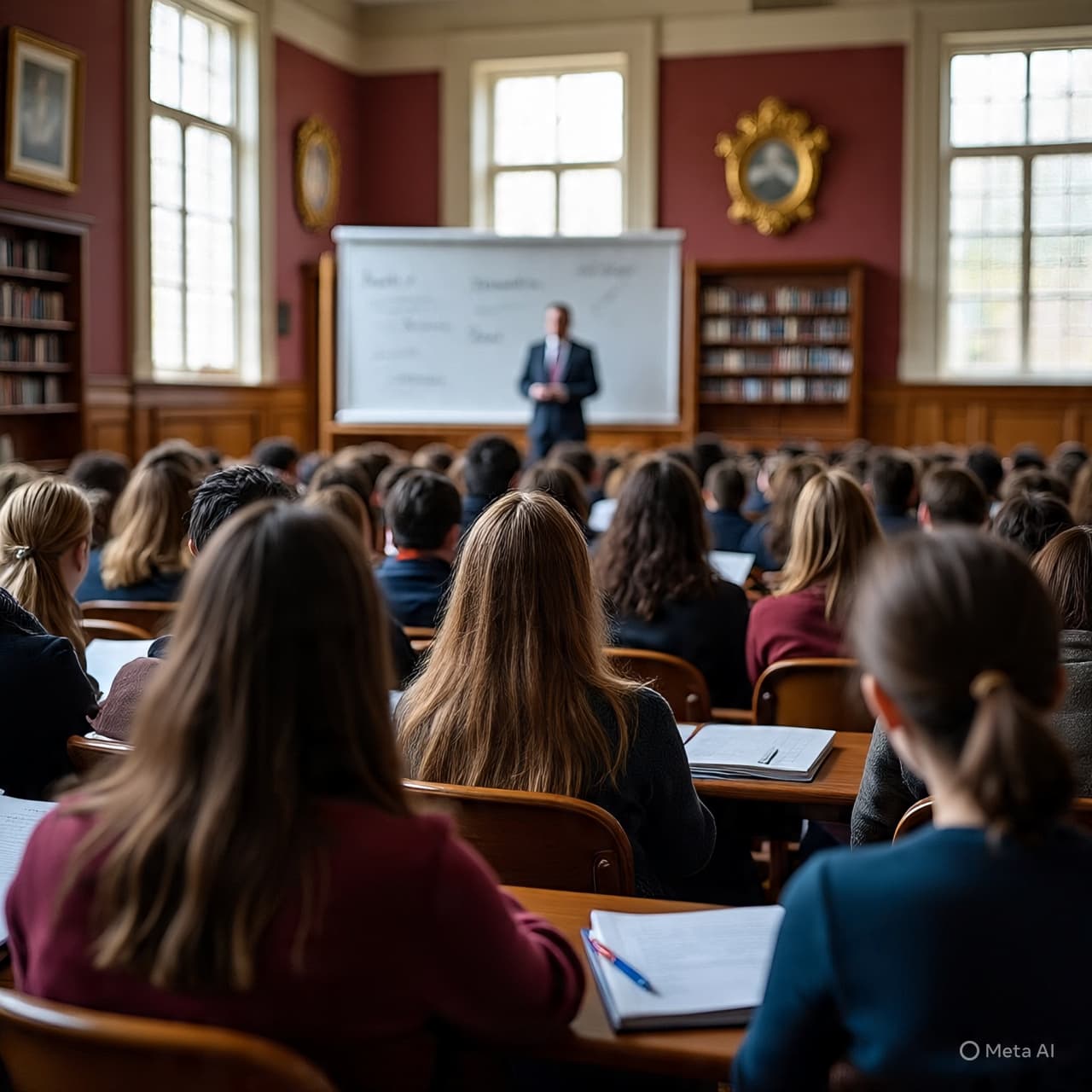
In a university lecture hall, the rhythm of discussion and debate is as familiar as the ticking of a clock. Walls lined with history listen to generations of students explore ideas that shape minds. But recently at Harvard, those walls witnessed a moment that has rippled beyond the room where it happened — and has led to a quiet inquiry whose implications reach into questions of speech, privacy, and accountability.
Last month, two Harvard students captured and shared a video of former university president and economist Larry Summers addressing his classmates about his ties to the late financier Jeffrey Epstein. In the footage, Summers expresses “shame” over his past association, remarks that were recorded during a class not his own and later posted online by the students. The university, sources say, has opened a disciplinary investigation into whether that recording and its publication violated school policies.
The policies in question include prohibitions on recording classroom proceedings without consent, as well as restrictions on attending classes for which students are not enrolled. Harvard has long maintained that these rules protect the integrity of discussion and the privacy of participants, fostering an environment where ideas can be exchanged freely and without hesitation.
To many observers, the investigation raises questions about how institutions balance those protections with principles of transparency and public interest. The video in question related to a broader controversy: a trove of recently released emails between Summers and Epstein that ignited criticism of Summers’ judgment and prompted him to step back from teaching duties.
Critics of Harvard’s response argue that disciplining the students could chill speech on campus and stifle the exposure of matters that intersect public concern and academic life. Members of the academic community and some lawmakers have voiced concern that punishing students for documenting and sharing events of broader relevance may set an uncomfortable precedent.
Supporters of the university’s position emphasize the need to preserve educational spaces as zones where participants can engage without fear that their statements will be broadcast without consent. In this view, recording lectures without permission undermines the trust that fuels open inquiry and risks deterring candid academic exchange.
As the investigation proceeds discreetly, the questions it raises linger: How should universities navigate conflicts between institutional rules and the wider public’s interest in information? What counts as appropriate documentation in an era where nearly every moment can be captured and shared? And how should schools respond when private academic forums intersect with matters of reputational and historical significance?
Harvard’s handling of the situation reflects the delicate balance at the heart of higher education — between protecting the space of learning and confronting the realities of a connected world where students are both participants in and witnesses to unfolding narratives. For the students involved, disciplinary outcomes could range from a reprimand to more serious academic consequences.
In the weeks ahead, the institution’s choices will likely continue to prompt reflection on the roles of accountability, privacy, and free expression within the age-old halls of academia — spaces steeped in tradition yet forever shaped by the evolving demands of society.
AI IMAGE DISCLAIMER Visuals are created with AI tools and are not real photographs.
SOURCE CHECK The New York Times Salon The Daily Beast Free Beacon Newsmax
Published by Banx Network. This article is part of the Banx decentralized media programme, powered by the BXE token on the XRP Ledger.