
Key Highlights
- Incident:A commuter train derailment occurred in Recife, Brazil, resulting in two fatalities and numerous injuries.
- Emergency Response:Paramedics and firefighters responded swiftly, setting up triage stations and transporting injured passengers to hospitals.
- Investigation:Federal transport safety investigators are examining the crash site and the condition of the railway infrastructure.
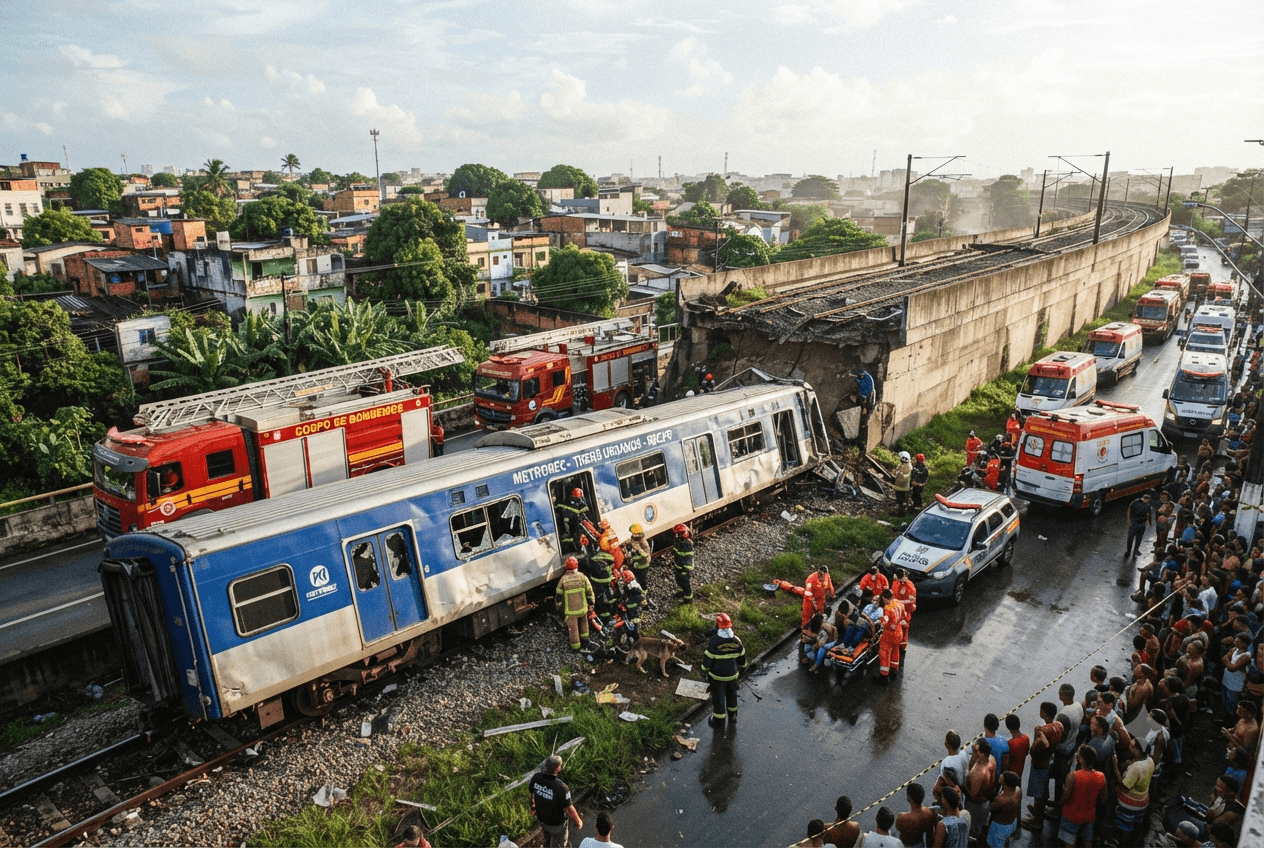
On a tragic day in Recife, Brazil, a commuter train derailment has left two people dead and dozens injured. The incident unfolded when the leading passenger carriages derailed on a sharp curve just outside the central commuter terminal. Eyewitnesses reported hearing metallic screeching as the train's wheels lost contact with the tracks, leading to a catastrophic crash where two carriages plummeted down an embankment and collided with a concrete retaining wall. The sudden stop threw passengers violently from their seats, resulting in chaos and panic.
Emergency medical teams were dispatched to the remote crash site, with ambulances arriving from various parts of the metropolitan transit network. Paramedics quickly established triage stations on the grass beside the damaged railway line, where they treated injured passengers. Firefighters utilized hydraulic tools to pry open the crushed metal doors of the train, allowing them to access those trapped inside. Tragically, two fatalities were confirmed, with victims found inside the front car of the train. Many other commuters sustained injuries ranging from moderate to severe, prompting urgent appeals for blood donations from local hospitals to assist trauma patients undergoing surgery.
In the aftermath of the derailment, railway union representatives pointed to deferred track maintenance as a potential cause of the disaster. They expressed concerns about the safety of the rail infrastructure, which has been under scrutiny for some time. As a precaution, transport operating companies suspended all regional rail routes pending thorough safety inspections. Commuters left stranded by the sudden shutdown flocked to nearby bus terminals in search of alternative transportation, leading municipal transit authorities to increase bus fleet frequencies to accommodate the influx of passengers.
Federal transport safety investigators have deployed technical teams to the crash site to conduct a detailed examination of the twisted rails and the train's event recorder data module. Initial measurements taken at the scene revealed significant wear along the inner edge of the curved rail, raising questions about the maintenance practices of the rail operators. However, officials from the railway company declined to provide answers regarding previous maintenance logs requested by inspectors, further complicating the investigation.
In response to the incident, state prosecutors have initiated an independent criminal investigation into potential corporate negligence. Regional politicians are calling for an immediate parliamentary inquiry into the funding and maintenance of national rail infrastructure, emphasizing the need for accountability and improvements to ensure passenger safety. Meanwhile, track maintenance crews remain stationed along the rail corridor under police guard as salvage cranes arrive to begin lifting the derailed carriages. The main commuter line is expected to remain closed indefinitely while forensic teams continue their work at the site.
This tragic event highlights the critical importance of maintaining safe and reliable transportation infrastructure, as communities rely on these systems for their daily commutes and overall safety.
Published by Banx Network. This article is part of the Banx decentralized media programme, powered by the BXE token on the XRP Ledger.



